Please read our important disclaimers before using this content
Your ex shows up two hours late for the custody exchange—again. They cancel last-minute visits repeatedly. They refuse to return the children's belongings. They make unilateral decisions about medical care and school despite your joint legal custody. They violate your custody order constantly, and you're exhausted.
If you're reading this, you've probably already tried everything else. You've sent polite texts. You've proposed compromises. You've documented violations in a spreadsheet that now has 58 entries. You have a court order for a reason—and watching it be ignored repeatedly feels like the court system itself is failing you.
You have a court order for a reason. When your co-parent violates it, there are legal consequences—potentially including contempt of court. But understanding when contempt is appropriate, how to file effectively, and what courts actually enforce helps you use this tool strategically rather than reactively. Building a solid documentation strategy for high-conflict custody before filing makes your contempt motion far more compelling. And for those navigating this without an attorney—which is many of you—this guide provides the foundation you need to protect your parenting time and your sanity.
What Is Contempt of Court?
Contempt of court is willful disobedience of a court order.1 In custody cases, it means intentionally violating the terms of a custody or parenting time order without legal justification.
Two types of contempt:
Civil contempt: Designed to compel compliance. The goal is getting the person to follow the order going forward. Remedies include make-up parenting time, attorney fees, and sometimes jail (until they comply).2
Criminal contempt: Punishment for past violations. Can result in fines or jail time as punishment, not just to compel compliance.
Most custody contempt proceedings are civil contempt seeking enforcement and compliance.
When Contempt Is Appropriate
Not every violation warrants contempt. Courts expect parents to be flexible and reasonable. Contempt is appropriate for:
Significant, Willful Violations
Parenting time violations:
- Consistently denying parenting time
- Repeatedly late for exchanges (significantly)
- Failing to return children after parenting time
- Denying make-up time after missed visits
- Unilaterally changing schedule
Decision-making violations (when you have joint legal custody):
- Making major decisions without consulting you
- Refusing to share information (medical, school)
- Enrolling in school or activities unilaterally
- Medical treatment decisions without agreement or emergency
Communication violations:
- Blocking all contact between children and other parent
- Ignoring court-ordered communication platform
- Refusing to respond to child-related communication
Relocation violations:
- Moving without required notice or permission
- Violating geographic restrictions
Other order violations:
- Refusing court-ordered therapy
- Violating substance testing requirements
- Ignoring supervised visitation requirements
- Violating no-contact provisions
When Contempt Is NOT Appropriate
Minor or understandable violations:
- One-time 15-minute late exchange due to traffic
- Emergency requiring schedule change
- Genuine miscommunication about pickup time
Good faith disagreements about meaning:
- Order is genuinely ambiguous
- Reasonable people could interpret differently
- No willful violation, just confusion
Circumstances beyond control:
- Child is ill
- Car breaks down
- Weather emergency
- Work emergency (occasionally)
Issues requiring modification, not enforcement:
- Order is no longer workable
- Circumstances have substantially changed
- Need different schedule or terms
Elements Required for Contempt
To find someone in contempt, courts require:3
Valid Court Order
- Clear, specific order
- Properly entered by court
- Currently in effect
- Not expired or superseded
Knowledge of Order
Person knew about the order—they can't violate what they don't know exists. Service of the order or presence in court when ordered establishes knowledge.
Ability to Comply
Person had the ability to comply. If genuinely impossible to comply, no contempt.
Example: Order says return children Sunday 6pm. Parent's flight delayed until 9pm due to weather. No ability to comply = no contempt.
Willful Violation
Intentional, deliberate disobedience. Not accident, misunderstanding, or impossible to avoid.
Court asks: Did they choose to violate the order despite knowing it and being able to comply?
Evidence You Need
Document everything:
For parenting time violations:
- Copies of custody order (relevant provisions highlighted)
- Calendar showing violations with dates, times
- Communications about each violation (texts, emails)
- Witnesses to violations
- Photos showing time stamps
- Log of make-up time requested and denied
For decision-making violations:
- Joint legal custody order
- Evidence of decision made unilaterally
- Your attempts to communicate/be involved
- Documentation showing you weren't consulted
- Impact on children if relevant
Pattern documentation:
- Violation timeline
- Number of violations
- Attempts to resolve
- Their excuses or justifications
- Whether violations continued after warning
Good organization matters: Courts see many contempt motions. Clear, concise presentation of violations and evidence increases effectiveness.
Sample documentation log format:
This format makes violations clear at a glance and shows the pattern courts need to see.
How to File for Contempt
Step 1: Attempt to Resolve
Before filing, try to resolve:
- Send clear, written communication identifying violation
- Request compliance going forward
- Propose make-up parenting time
- Suggest mediation if appropriate
Document these attempts—courts want to see you tried to resolve before involving them.
Step 2: Consider Legal Representation
Contempt has potential serious consequences (jail, fines). Legal guidance is valuable:
If you can afford an attorney, they can help with:
- Determining if contempt is appropriate or if modification is needed
- Evaluating strength of your evidence
- Strategic timing and remedy requests
- Navigating complex procedures
If you're proceeding pro se (without attorney):
- Many courts have self-help centers with contempt motion forms and instructions
- Legal aid organizations may offer limited scope representation (help with forms, not full representation)
- Bar associations often have lawyer referral services with reduced-fee consultations
- Court staff can answer procedural questions (but cannot give legal advice)
Reality check: Many protective parents cannot afford attorneys for every violation. Pro se contempt motions are common and can be effective with careful preparation and documentation. This guide provides the framework you need, but research your specific jurisdiction's procedures.
Step 3: File Motion for Contempt
Your motion includes:
- Identification of specific order provisions violated
- Specific dates, times, and details of each violation
- Evidence supporting allegations
- Request for specific relief
Be specific: "Respondent violated paragraph 2.3 of the parenting plan by failing to return children at 6:00 PM on 1/15/24, 1/22/24, and 2/5/24, instead returning them at 9:30 PM, 10:15 PM, and 8:45 PM respectively."
Step 4: Serve Motion
Other parent must be properly served with:
- Motion
- Supporting documents
- Notice of hearing
Service requirements vary significantly by jurisdiction:
- Some states require personal service (sheriff or process server) for contempt motions
- Some allow service by certified mail
- Some allow service by regular mail if they've previously appeared in the case
- Check your local rules carefully—improper service can get your motion dismissed
Pro se tip: If you're unsure about service requirements, call the court clerk's office and ask what service method is required for a contempt motion in your county. Many courts also have self-help centers with specific instructions.
Step 5: Hearing
You must prove:
- Valid order
- Knowledge
- Ability to comply
- Willful violation
Present:
- Your testimony
- Documents
- Witnesses if available
- Clear timeline of violations
Other parent can defend:
- Challenging whether violation occurred
- Showing inability to comply
- Showing order was ambiguous
- Showing violation wasn't willful
Standard of proof varies by jurisdiction and type of contempt:
- Civil contempt: Most states use "preponderance of the evidence" (more likely than not)—same standard as other civil cases
- Criminal contempt: "Beyond a reasonable doubt" (same as criminal trials)—due process protections apply
- Some jurisdictions: Use "clear and convincing evidence" (intermediate standard) for civil contempt
- Check your local rules or ask court staff which standard applies in your jurisdiction
Step 6: Court's Decision
If court finds contempt:
Possible remedies:
- Order compliance going forward
- Make-up parenting time
- Attorney fees and costs
- Compensatory damages
- Fine
- Jail time (civil contempt: until compliance; criminal contempt: set period)
If court doesn't find contempt:
- Might still order compliance
- Might modify order if appropriate
- Might order mediation
- Might do nothing
Remedies Courts Order
Make-Up Parenting Time
Most common remedy. Violating parent must make up missed time:
- Specific schedule for make-up time
- Often additional time as consequence
- Typically at non-violating parent's discretion for scheduling
Example: Denied 4 weekends = 8 additional weekends over next 4 months.
Attorney Fees and Costs
Many jurisdictions allow courts to award attorney fees and costs to the prevailing party in contempt cases, making the violating parent pay for your legal expenses and court costs.
However, this varies by state:
- Some states have specific statutes authorizing fee awards in contempt cases
- Some require findings of bad faith or willful violation
- Some limit fees to the contempt proceeding itself (not the underlying case)
- Some states rarely award fees in family law matters
If you're pro se (representing yourself), you typically cannot recover attorney fees because you didn't incur them—but you may be able to recover court costs, filing fees, and service fees.
When attorney fees are available, they serve as a powerful deterrent against serial violators—contempt gets expensive when you're paying both sides' legal bills.
Modification of Custody
Repeated violations can support:
- Increased parenting time for compliant parent
- Decreased time for violating parent
- Change in legal custody
- Additional restrictions or requirements
Contempt itself isn't modification, but pattern of violations is evidence supporting modification.
Compensatory Damages
Sometimes courts order payment for:
- Lost wages due to violations
- Childcare costs incurred
- Travel expenses wasted
- Other quantifiable damages
Fines
Court can impose fines payable to court or to other parent.
Jail Time
Courts can order jail for contempt:
Civil contempt: Often called having the "keys to the jail cell"—comply with the order and you get released. Used when the court needs to compel future compliance. Critical limitation: You cannot be jailed for civil contempt if you genuinely cannot comply (no ability = no civil contempt jail time).4
Criminal contempt: Set sentence as punishment for past violations. Requires due process protections (right to counsel, proof beyond reasonable doubt). Less common in custody cases.
Reality: Jail time for custody contempt is rare in practice. Courts typically reserve incarceration for severe, repeated violations where other remedies (make-up time, fines, fee awards) have already failed. Most custody contempt cases result in make-up parenting time and fee awards rather than jail.
Survivor perspective: While the threat of jail feels like justice when you've been violated repeatedly, understand that courts are hesitant to incarcerate parents—even those flagrantly violating orders. Expect frustration with how slowly the system moves toward serious consequences.
Strategic Considerations
When to File Contempt vs. Other Options
File contempt when:
- Clear, significant violations
- Pattern of non-compliance
- Other attempts to resolve failed
- Need court enforcement
Consider modification instead when:
- Order is outdated or unworkable
- Circumstances substantially changed
- Need different terms, not just enforcement
Consider mediation when:
- Genuine miscommunication or ambiguity
- Relationship might improve with facilitation
- Minor issues better resolved cooperatively
Timing
Don't wait too long: Courts question why you waited months to address "urgent" violations.
Don't file too quickly: Show you tried to resolve first.
Document as you go: Don't rely on memory months later—the evidence documentation guide for custody cases provides a system for tracking violations in court-ready format.
Pattern vs. Single Incident
Courts are more responsive to patterns:
- Multiple violations over time
- Consistent refusal to comply
- Continuing despite warnings
Single incidents rarely justify contempt unless egregious.
My Story: "The Spreadsheet That Finally Worked"
I tracked violations for eight months before filing contempt. Late returns, canceled visits with hours' notice, unilateral medical decisions. My ex claimed every violation was an "emergency" or "misunderstanding."
My attorney looked at my documentation—a detailed spreadsheet with 52 violations—and said, "This is excellent evidence. But expect frustration. Courts don't move as fast as you need them to."
She was right. The hearing was scheduled three months out. In the meantime, violations continued. But having filed contempt changed something: my ex knew there would be consequences. Violations decreased (though didn't stop).
At the hearing, the judge reviewed my spreadsheet, the communications I'd saved, and my attempts to resolve each violation. My ex claimed the order was "confusing" and he "tried his best."
The judge didn't buy it. "The order says 6 PM Sunday. That's clear. You've violated it 52 times in eight months. That's not confusion—that's choosing not to comply."
Result: 26 make-up weekends over the next year (double the missed time), $8,000 in attorney fees, and a stern warning that future violations would result in jail time.
Did it stop all violations? No. But it established consequences. And when violations continued, we had a record of contempt findings to support our custody modification motion.
The process was exhausting, expensive, and slower than I wanted. But documentation and persistence eventually worked. The system isn't designed for quick justice—it's designed for thorough justice. Sometimes that has to be enough.
— Parent who learned contempt is a marathon, not a sprint
The Narcissistic Co-Parent
Narcissists often:
- Violate orders to maintain control
- Test boundaries constantly
- Escalate when facing consequences
- Use contempt proceedings as drama
Understanding these DARVO tactics helps you anticipate how they'll spin the contempt hearing against you.
Strategies:
- Document meticulously
- Communicate only in writing about violations
- Request specific, clear remedies
- Be prepared for retaliation
- Don't engage in conflict—let court enforce
Important Jurisdictional Considerations
Contempt procedures vary significantly by state and even by county.5 Research your specific jurisdiction's requirements:
Filing Requirements
Motion type:
- Some jurisdictions require "Motion for Rule to Show Cause" (why they shouldn't be held in contempt)
- Some use standard "Motion for Contempt"
- Some require verified motions (sworn under oath) or supporting affidavits
Time limitations:
- Some states have statute of limitations on contempt (often 6 months to 2 years from violation)
- Some require filing within reasonable time or court questions delay
- Check local rules for specific deadlines
Procedural Variations
Hearing types:
- Some jurisdictions handle contempt as emergency matters with expedited hearings
- Some schedule contempt like regular motions (months out)
- Some require preliminary hearing before full contempt hearing
Burden of proof location:
- Most jurisdictions: You prove violation occurred; they prove inability to comply (if claimed)
- Some jurisdictions: They must prove inability to comply as affirmative defense
Appeal rights:
- Criminal contempt findings are typically appealable
- Civil contempt findings may have limited appeal rights
- Sanctions orders may be appealable depending on type
Research your jurisdiction: Don't rely on general information. Check your state's family law statutes, local court rules, and court website for jurisdiction-specific procedures.
Common Defenses to Contempt
Your ex might argue:
Order is ambiguous: "I didn't understand what 'holiday weekend' meant." Counter: Show order is clear; their interpretation is unreasonable.
Couldn't comply: "I was sick and couldn't drive." Counter: Show no evidence of inability; no communication about issue at time.
Emergency: "Child was having meltdown and needed routine." Counter: Not genuine emergency; pattern of using excuses.
You consented: "They texted saying this was okay." Counter: Show no such communication; or show it was about different situation.
Order changed: "We agreed to new schedule." Counter: Court orders can only be changed by court, not verbal agreements.
When Contempt Doesn't Work
Sometimes contempt proceedings are ineffective:
Order is truly ambiguous: Court won't enforce what isn't clear. Solution: Request clarification or modification.
Violations are minor: Court won't use limited resources on 10-minute late exchanges. Solution: Address if pattern; otherwise let it go.
Order is unworkable: Circumstances changed; order doesn't fit reality. Solution: Modification, not contempt.
No real remedy available: What you want isn't something court can order. Solution: Adjust expectations or seek modification.
What If Your Ex Files Contempt Against You?
If you're facing a contempt motion:
Take it seriously: Contempt can result in jail, fines, and attorney fees. Don't ignore it.
Gather evidence of compliance:
- Calendar showing you followed the order
- Communications demonstrating compliance
- Witnesses who can verify compliance
- Documentation of inability to comply (if applicable)
Show good faith:
- If you made a mistake, acknowledge it and show corrective action
- If circumstances prevented compliance, document the circumstances
- If order was ambiguous, show your reasonable interpretation
Consider whether you need to purge the contempt: If found in contempt, you may need to comply with specific actions to avoid sanctions. Understand what the court expects.
Consult legal resources: Even if you can't afford full representation, a consultation with a family law attorney about defending against contempt can be valuable. Legal aid may be available if you qualify.
Legal Resources for Pro Se Filers
If you're navigating contempt without an attorney:
Court self-help centers: Most family courts have self-help centers with:
- Contempt motion form packets
- Instructions for filing and service
- Information about local procedures
- Sometimes brief consultations with staff attorneys
Legal aid organizations:
- Many offer free or reduced-fee services to low-income individuals
- Some provide limited scope representation (help with specific tasks, not full representation)
- Find local legal aid: LawHelp.org
State bar associations:
- Lawyer referral services (often with reduced-fee initial consultations)
- Pro bono programs
- Self-help resources specific to your state
Online resources:
- National Center for State Courts - Links to state court websites with forms and procedures
- State-specific family law self-help websites (search "[your state] family court self-help")
Important: Court staff can answer procedural questions ("Where do I file this?" "What is the filing fee?") but cannot give legal advice ("Should I file contempt?" "Will I win?"). Know the difference to get the help available.
Key Takeaways
-
Contempt is for willful, significant violations of clear court orders—not minor mishaps or good faith disagreements.
-
Courts require proof of valid order, knowledge, ability to comply, and intentional violation—burden of proof is on you.
-
Standard of proof varies: Most jurisdictions use "preponderance of evidence" for civil contempt, "beyond reasonable doubt" for criminal contempt.
-
Document everything: Specific dates, times, communications, and attempts to resolve before filing. Use a clear log format.
-
Common remedies include make-up parenting time, attorney fees (if jurisdiction allows), modifications, fines, and occasionally jail—but jail is rare.
-
File contempt strategically: When pattern of violations exists, other remedies have failed, and evidence is strong.
-
Pro se contempt motions are common: Many protective parents represent themselves effectively with careful preparation and court self-help resources.
-
Consider whether modification is more appropriate than contempt if the order is outdated or circumstances have changed.
-
With narcissistic co-parents, contempt may be necessary to establish boundaries and consequences, but expect escalation and retaliation.
Your Next Steps
If your co-parent is violating custody orders:
-
Document each violation immediately: Date, time, what happened, communications, witnesses. Use a log or calendar.
-
Communicate clearly in writing about the violation and request compliance. Save all communications.
-
Attempt to resolve before filing: Propose make-up time, request mediation, clearly state the order's requirements.
-
Consult your attorney about whether contempt is appropriate or if modification/other remedy is better.
-
Gather and organize evidence: Custody order, violation timeline, communications, witnesses, any other supporting documents.
-
File contempt motion with specific allegations, evidence, and requested relief if violation continues and attorney recommends.
Custody orders exist to protect children and provide structure. When violated, enforcement through contempt—used strategically and appropriately—can establish consequences and compel compliance. Don't let ongoing violations become normalized.
Resources
Finding Legal Representation:
- American Bar Association - Family Law Section - Find attorneys experienced in custody enforcement
- State Bar Associations - Search by state for family law specialists
- Legal Aid Organizations - Low-cost or free legal assistance for contempt proceedings
- Avvo - Attorney ratings and reviews for custody dispute lawyers
Court Resources and Self-Help:
- Court Self-Help Centers - Local court information on custody enforcement procedures
- National Center for State Courts - State-specific family court resources and forms
- WomensLaw.org - State-by-state custody enforcement information
- California Courts - Enforce Custody Order - Comprehensive custody enforcement guide (example from one state)
High-Conflict Co-Parenting Resources:
- One Mom's Battle - Resources for high-conflict custody situations with narcissistic co-parents
- National Domestic Violence Hotline - 1-800-799-7233 (custody-related abuse support)
- Our Family Wizard - Documented co-parent communication tool admissible in court
- TalkingParents - Unalterable record of custody communications
References
- Cornell Law School, Legal Information Institute. "Contempt of Court." Wex US Law. https://www.law.cornell.edu/wex/contempt_of_court — Foundational legal definition of contempt of court and its application in civil and criminal contexts. ↩
- North Carolina Judicial Branch, School of Government. "Enforcement Issues in Child Custody Cases." https://www.sog.unc.edu/sites/default/files/course_materials/All%20Materials%20Combined_enforcement%20issues.pdf — Comprehensive judicial training materials on civil and criminal contempt remedies in custody enforcement, including make-up parenting time and fee awards. ↩
- California Courts. "FL-410 Order to Show Cause and Affidavit for Contempt." https://courts.ca.gov/sites/default/files/courts/default/2024-11/fl410.pdf — Official court form and procedures documenting the four elements required for contempt findings: valid order, knowledge, ability to comply, and willful violation. ↩
- California Courts. "Enforce a Custody Order | Self Help Guide." https://selfhelp.courts.ca.gov/child-custody/enforce — State court guidance on contempt procedures, remedies, and attorney fee awards in custody enforcement cases. ↩
- Turner v. Rogers, 564 U.S. 431 (2011). U.S. Supreme Court. https://www.supremecourt.gov/opinions/10pdf/10-10.pdf — Landmark Supreme Court decision establishing due process requirements for civil contempt proceedings, including the requirement that a person cannot be incarcerated for civil contempt if genuinely unable to comply. ↩
- Office of Justice Programs, Office of Juvenile Justice and Delinquency Prevention. "The Uniform Child-Custody Jurisdiction and Enforcement Act." https://www.ojp.gov/pdffiles1/ojjdp/189181.pdf — Federal guidance on the Uniform Child-Custody Jurisdiction and Enforcement Act (UCCJEA), documenting state-by-state variations in custody enforcement procedures adopted across 50 states. ↩
- Nebraska Judicial Branch. "Enforcement of Visitation Orders." https://nebraskajudicial.gov/self-help/families-children/enforcement-visitation-orders — State court self-help resource documenting jurisdiction-specific procedures, remedies, and timelines for contempt proceedings in custody violations. ↩
Recommended Reading
From Clarity House Press — plus trusted books for deeper understanding
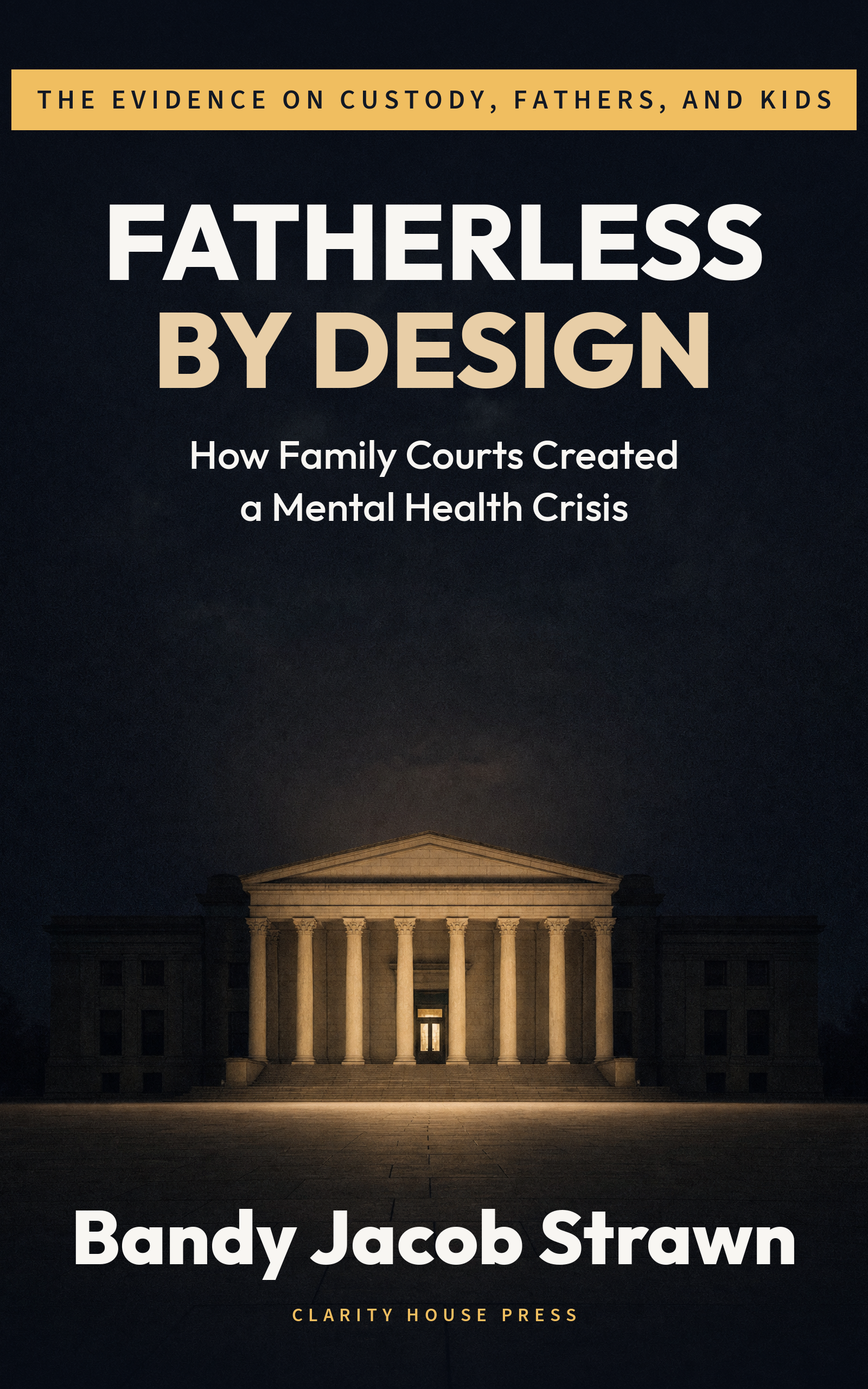


Fathers' Rights
Jeffery Leving & Kenneth Dachman
Landmark guide by renowned men's rights attorney covering every aspect of custody for fathers.
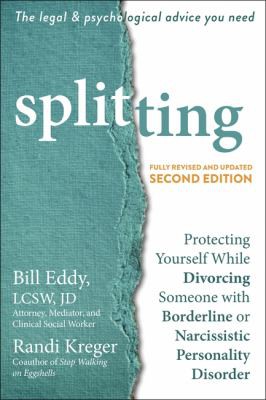
Splitting: Protecting Yourself While Divorcing Someone with Borderline or Narcissistic Personality Disorder
Bill Eddy & Randi Kreger
Updated edition covering domestic violence, alienation, false allegations in high-conflict divorce.
As an Amazon Associate, Clarity House Press earns from qualifying purchases. Your price is never affected.
Found this helpful?
Share it with someone who might need it.
About the Author

Clarity House Press
Editorial Team
The editorial team at Clarity House Press curates and publishes evidence-based content on narcissistic abuse recovery, high-conflict divorce, and healing. Our content is informed by research, survivor experiences, and established trauma-informed approaches.
View all posts by Clarity House Press →Published by Clarity House Press Editorial Team