Please read our important disclaimers before using this content
If you've experienced prolonged narcissistic abuse, emotional manipulation, or high-conflict relationships—and you find that standard PTSD treatment approaches don't fully address your symptoms—you may be dealing with Complex Post-Traumatic Stress Disorder (C-PTSD). Understanding what C-PTSD is—and what distinguishes it from PTSD—is the foundation for finding effective treatment, including learning how your nervous system's window of tolerance narrows under chronic trauma.
While traditional PTSD and C-PTSD share some features, they're fundamentally different conditions requiring different therapeutic approaches. Understanding the distinction isn't just academic—it's essential for effective healing.
PTSD: Single-Event Trauma
Post-Traumatic Stress Disorder (PTSD) typically develops after exposure to a single traumatic event or a series of similar events: a car accident, natural disaster, combat experience, or assault.1
Core PTSD symptoms (DSM-5-TR criteria):
- Intrusion symptoms: Flashbacks, nightmares, intrusive memories of the event
- Avoidance: Avoiding reminders of the trauma (people, places, activities, thoughts)
- Negative alterations in mood and cognition: Persistent negative beliefs, emotional numbing, inability to experience positive emotions
- Alterations in arousal and reactivity: Hypervigilance, exaggerated startle response, irritability, sleep disturbances, reckless or self-destructive behavior
PTSD is characterized by fear-based symptoms tied to a specific traumatic event or series of similar events. The DSM-5-TR (2022) refined these criteria to better capture the full range of trauma responses.
Complex PTSD: Prolonged Relational Trauma
Complex PTSD develops from prolonged, repeated trauma—typically in situations where:
- Escape feels impossible or is actually prevented
- The trauma occurs within a relationship (romantic partner, parent, caregiver)
- The trauma involves betrayal by someone who should have been trustworthy
- The victim was under the control of the perpetrator
Common scenarios that produce C-PTSD:
- Prolonged emotional, physical, or sexual abuse in childhood2
- Domestic violence relationships (particularly with narcissistic or sociopathic partners)3
- Being held in captivity
- Prolonged exposure to combat situations
- Chronic neglect or emotional abandonment in formative years2
According to the ICD-11 diagnostic criteria (World Health Organization, 2019; implemented 2022), C-PTSD includes all core PTSD symptoms (re-experiencing, avoidance, and persistent sense of heightened threat) plus three additional disturbances in self-organization:4
1. Affective Dysregulation5
- Difficulty regulating emotions (explosive anger, chronic numbness, rapid mood swings)
- Heightened emotional reactivity
- Emotional numbing or difficulty accessing emotions
2. Negative Self-Concept6
- Persistent beliefs about oneself as diminished, defeated, or worthless
- Deep feelings of shame, guilt, or failure related to the trauma7
- Confusion about who you are apart from the abusive relationship
- Defining yourself through the lens of trauma or abuse
3. Disturbances in Relationships3
- Difficulty trusting others
- Feeling distant or cut off from others
- Difficulty maintaining close relationships
- Pattern of avoiding, passively engaging in, or being preoccupied with relationships
Note on Somatic Symptoms: Chronic pain, gastrointestinal issues, headaches, and autoimmune conditions are extremely common in C-PTSD survivors—research indicates that prolonged exposure to trauma hormones (cortisol, adrenaline) can create lasting changes in the body's stress response systems.8 However, these physical symptoms are not part of the formal diagnostic criteria for C-PTSD; they are associated features that clinicians frequently observe in complex trauma survivors. If you're experiencing unexplained physical symptoms alongside emotional and relational difficulties, this pattern is consistent with C-PTSD, not "just in your head."
Why the Distinction Matters for Treatment
Standard PTSD treatment—particularly exposure-based therapies like Prolonged Exposure (PE) or Cognitive Processing Therapy (CPT)—focuses on processing the traumatic memory and reducing fear responses.
These approaches can be insufficient—and in some cases counterproductive—for C-PTSD because:
1. No single memory to process C-PTSD doesn't stem from one event. It's the cumulative impact of thousands of interactions, betrayals, and invalidations. There's no single "trauma narrative" to work through.
2. The problem isn't just fear The core wounds in C-PTSD are shame, worthlessness, and identity disruption. Exposure therapy that works well for fear doesn't address these deeper structural issues.9
3. Safety and stabilization must come first Jumping into trauma processing before establishing emotional regulation skills, building support systems, and creating actual safety (including leaving abusive relationships if still in them) can lead to overwhelm, increased symptom severity, and therapeutic rupture. This is why phase-based treatment is essential for C-PTSD.10 The neuroscience of trauma and recovery explains why these stabilization stages aren't optional—they're how the brain rewires.
Effective C-PTSD Treatment Approaches
1. Phase-Based Trauma Treatment
Rather than immediately processing trauma memories, effective C-PTSD treatment follows phases:
-
Phase 1: Safety and Stabilization (3-12+ months)
- Establish physical safety (leave abusive relationship if still in it)
- Develop emotional regulation skills
- Build support system
- Address immediate crises
- Learn grounding and self-soothing techniques
-
Phase 2: Processing and Mourning (1-3+ years)
- Process traumatic memories (when stabilized)
- Grieve losses (lost time, lost self, lost relationships)
- Challenge distorted beliefs about self
- Develop coherent trauma narrative
-
Phase 3: Reconnection and Integration (6 months-2+ years)
- Rebuild identity apart from trauma
- Develop healthy relationships
- Reconnect with meaningful activities and goals
- Integrate trauma as part of your story, not the entirety of your identity
2. Therapeutic Modalities Effective for C-PTSD
Internal Family Systems (IFS) Works with different "parts" of self that developed in response to trauma. Particularly helpful for the fragmentation common in C-PTSD.
EMDR (Eye Movement Desensitization and Reprocessing) Can be adapted for complex trauma by targeting multiple memories, developing internal resources before processing, and using the "flash technique" for overwhelming material. Particularly effective for somatic symptoms and fragmented memories.11
Dialectical Behavior Therapy (DBT) Originally developed for borderline personality disorder, DBT's emotion regulation and distress tolerance skills are invaluable for C-PTSD's emotional dysregulation.12
Sensorimotor Psychotherapy Body-centered approach that addresses the somatic symptoms and nervous system dysregulation central to C-PTSD.
Schema Therapy Addresses core beliefs and maladaptive coping patterns developed in response to unmet childhood needs—common in C-PTSD stemming from childhood trauma.
Why You Might Not Have Been Diagnosed
Complex PTSD is relatively new to diagnostic classification. It was included in the ICD-11 (World Health Organization's diagnostic manual, adopted 2019, implemented 2022) but is not yet included in the DSM-5-TR (the American diagnostic manual most U.S. clinicians use). This means diagnostic practices vary widely depending on your provider's training and theoretical orientation.
Some clinicians who aren't yet familiar with C-PTSD may diagnose these conditions instead:
- Borderline Personality Disorder
- Bipolar Disorder
- Major Depressive Disorder
- Generalized Anxiety Disorder
- "Treatment-resistant" depression or anxiety
Important note: These conditions can be comorbid with (exist alongside) C-PTSD, or in some cases represent overlapping symptom presentations rather than distinct diagnoses. The key is finding a provider who understands complex trauma and can differentiate between personality pathology and trauma-based patterns.
If you've tried multiple medications with limited success, or if standard therapy approaches haven't provided relief, ask your therapist about Complex PTSD assessment. Many people find that reframing their symptoms as trauma responses rather than personality disorders is both accurate and profoundly validating.
Self-Assessment: Do You Have C-PTSD Indicators?
While only a qualified mental health professional can diagnose C-PTSD, these questions may indicate whether to seek specialized assessment:
Trauma history:
- Were you in a prolonged abusive or highly controlling relationship?
- Did you experience chronic emotional or physical abuse in childhood?
- Was there prolonged neglect or emotional abandonment?
Current symptoms:
- Do you have difficulty controlling your emotions (explosive anger, sudden crying, chronic numbness)?
- Do you feel fundamentally worthless or damaged?
- Do you struggle to trust others or form close relationships?
- Do you have chronic unexplained physical symptoms?
- Do you feel like you lost yourself in the relationship and don't know who you are?
- Do you have difficulty recognizing or expressing your own needs?
If you answered yes to multiple questions in both categories, consider seeking evaluation from a trauma-informed therapist familiar with Complex PTSD.
The Path Forward
Understanding that you have Complex PTSD rather than standard PTSD isn't discouraging news—it's clarifying. It explains why:
- Your symptoms feel more pervasive than just "flashbacks"
- Quick fixes and symptom management haven't resolved your distress
- Your struggle feels like it's about who you are, not just what happened to you
C-PTSD is highly treatable, but it requires the right approach. Effective treatment includes:
- A trauma-informed therapist specifically trained in complex trauma (not just general PTSD training)
- Patience with a longer healing timeline (years, not months)
- Phase-based treatment that prioritizes safety before processing
- Addressing relational patterns and identity, not just symptom reduction
- Often, a combination of therapeutic modalities tailored to your specific trauma history
Note on overlapping diagnoses: Some people experience both PTSD (from discrete traumatic events) and C-PTSD (from prolonged relational trauma). If you've experienced multiple types of trauma—for example, a car accident that caused PTSD and childhood abuse that caused C-PTSD—you may benefit from integrated treatment that addresses both.
You're not broken beyond repair. You're injured in specific ways that require specific treatment. With the right support, the pervasive symptoms that seem like permanent features of who you are can become temporary scars from what you survived. Finding a therapist who actually understands narcissistic abuse makes a profound difference—the wrong therapist can inadvertently reinforce the very distortions C-PTSD created.
Resources
Finding Trauma-Specialized Therapists:
- International Society for Traumatic Stress Studies - Clinical resources and trauma-specialized provider directory
- IFS Institute Therapist Directory - Find certified Internal Family Systems therapists
- EMDR International Association - Directory of certified EMDR therapists specializing in complex trauma
- Psychology Today - Trauma Therapists - Filter by "Trauma and PTSD" and "Complex Trauma"
Books and Educational Resources:
- The Complex PTSD Workbook by Arielle Schwartz - Evidence-based skills for recovery
- Complex PTSD: From Surviving to Thriving by Pete Walker - Comprehensive self-help guide
- The Body Keeps the Score by Bessel van der Kolk - Understanding trauma's impact on the body
- Trauma and Recovery by Judith Herman - Foundational work on complex trauma
Crisis Support and Resources:
- National Domestic Violence Hotline - 1-800-799-7233 (relational trauma support)
- 988 Suicide & Crisis Lifeline - Call or text 988 for immediate mental health crisis support
- Crisis Text Line - Text HOME to 741741 (free 24/7 crisis counseling)
- SAMHSA Helpline - 1-800-662-4357 (treatment referrals)
Note: When searching for a therapist, specifically ask: "Do you have training in complex trauma and phase-based treatment for C-PTSD?" Many therapists are trained in PTSD but not the specialized approaches C-PTSD requires.
References
- American Psychiatric Association. (2022). Diagnostic and Statistical Manual of Mental Disorders (5th ed., text rev.). https://doi.org/10.1176/appi.books.9780890425787 - DSM-5-TR criteria for PTSD including intrusion, avoidance, negative alterations in cognition and mood, and alterations in arousal and reactivity. ↩
- Cloitre, M., Shevlin, M., Brewin, C. R., Bisson, J. I., Roberts, N. P., Maercker, A., Karatzias, T., & Hyland, P. (2018). The International Trauma Questionnaire: Development of a self-report measure of ICD-11 PTSD and complex PTSD. Acta Psychiatrica Scandinavica, 138(6), 536-546. https://pubmed.ncbi.nlm.nih.gov/30178492/ - Validation of ICD-11 Complex PTSD diagnostic criteria including disturbances in self-organization. ↩
- Klaassens, E. R., Giltay, E. J., Cuijpers, P., van Veen, T., & Zitman, F. G. (2012). Childhood trauma, the HPA axis and psychiatric illnesses. European Journal of Psychotraumatology, 3(1), 18585. https://pmc.ncbi.nlm.nih.gov/articles/PMC9120425/ - Research demonstrating how prolonged childhood trauma dysregulates the hypothalamic-pituitary-adrenal (HPA) axis and cortisol stress response systems. ↩
- Sar, V. (2023). The memory and identity theory of ICD-11 complex posttraumatic stress disorder. European Journal of Psychotraumatology, 14(2), 2197298. https://pubmed.ncbi.nlm.nih.gov/37338431/ - Theoretical framework explaining how C-PTSD involves identity disruption and negative self-concept beyond fear-based symptoms. ↩
- De Jongh, A., Resick, P. A., Zoellner, L. A., van Minnen, A., Lee, C. W., Monson, C. M., ... & Bicanic, I. A. (2016). Critical analysis of the current treatment guidelines for complex PTSD in adults. Depression and Anxiety, 33(5), 359-369. https://pmc.ncbi.nlm.nih.gov/articles/PMC8612023/ - Evidence supporting phase-based treatment approaches for Complex PTSD emphasizing stabilization before trauma processing. ↩
- Valiente-Gomez, A., Moreno-Alcazar, A., Treen, D., Cedron, C., Colom, F., Perez, V., & Amann, B. L. (2023). Efficacy of EMDR in Post-Traumatic Stress Disorder: A Systematic Review and Meta-analysis of Randomized Clinical Trials. Psicothema, 35(4), 416-427. https://pubmed.ncbi.nlm.nih.gov/37882423/ - Meta-analysis demonstrating EMDR efficacy for PTSD and trauma-related symptoms. ↩
- Bohus, M., Kleindienst, N., Hahn, C., Muller-Engelmann, M., Ludascher, P., Steil, R., ... & Priebe, K. (2020). Dialectical Behavior Therapy for Posttraumatic Stress Disorder (DBT-PTSD) Compared With Cognitive Processing Therapy (CPT) in Complex Presentations of PTSD in Women Survivors of Childhood Abuse: A Randomized Clinical Trial. JAMA Psychiatry, 77(12), 1235-1245. https://pubmed.ncbi.nlm.nih.gov/32697288/ - RCT demonstrating DBT-PTSD efficacy for complex trauma presentations with emotion dysregulation. ↩
- Karatzias, T., Shevlin, M., Fyvie, C., Fearon, P., McElroy, E., Dey, S., ... & Cloitre, M. (2020). Evidence of distinct profiles of Posttraumatic Stress Disorder (PTSD) and Complex Posttraumatic Stress Disorder (CPTSD): The PTSD in UK REACH retrospective study. Journal of Affective Disorders, 282, 581-589. https://pubmed.ncbi.nlm.nih.gov/32738562/ - Longitudinal evidence differentiating childhood relational trauma patterns from single-incident traumas in development of C-PTSD. ↩
- Freyd, J. J., & Birrell, P. L. (2013). Betrayal trauma: Relational processes and recovery. Journal of Aggression, Maltreatment and Trauma, 22(5), 488-500. https://pubmed.ncbi.nlm.nih.gov/32533575/ - Research on betrayal trauma in intimate relationships and its distinct neurobiological and psychological effects compared to non-relational trauma. ↩
- Tull, M. T., & Roemer, L. (2007). Emotion regulation difficulties associated with the anxiety and mood disorders. Journal of Anxiety Disorders, 21(3), 410-424. https://pmc.ncbi.nlm.nih.gov/articles/PMC12154506/ - Research on affect dysregulation in complex trauma and its neurobiological basis in HPA axis and amygdala hyperactivation. ↩
- Spinhoven, P., Penninx, B. W., Krempeniou, A., van Hemert, A. M., & Elzinga, B. M. (2015). Trait rumination predicts onset of post-traumatic stress disorder following trauma exposure. Journal of Anxiety Disorders, 31, 1-6. https://pmc.ncbi.nlm.nih.gov/articles/PMC10629420/ - Evidence of negative self-concept and persistent self-critical thinking in complex PTSD symptom maintenance. ↩
- Tangney, J. P., Wagner, P., & Gramzow, R. (1992). Proneness to shame, proneness to guilt, and psychopathology. Journal of Abnormal Psychology, 101(3), 469-478. https://pmc.ncbi.nlm.nih.gov/articles/PMC7500058/ - Meta-analytic evidence linking shame to PTSD symptom severity and identifying shame as a central affective component of trauma responses. ↩
Recommended Reading
From Clarity House Press — plus trusted books for deeper understanding



My Grandmother's Hands
Resmaa Menakem, MSW, LICSW
A body-centered approach to healing trauma that lives in the nervous system, with practices for settling and self-regulation.
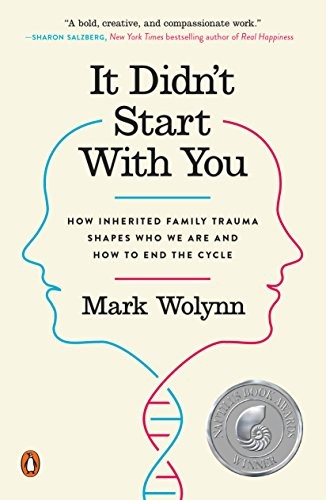
It Didn't Start with You
Mark Wolynn
Groundbreaking exploration of inherited family trauma and how to end intergenerational cycles.
As an Amazon Associate, Clarity House Press earns from qualifying purchases. Your price is never affected.
Found this helpful?
Share it with someone who might need it.
About the Author

Clarity House Press
Editorial Team
The editorial team at Clarity House Press curates and publishes evidence-based content on narcissistic abuse recovery, high-conflict divorce, and healing. Our content is informed by research, survivor experiences, and established trauma-informed approaches.
View all posts by Clarity House Press →Published by Clarity House Press Editorial Team