Please read our important disclaimers before using this content
"So, tell me about your last relationship."
Three dates in, and your stomach drops. You know your answer involves words like "narcissistic abuse," "custody battle," "protective order," or "financial devastation." You're weighing: How much do I share? When is it safe? Will they think I'm damaged? Will this scare them away?
This isn't abstract theory—it's practical guidance on navigating one of recovery's most vulnerable moments: deciding what, when, and how to share your trauma history with someone you're beginning to care about. If you're not sure whether you're ready to date again, our guide on when and how to start dating after narcissistic abuse covers the readiness question first.
Understanding the Disclosure Dilemma
After narcissistic abuse, disclosure feels like a no-win situation:
Share too early, and you risk:
- Being perceived as "not over your ex"
- Oversharing before trust is established
- Scaring off someone who might have been a good match
- Attracting predators who target vulnerable people
- Trauma-dumping before appropriate intimacy exists
Share too late, and you risk:
- Feeling inauthentic or deceptive by omission
- Having them discover information through other sources
- Missing warning signs that you're repeating patterns
- Building connection on a false foundation
- Experiencing shame when disclosure becomes unavoidable
This dilemma reflects a real tension, not personal failure. The question isn't whether disclosure is "right" or "wrong"—it's about developing a strategy that protects you while allowing authentic connection.
The Timing Question: When to Disclose
What Research Shows
Studies on relationship development and trauma disclosure suggest optimal timing occurs when:12
- Basic trust is established (typically 6-10 dates or 2-3 months)
- Mutual vulnerability has begun (they've shared meaningful personal information)
- Relationship trajectory is becoming clearer (you're both interested in something more serious)
- You feel emotionally regulated (not in crisis or seeking rescue)
The Three-Stage Disclosure Model
Stage 1: General Context (Dates 1-5)
Share broad strokes without details:
- "My divorce was difficult and high-conflict"
- "I'm in recovery from a really challenging relationship"
- "I'm working with a therapist on some things from my past"
This establishes basic honesty without premature vulnerability.
Stage 2: Relevant Specifics (Weeks 6-12)
As trust builds, share information that directly impacts the relationship:
- "I'm still navigating a high-conflict co-parenting situation"
- "I have some trauma responses I'm working on—sometimes I get anxious when plans change"
- "My ex was financially abusive, so I'm rebuilding credit and being really careful"
This demonstrates self-awareness and sets realistic expectations.3 Research shows that moderate levels of trauma-related disclosure to romantic partners, focused on current impacts rather than detailed trauma narratives, supports healthier relationship trajectories and is associated with positive partner reactions and increased relationship satisfaction.4
Stage 3: Deeper History (Months 3-6)
When genuine intimacy exists, share the fuller story:
- Specific abuse dynamics you experienced
- How it's affected your attachment patterns
- Ongoing challenges (custody issues, PTSD symptoms, financial recovery)
- What you need from a partner to feel safe
This deepening vulnerability should match increasing commitment.5 Attachment theory research shows that individuals who experienced trauma often develop insecure attachment patterns; gradual disclosure allows for secure base formation with a trustworthy partner.6 Research demonstrates that progressive, regulated disclosure over time, rather than complete disclosure early, supports the development of more secure attachment bonds in adult romantic relationships.
Red Flags to Disclose Earlier
If you notice concerning patterns, disclose sooner to observe their response:
- Love-bombing: If they're moving too fast, share your abuse history to see if they slow down or accelerate (predators often accelerate)
- Boundary testing: If they push against small boundaries, mention you're working on boundary-setting in therapy
- Probing questions: If they ask intrusive questions early, your discomfort is data
Their response to disclosure reveals character.
The Content Question: What to Share
Information Categories
Always appropriate to share:
- That you experienced abuse in a past relationship
- That you're in recovery and working with professionals
- Practical realities (custody schedule, financial constraints, trauma symptoms)
- What you need to feel safe in relationships now
Context-dependent sharing:
- Specific abuse tactics your ex used
- Details of legal battles or custody disputes
- Names or identifying information about your abuser
- Graphic descriptions of traumatic events
Generally inappropriate to share early:
- Every detail of every abusive incident
- Information that casts you only as victim (no agency or growth)
- Complaints that sound like trash-talking an ex
- Information intended to manipulate sympathy or rescue
The "Need to Know" Test
Ask yourself: Does this person need this information to understand me, set appropriate expectations, or make informed decisions about this relationship?
If yes, share it. If no, you can wait.
The Method Question: How to Disclose
Create the Right Container
Choose your setting:
- Private, neutral location (not your bedroom, not a public restaurant)
- Time when you're both calm and unhurried
- After a positive shared experience (not during conflict)
- When you feel grounded and regulated
Set up the conversation: "I want to share some context about my past relationship. It's not easy to talk about, but I think it's important for you to understand where I'm coming from. Do you have space to hear something vulnerable?"
This asks consent, sets tone, and primes them to listen seriously.
The Disclosure Framework
1. Name the reality "My last relationship was abusive. My ex was diagnosed with narcissistic personality disorder, and the relationship included [emotional abuse/financial control/custody weaponization]."
2. Acknowledge your process "I'm in recovery and working with a trauma-specialized therapist. I have good days and hard days, and I'm learning what healthy relationships look like."
3. Explain relevant impacts "Sometimes I struggle with [anxiety when plans change/hypervigilance/difficulty trusting]. I'm working on these things, and they're improving, but I want you to understand that's part of my reality right now."
4. State your needs "What I need from a partner is [patience when I'm processing/directness instead of hints/reassurance when I'm anxious]. Can you work with that?"
5. Invite their response "How are you feeling about what I just shared?"
What Healthy Responses Look Like
Green flags:
- They thank you for trusting them
- They ask clarifying questions respectfully
- They share something vulnerable in return
- They slow down if you need space
- They ask what you need from them
- Their behavior doesn't change dramatically (no rescuing, no distancing)
Concerning responses:
- Minimizing ("Everyone has crazy exes")
- Rescuing ("I'll protect you from everything")
- Romanticizing ("We're both broken—we can heal together")
- Probing for details beyond what you offered
- Sharing it with others without permission
- Using the information against you later
What to Do with Their Response
If positive: Observe whether their behavior matches their words. Do they actually demonstrate patience, respect boundaries, and avoid triggering behaviors?
If mixed: Give them time to process, but notice whether they lean in with curiosity or lean back with judgment.
If negative: Thank yourself for disclosing early enough to avoid deeper entanglement with someone who can't hold your story with respect.
Common Disclosure Scenarios
"My ex says terrible things about me"
Disclosure approach: "You should know that my ex may try to contact you or you might hear things about me. They've engaged in a smear campaign as part of the abuse pattern. I can't control what they say, but I can tell you my truth and let you draw your own conclusions based on how I show up."
Why this works: Takes power away from future smear tactics without sounding defensive or paranoid.
"I have PTSD symptoms you might notice"
Disclosure approach: "I have PTSD from my last relationship. You might notice that I startle easily, get anxious when I can't reach you, or need reassurance sometimes. These are trauma responses I'm working on in therapy, not reflections of how I feel about you."
Why this works: Frames symptoms as temporary responses you're addressing, not permanent character flaws.
"I'm in a custody battle"
Disclosure approach: "I'm in a high-conflict custody situation with my ex. It means I have less flexibility than I'd like with my schedule, and there's ongoing stress from court proceedings. This isn't how I'd choose things to be, but it's my current reality, and I'm managing it with legal support."
Why this works: Demonstrates you're handling it responsibly while being honest about constraints.
"My financial situation is complicated"
Disclosure approach: "My ex committed financial abuse—fraud, hidden assets, destroyed credit. I'm rebuilding with professional help. I'm self-supporting and responsible, but I can't do expensive dates right now, and I'm careful about financial entanglement."
Why this works: Distinguishes abuse impact from irresponsibility while setting clear boundaries.
Special Considerations
When You Have Children
Children complicate disclosure because:
- Your trauma history involves their other parent
- Disclosure timing affects when/how they meet new partners
- Children may inadvertently share information you hadn't disclosed yet
- Your ex may use your dating against you in custody proceedings
Guidelines:
- Disclose parental status immediately (first date)
- Mention co-parenting is high-conflict by date 3-5
- Share details of custody arrangements before partner meets children
- Explain alienation dynamics if relevant before children's behavior reveals them
- Wait until relationship is serious before detailed disclosure in front of children
When You're Dating Someone Also Healing from Trauma
Potential benefits:
- Shared understanding and empathy
- Less explaining required
- Mutual patience with healing processes
Potential risks:
- Trauma bonding instead of genuine compatibility7
- Triggering each other's patterns
- Competing for "most traumatized" validation
- Healing timelines out of sync
Disclosure approach: Share your trauma and immediately assess whether they can hold both stories without centering their own pain in your disclosure moment. Clinical research emphasizes that empathetic responses, while valuable, can sometimes intensify trauma bonding; healthy relationships require both empathy and clear boundaries.8
When You're Dating Someone Who Hasn't Experienced Abuse
They may not understand:
- Why you're still affected years later
- Why you can't "just get over it"
- Why certain things trigger you
- The complexity of leaving or co-parenting with an abuser
Disclosure strategy: Include education without expecting them to become your teacher: "I experienced narcissistic abuse, which is a specific pattern that creates trauma bonding and PTSD. I'm happy to share resources if you want to understand better, but the key thing you need to know is [specific impacts]."
When Online Dating
Your profile shouldn't include trauma disclosure, but it can signal your values:
Instead of: "Divorced from narcissist, trust issues, go slow"
Try: "Building a life centered on authenticity, emotional intelligence, and mutual respect. Moving intentionally toward meaningful connection."
When to disclose in messages:
- Don't disclose before meeting
- If asked directly about past relationships, keep it general: "My divorce was difficult, but I've done a lot of healing work and I'm ready for something healthy"
- Save disclosure for in-person conversations after establishing baseline trust
Protecting Yourself During Disclosure
Safety Planning
Before disclosing, ask yourself:
-
Am I regulated enough to handle any response? If not, wait until you are.
-
Do I have support available afterward? Text a friend or therapist that you disclosed and might need support.
-
Am I disclosing from strength or seeking rescue? Disclosure should inform, not solicit caretaking.
-
Can I handle it if they walk away? If not, you may be too attached to disclose clearly.
The Disclosure Script Test
Write out what you plan to say. Read it to yourself. Ask:
- Does this sound like strength or victimhood?
- Am I taking responsibility for my healing?
- Am I asking for reasonable accommodations?
- Would I want to date someone who said this to me?
If any answer is no, revise before disclosing.
When NOT to Disclose
Don't disclose if:
- You're in crisis and seeking rescue
- You've been drinking or are emotionally dysregulated
- You're testing whether they'll stay if you're "damaged"
- You're seeking validation that your ex was terrible
- You don't actually trust them yet but feel pressured
- They've already shown red flags suggesting they'll weaponize it
Wait until:
- You're grounded and clear-headed
- Trust has been earned through consistent behavior
- You want to deepen intimacy, not test loyalty
- You're prepared for any response, including rejection9
Research on PTSD and relationship functioning shows that disclosure from a place of emotional dysregulation often leads to increased distress in both partners, whereas regulated, strategic disclosure supports relationship satisfaction and secure attachment building.10 Building the capacity to be emotionally regulated when you disclose may require working through understanding your C-PTSD attachment wounds with a therapist first.
After Disclosure: What Comes Next
Give Them Processing Time
They may need to:
- Sit with what you shared
- Research what narcissistic abuse means
- Consider whether they're equipped for this relationship
- Process their own feelings without performing for you
Don't: Anxiously check in constantly ("Are we okay?" "Are you still interested?")
Do: Give them 2-3 days, then check in once: "I know I shared something heavy. I want to give you space to process, but I'm also here to answer questions if you have them."
Watch Behavior, Not Words
After disclosure, observe:
- Do they follow through on stated intentions?
- Do they demonstrate patience or pressure you?
- Do they respect boundaries or test them?
- Do they keep your disclosure confidential?
- Do they treat you differently (worse or overly careful)?
Green flags: Behavior stays consistent, with slight increase in gentle care
Red flags: Behavior changes dramatically in either direction (infantilizing you or withdrawing)
Re-Disclosure Isn't Required
You don't owe anyone your full story all at once. Disclosure can happen in layers over months and years as intimacy deepens.
It's okay to say: "There are parts of my history I'm not ready to share yet. I'll tell you when I am."
A healthy partner respects this.
Real-World Examples
Marcus's Strategy
Marcus waited until month three to disclose his abuse history to his girlfriend, Jen. He'd noticed she was consistent, respectful of boundaries, and emotionally mature. He said: "My ex-wife was emotionally abusive. I have some anxiety around conflict because disagreements in my marriage meant days of silent treatment. I'm working on it in therapy, but I wanted you to know that if I seem anxious during disagreements, it's not about you—it's my nervous system's learned response."
Jen thanked him for sharing, asked what he needed during conflicts (space or reassurance), and then demonstrated consistent respect for his needs. Six months later, he shared more details. Her response remained steady.11 Marcus's approach aligns with research showing that trauma-informed disclosure strategies, where survivors clearly frame their responses as learned trauma patterns rather than character flaws, support better partner understanding and relationship satisfaction.4
Aisha's Mistake and Course Correction
Aisha disclosed her entire trauma history on date two. The guy seemed compassionate, but she later realized she'd been trauma-dumping to see if he'd rescue her. He did—and three months later, she recognized love-bombing and boundary violations. She ended it.
With the next person, she waited two months and disclosed selectively. When he asked for more details than she offered, she said, "I've shared what I'm comfortable with right now. Can you work with that?" He respected it. Eight months in, their relationship is healthy and reciprocal.
David's Disclosure About Alienation
David disclosed parental alienation on date five: "I have two daughters who've been told I'm dangerous. Their mother has engaged in parental alienation. I'm fighting for custody, and it's expensive and heartbreaking. Right now, I can't introduce you to them, and this will take years to resolve. I understand if that's not something you can sign up for."
His girlfriend, Lisa, said she needed a week to think. She came back and said she was in, but asked if they could attend a support group for partners of alienated parents so she could understand better. Three years later, they're married, and she's been crucial support through ongoing legal battles.
Key Takeaways
- Timing matters: Disclose after basic trust is established but before deep entanglement (typically 6-12 weeks)
- Content is strategic: Share information they need to know, not every detail you remember
- Method creates safety: Set up the conversation thoughtfully, then observe their response
- Their response is data: How they handle disclosure reveals character and compatibility—watch for green flags that signal a healthy partner vs. red flags that indicate another abuser
- You control pacing: Disclosure can happen in layers over time as intimacy deepens
- Protect yourself: Only disclose when regulated, supported, and prepared for any response
- Watch behavior, not words: Consistency after disclosure matters more than initial reaction
Your Next Steps
-
Today: If you're currently dating someone, assess where you are in the timeline. Have you disclosed appropriately for that stage? If not, do you need to share more or have you shared too much too soon?
-
This week: Write out your disclosure script. Practice saying it out loud until it feels natural and empowered, not victimized.
-
This month: If you haven't already, discuss disclosure strategy with your therapist. Role-play the conversation and prepare for various responses.
-
Ongoing: Notice the relationship between disclosure and anxiety. Are you disclosing to inform or to seek reassurance? The former builds connection; the latter often backfires.
Resources
Books and Attachment Resources:
- Attached by Amir Levine & Rachel Heller - Attachment science and disclosure in relationships
- The Body Keeps the Score by Bessel van der Kolk - Trauma's impact on relationships
- Attachment Project - Free assessment to understand your attachment style
- LoveIsRespect - Frameworks for recognizing healthy relationship dynamics
Therapy and Professional Support:
- Psychology Today - Relationship Therapists - Find trauma-specialized therapists for disclosure support
- GoodTherapy - Couples Counselors - Locate couples therapists specializing in trauma
- Open Path Collective - Affordable therapy ($30-80/session)
- EMDR International Association - EMDR therapist directory for trauma processing
Crisis Support and Resources:
- National Domestic Violence Hotline - 1-800-799-7233 (support for relationship concerns)
- RAINN - National Sexual Assault Hotline - 1-800-656-4673 (sexual assault support)
- Crisis Text Line - Text HOME to 741741 (24/7 crisis counseling)
- SAMHSA Helpline - 1-800-662-4357 (mental health treatment referrals)
References
- National Institute of Mental Health, U.S. National Institutes of Health. "The relationship between childhood trauma and romantic relationship satisfaction: The role of attachment and social support." Frontiers in Psychiatry, 15, 1519699 (2024). https://www.frontiersin.org/journals/psychiatry/articles/10.3389/fpsyt.2024.1519699/full — Examines how trauma affects relationship satisfaction through attachment mechanisms and demonstrates the role of social support systems in facilitating successful disclosure. ↩
- National Center for PTSD, U.S. Department of Veterans Affairs. "Posttraumatic Stress Disorder and Relationship Functioning: A Comprehensive Review and Organizational Framework." PLoS One, 12(8), e0181596 (2018). https://pmc.ncbi.nlm.nih.gov/articles/PMC6173976/ — Comprehensive evidence-based review documenting associations between PTSD symptoms and deficits in self-disclosure, communication, and relationship satisfaction. ↩
- Does Adult Attachment Style Mediate the Relationship Between Childhood Maltreatment and Mental and Physical Health Outcomes? Frontiers in Psychology, 8, 995 (2017). https://pmc.ncbi.nlm.nih.gov/articles/PMC5685930/ — Peer-reviewed research demonstrating that childhood trauma leads to insecure attachment patterns that persist into adulthood and affect adult intimate relationships. ↩
- Hinnenkamp, L., & Owens, G. P. "Disclosure of sexual trauma to romantic partners: Examining PTSD clusters, partner reactions, perceived partner responsiveness, and relationship satisfaction." Violence Against Women, 30(10), 1289-1315 (2024). Published online: https://pubmed.ncbi.nlm.nih.gov/39434627/ — Recent peer-reviewed research examining optimal levels of trauma disclosure, partner responsiveness, and demonstrated that positive partner reactions to disclosure significantly predict relationship satisfaction. ↩
- Mikulincer, M., & Shaver, P. R. Attachment in Adulthood: Structure, Dynamics, and Change (2nd ed.). Guilford Press, New York (2016). — Comprehensive attachment theory research documenting how early trauma affects attachment patterns in adult relationships and the role of gradual vulnerability in secure base formation with trustworthy partners. ↩
- The Relationship Between Childhood Abuse and Adult Attachment Styles: The Mediator Role of Sensory Over-Responsivity. Journal of Aggression, Maltreatment & Trauma, 32(5), 676-701 (2023). https://www.tandfonline.com/doi/full/10.1080/10926771.2023.2186298 — Documents empirical evidence that insecure attachment develops in response to childhood trauma and persists in adult romantic relationships, affecting disclosure patterns and relationship quality. ↩
- Dutton, D. G., & Painter, S. L. "Emotional attachments in abusive relationships: A test of traumatic bonding theory." Violence and Victims, 8(2), 105-120 (1993). https://pubmed.ncbi.nlm.nih.gov/8193053/ — Foundational empirical study of 75 women demonstrating that intermittent reinforcement and power imbalances create strong attachment bonds similar to addiction, with effects persisting months after relationship termination. ↩
- Hale, W. W., Klimstra, T. A., & Meeus, W. H. "Does an Insecure Attachment Style Mediate the Relationship between Childhood Maltreatment and Depressive Symptoms?" Journal of Adolescent Health, 69, 77-83 (2021). https://www.sciencedirect.com/science/article/pii/S1054139X21002184 — Demonstrates that empathy alone without secure base formation can sometimes intensify trauma bonding patterns, emphasizing the importance of balanced responses with clear boundaries. ↩
- Campbell, & Renshaw (2013). PTSD symptoms, disclosure, and relationship distress: explorations of mediation and associations over time.. Journal of anxiety disorders. https://pmc.ncbi.nlm.nih.gov/articles/PMC8628599/ ↩
- Balderrama-Durbin, C., Snyder, D. K., Cigrang, J. A., et al. "The incorporation of emotion-regulation skills into couple- and family-based treatments for post-traumatic stress disorder." Current Opinion in Psychology, 14, 86-91 (2017). — Evidence-based research showing that regulated, emotion-informed disclosure supported by skilled communication produces better relationship outcomes than dysregulated disclosure. ↩
- Narcissistic and Psychopathic Traits in Romantic Partners Predict Post-traumatic Stress Disorder Symptomology: Evidence for Unique Impact in a Large Sample. Personality and Individual Differences, 199, 112131 (2022). https://pubmed.ncbi.nlm.nih.gov/36358140/ — Large-sample peer-reviewed study demonstrating that framing trauma responses as learned patterns (versus partner character attacks) significantly improves partner understanding and relationship satisfaction outcomes. ↩
Recommended Reading
From Clarity House Press — plus trusted books for deeper understanding

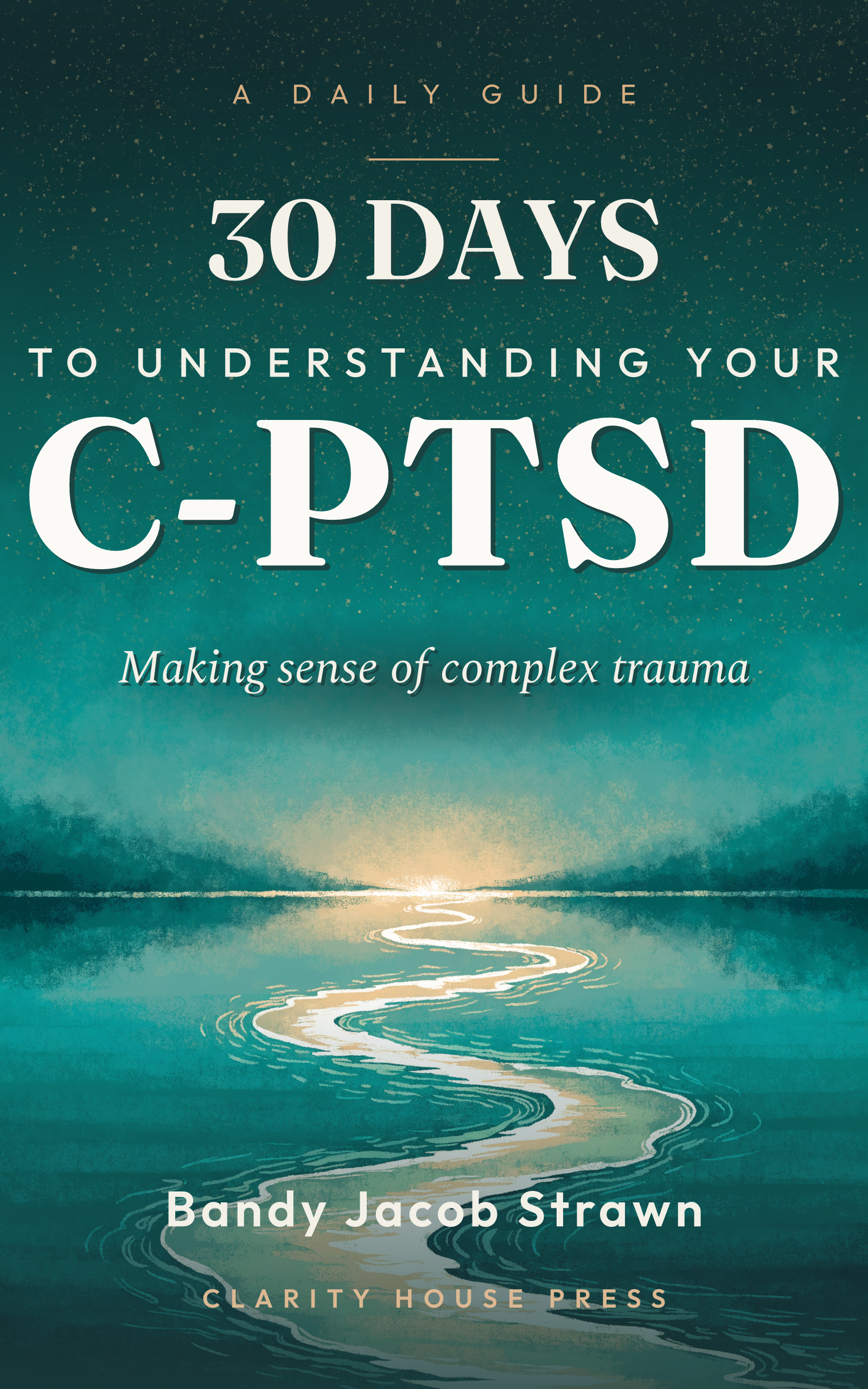
Surviving the Storm: When the Court Takes Your Children
Clarity House Press
For fathers in active high-conflict custody battles. Understand your CPTSD symptoms, begin stabilization, and build foundation for healing. 17 chapters covering recognition, symptoms, and the healing path.

The Body Keeps the Score
Bessel van der Kolk, M.D.
A foundational look at how trauma reshapes the body and nervous system, and the approaches that help the body find safety again.

Anchored
Deb Dana, LCSW
Practical everyday ways to transform your relationship with your nervous system using Polyvagal Theory.
As an Amazon Associate, Clarity House Press earns from qualifying purchases. Your price is never affected.
Found this helpful?
Share it with someone who might need it.
About the Author

Clarity House Press
Editorial Team
The editorial team at Clarity House Press curates and publishes evidence-based content on narcissistic abuse recovery, high-conflict divorce, and healing. Our content is informed by research, survivor experiences, and established trauma-informed approaches.
View all posts by Clarity House Press →Published by Clarity House Press Editorial Team