Please read our important disclaimers before using this content
After years of gaslighting, DARVO, and systematic reality distortion, your thought patterns may not feel like your own. You might catch yourself thinking "I'm too sensitive," "I overreact to everything," or "I can't trust my own judgment"—the exact messages your abuser implanted. Our comprehensive guide to gaslighting explains how this reality distortion is systematically constructed.
Cognitive Behavioral Therapy (CBT) is an evidence-based therapeutic approach that helps you identify, challenge, and restructure these distorted thought patterns.1 For narcissistic abuse survivors, trauma-informed CBT offers practical tools to rebuild accurate thinking, restore self-trust, and break free from the cognitive prison abuse created.
What Is CBT and How Does It Work?
Cognitive Behavioral Therapy is based on a simple but powerful premise: our thoughts, feelings, and behaviors are interconnected. By changing distorted thought patterns, we can change how we feel and behave.
The CBT Triangle
     THOUGHTS
     /      \
    /        \
FEELINGS — BEHAVIORS
Example from narcissistic abuse:
Triggering Situation: Your ex sends a critical text about a parenting decision
Thought: "I'm a terrible parent. I always mess everything up."
Feeling: Shame, anxiety, inadequacy
Behavior: Overcompensate by changing plans, apologize excessively, or freeze in indecision
CBT Intervention:
Alternative Thought: "I made a reasonable parenting decision. His criticism is a control tactic, not truth."
Resulting Feeling: Calm, confidence, clarity
Resulting Behavior: Respond with a neutral, factual statement (or don't respond), maintain your decision
The goal isn't positive thinking—it's accurate thinking. After narcissistic abuse, your thoughts have been systematically distorted. CBT helps you identify what's real.
Why CBT Is Effective for Narcissistic Abuse Recovery
1. Counters Gaslighting
Gaslighting trains you to distrust your own perceptions. CBT provides structured methods to:
- Test the accuracy of thoughts against evidence
- Distinguish between your authentic thoughts and implanted narratives
- Recognize when you're applying your abuser's voice to yourself
2. Identifies Cognitive Distortions
Narcissistic abuse creates predictable thought distortions. CBT helps you name and challenge them:
- All-or-nothing thinking: "If I'm not perfect, I'm worthless."
- Overgeneralization: "He cheated—I can never trust anyone again."
- Mental filter: Focusing only on your mistakes while discounting evidence of your competence
- Mind reading: "Everyone thinks I'm crazy for leaving him."
- Catastrophizing: "If I set this boundary, he'll destroy me in court."
3. Provides Concrete Skills
Unlike some therapies that focus primarily on insight, CBT teaches actionable techniques you can practice between sessions:
- Thought records
- Behavioral experiments
- Exposure hierarchies
- Problem-solving strategies
- Grounding techniques
4. Evidence-Based and Structured
CBT is one of the most researched psychotherapies, with strong evidence for treating PTSD, anxiety, and depression.2 For narcissistic abuse specifically, trauma-focused CBT is clinically recommended and often works best when combined with other modalities such as EMDR or somatic therapy to address the full spectrum of relational trauma. It's:
- Time-limited (typically 12-20 sessions for specific issues)
- Goal-oriented (you and your therapist identify concrete objectives)
- Collaborative (you're an active participant, not passive recipient)
Core CBT Techniques for Abuse Survivors
1. Thought Records (Cognitive Restructuring)
The foundational CBT tool: systematically examining and challenging distorted thoughts.
The 7-Column Thought Record:**
How to use thought records:
- Situation: What happened? (Be specific, factual)
- Automatic Thought: What went through your mind? (The immediate, reflexive thought)
- Emotion: What did you feel? Rate intensity 0-100%
- Evidence For: What supports this thought? (Be honest but critical)
- Evidence Against: What contradicts this thought? (Look for facts you're ignoring)
- Alternative Thought: What's a more balanced, accurate thought?
- New Emotion: How do you feel now? Rate intensity 0-100%
Common survivor experience:
At first, the "evidence against" column feels impossible. Your brain has been trained to see only your faults. This is where a skilled therapist guides you to notice evidence you've been conditioned to ignore.
2. Identifying Cognitive Distortions
Learn to recognize the specific patterns of distorted thinking abuse created.
Common Distortions in Abuse Survivors:**
Personalization:
- Distortion: "The custody evaluator seemed cold—I must have said something wrong."
- Reality Check: Evaluators maintain professional boundaries. Their demeanor isn't about you.
Should Statements:
- Distortion: "I should have left sooner. I should have protected the kids better."
- Reality Check: You did the best you could with the information and resources you had at the time.
Labeling:
- Distortion: "I'm damaged. I'm broken. I'm permanently defined by what happened to me."
- Reality Check: You experienced abuse. You survived it. Some people use "victim" to acknowledge what happened; others prefer "survivor." The label you choose is yours, and your identity extends far beyond the abuse.
Emotional Reasoning:
- Distortion: "I feel like a failure, so I must be one."
- Reality Check: Feelings are not facts. Your emotions are valid responses to trauma, not truth.
Magnification/Minimization:
- Distortion: Magnifying your mistakes, minimizing your strengths or the abuse's severity
- Reality Check: "I forgot to respond to one school email" vs. "He systematically isolated me from friends and family for three years"
3. Behavioral Experiments
WARNING - SAFETY CRITICAL: Do NOT attempt behavioral experiments involving your abuser without professional therapist guidance. Testing boundaries with a narcissistic or abusive individual can escalate danger. Behavioral experiments should ONLY be conducted under therapist supervision with proper safety planning in place. The examples below are for educational purposes to understand the CBT technique, not self-help exercises to attempt on your own.
Note for those in custody litigation: Behavioral experiments that involve documented communication (co-parenting apps) can demonstrate active therapy engagement and reasonable co-parenting behavior, which courts and evaluators view favorably. However, be aware that therapy materials may be discoverable in some jurisdictions. Discuss with your attorney if you have concerns about record subpoenas.
Test the accuracy of your beliefs through real-world experiments.
Example Belief: "If I set a boundary with my ex, he'll explode and use it against me in court."
Behavioral Experiment:
-
Prediction: "If I respond to his demanding text with a calm boundary ('I'll respond to co-parenting questions during business hours, not at midnight'), he'll escalate and tell his attorney I'm uncooperative."
-
Experiment: Send the boundary-setting response using a co-parenting app (so it's documented). Note: Some courts require or strongly encourage use of specific co-parenting communication platforms. Check your custody order or ask your attorney whether your jurisdiction has preferences or requirements.
-
Outcome: Observe what actually happens.
-
Learning:
- If he escalates: You have documentation showing you set a reasonable boundary and his response was disproportionate. You learn that his behavior reflects his issues, not your wrongdoing.
- If he complies or ignores: You learn that boundaries can work, and your catastrophic prediction was anxiety, not reality.
Behavioral experiments help you:
- Test catastrophic predictions against reality
- Build evidence that you can handle difficult situations
- Reduce avoidance behaviors driven by fear
4. Downward Arrow Technique
Uncover core beliefs underlying your automatic thoughts.
How it works:**
Start with an automatic thought and keep asking, "If that were true, what would it mean about me?"
Example:
- Automatic Thought: "I can't handle this custody battle."
- Ask: "If I can't handle this, what does that mean?"
- Answer: "It means I'm weak."
- Ask: "If I'm weak, what does that mean?"
- Answer: "It means I can't protect my kids."
- Ask: "If I can't protect my kids, what does that mean?"
- Answer: "It means I'm a failure as a parent."
Core belief uncovered: "I'm a failure."
Once you identify the core belief, you can work with your therapist to:
- Examine where this belief came from (often instilled by the abuser)
- Gather evidence for and against the belief
- Develop a more accurate, balanced core belief
5. Grounding and Distraction Techniques
CBT for trauma includes strategies to manage overwhelming emotions in the moment.
5-4-3-2-1 Grounding:**
When anxiety spikes or you're triggered:
- 5 things you can see
- 4 things you can touch
- 3 things you can hear
- 2 things you can smell
- 1 thing you can taste
This interrupts the fight-or-flight response and brings you back to the present.3 Research demonstrates that mindful acceptance techniques like grounding effectively down-regulate pain and negative emotion by engaging cognitive control networks.4
Thought-Stopping:
When intrusive thoughts loop ("He's right, I am crazy"):
- Visualize a STOP sign
- Say "STOP" (aloud or internally)
- Redirect to a predetermined neutral or positive thought
- Engage in a distracting activity (call a friend, exercise, puzzle)
NOTE ON THOUGHT-STOPPING: Some trauma specialists caution that thought-stopping can suppress important trauma processing. Discuss with your therapist whether this technique is appropriate for your specific situation. For some survivors, acknowledging and processing intrusive thoughts with a therapist is more effective than attempting to suppress them.
CBT for Trauma vs. Traditional CBT
Traditional CBT was designed for anxiety and depression. Trauma-focused CBT makes critical modifications for abuse survivors:
Trauma-Informed CBT Modifications
1. Safety First:
- Therapist assesses current safety before challenging thoughts
- If you're still in danger, stabilization precedes cognitive work
- The VA's National Center for PTSD identifies trauma-focused therapies like Cognitive Processing Therapy (CPT) as having the strongest recommendation for PTSD treatment across all clinical practice guidelines5
Mandatory Reporting: All mental health professionals are mandatory reporters of child abuse/neglect and, in some states, domestic violence. If you disclose ongoing abuse of yourself or your children, your therapist may be legally required to report to child protective services or law enforcement. This protects children but can complicate custody cases. Discuss reporting obligations with your therapist early in treatment so you understand the limits of confidentiality.
2. Validation Before Restructuring:
- Your therapist validates that the abuse was real before helping you challenge distorted thoughts
- Distinguishes between accurate thoughts ("He abused me") and distorted ones ("It was my fault")
3. Addressing Dissociation:
- Standard CBT assumes you're present and able to engage cognitively
- Trauma CBT includes grounding techniques for when you dissociate
4. Slower Pacing:
- Trauma survivors may need more time to build trust before deep cognitive work
- Therapists avoid retraumatization by moving at your pace
5. Integration with Other Modalities:
- Often combined with EMDR, somatic work, or DBT skills6
- Recognizes that changing thoughts alone may not address body-based trauma
Common CBT Homework Assignments
NOTE ON HOMEWORK ASSIGNMENTS: The following examples represent typical homework a CBT therapist might assign during treatment. These are NOT self-help exercises to attempt on your own without professional guidance. CBT for trauma should always be conducted with a qualified therapist, especially when recovering from narcissistic abuse. Do not attempt these exercises without therapist supervision.
CBT is an active therapy—you'll have between-session work:
Week 1-2:
- Daily thought records (1-2 per day)
- Identify one cognitive distortion per day
Week 3-4:
- Behavioral experiments (test one catastrophic prediction)
- Practice grounding techniques daily
Week 5-6:
- Challenge core beliefs (gather evidence for alternative beliefs)
- Behavioral activation (schedule pleasant activities)
Ongoing:
- Exposure exercises (gradually face avoided situations)
- Relapse prevention planning (identify early warning signs, coping strategies)
Important: If homework feels overwhelming, tell your therapist. The goal is skill-building, not adding to your stress. Inability to complete homework does not mean failure—good trauma-informed therapists expect modification of standard protocols based on your current capacity and circumstances.
Important Legal Consideration for Custody Litigation
If you are currently involved in custody proceedings:
Therapy records, including thought records and homework assignments, may be discoverable through subpoena in some jurisdictions. This varies significantly by state—some states provide strong psychotherapist-patient privilege protections, while others allow broader discovery in custody cases.
This does NOT mean you should avoid therapy. Courts generally view active therapy participation favorably. However:
- Discuss with your attorney whether to sign releases for therapy records or how to respond to subpoenas
- Be aware that written materials may be reviewed by evaluators, GALs, or opposing counsel
- Don't let this deter you from honest therapeutic work—the benefits of healing outweigh the minimal risks
- Work with a therapist experienced in custody cases who understands documentation standards
Your attorney can advise you on your jurisdiction's specific rules regarding therapy record discoverability and privilege protections.
CBT and Complex PTSD (C-PTSD)
NOTE ON TERMINOLOGY: This article uses "C-PTSD" (Complex PTSD) to describe the constellation of symptoms resulting from prolonged trauma like narcissistic abuse. C-PTSD is officially recognized in the ICD-11 (World Health Organization, 2022) and increasingly acknowledged in DSM-5-TR research, though it's not yet a separate DSM diagnosis. Some clinicians may diagnose "PTSD with dissociative features" or "PTSD" using DSM-5 criteria. The treatment principles discussed here apply regardless of diagnostic terminology.
Narcissistic abuse typically causes Complex PTSD (C-PTSD), not single-incident PTSD. Standard CBT needs significant adaptation.
C-PTSD symptoms CBT addresses:7
-
Negative self-concept: "I'm worthless, damaged, defective"
- CBT intervention: Core belief work, evidence gathering, compassionate reframing
-
Emotional dysregulation: Intense, rapidly shifting emotions
- CBT intervention: DBT skills integration (distress tolerance, emotion regulation)8
-
Relationship difficulties: Difficulty trusting, fear of vulnerability
- CBT intervention: Schema therapy, interpersonal effectiveness skills
-
Dissociation: Feeling disconnected from yourself or reality
- CBT intervention: Grounding techniques, present-moment awareness
Timeline for C-PTSD:
Standard CBT protocols are 12-16 weeks for anxiety and depression; PTSD protocols typically run 12-20 sessions over a similar timeline. For C-PTSD from narcissistic abuse (as recognized in ICD-11 and increasingly in DSM-5-TR research), expect 6+ months of weekly sessions, often 12+ months—considerably longer than protocols for single-incident PTSD.9 Individuals with complex PTSD may require more or different interventions and a longer course of treatment than those with standard PTSD.10
What CBT for Trauma Looks Like in Practice
Early Sessions (Weeks 1-4)
- Psychoeducation about trauma, PTSD, and how abuse affects thinking
- Establishing safety (crisis plan, safety planning if still in contact with abuser)
- Building rapport with your therapist
- Introducing the CBT model (thoughts-feelings-behaviors triangle)
- Learning grounding techniques
Middle Sessions (Weeks 5-12)
- Identifying automatic thoughts and cognitive distortions
- Thought records (daily practice)
- Challenging core beliefs instilled by the abuser
- Behavioral experiments (testing beliefs against reality)
- Exposure work (if avoiding trauma reminders)
Later Sessions (Weeks 13-20+)
- Processing trauma narratives (some CBT protocols include writing/discussing the abuse)
- Relapse prevention (recognizing warning signs, maintaining skills) — understanding why healing isn't linear is critical for maintaining momentum
- Meaning-making (integrating the abuse into your life story without it defining you)
- Termination planning (preparing to continue skills independently)
CBT Challenges for Abuse Survivors
1. "I Can't Think Straight"
After abuse, cognitive functioning is often impaired (trauma brain fog).11 Research shows that PTSD is associated with executive function difficulties, particularly in disengaging attention from trauma-related stimuli.12 You might struggle with:
- Concentrating during sessions
- Completing thought records
- Remembering skills between sessions
Solution:** A trauma-informed therapist will:
- Use shorter, more frequent sessions if needed
- Provide written summaries and handouts
- Accept voice-recorded thought records instead of written ones
- Move slower and repeat information
2. "Challenging My Thoughts Feels Like Gaslighting Myself"
You've been gaslit for years. Now therapy asks you to question your thoughts?
Critical distinction:**
- Gaslighting: Someone else denies your reality to control you
- CBT: You examine your own thoughts with curiosity to determine accuracy
Your therapist should never:
- Tell you the abuse wasn't that bad
- Minimize your experience
- Suggest you're overreacting
Your therapist should:
- Validate that the abuse was real
- Help you distinguish between accurate thoughts ("He abused me") and distorted ones ("I deserved it")
3. "I Feel Disloyal Challenging Negative Thoughts About Him"
Some survivors resist generating evidence against thoughts like "He's not that bad" because it feels like admitting the relationship wasn't all terrible.
Reality:** Acknowledging that he wasn't abusive 100% of the time doesn't negate the abuse. It makes the abuse more damaging because the intermittent kindness created trauma bonding—attachment formed through intermittent reinforcement cycles.13 This phenomenon, documented in research on intimate partner violence, demonstrates how unpredictable patterns of abuse and affection strengthen attachment bonds and make leaving more difficult.14
CBT helps you hold both truths: "There were good moments" AND "The relationship was fundamentally abusive and harmful."
4. "What If My Negative Thoughts Are Accurate?"
Sometimes your "distorted" thought is actually accurate:
- Thought:** "He's going to use this against me in court."
- Reality: He might. He's done it before.
CBT for abuse survivors includes:
- Accurate risk assessment (not everything is a cognitive distortion)
- Problem-solving for real threats (not just challenging thoughts)
- Distinguishing worry from preparation (productive vs. unproductive thinking)
Therapy vs. Legal Standards of Evidence:
In therapy, you work with your subjective experience and perceptions. In court, you must prove claims with objective evidence meeting legal standards (preponderance of evidence in family court).
Example:
- Therapeutic truth: "I feel unsafe when he yells at me" (valid basis for therapeutic work)
- Legal claim: "He engages in emotional abuse" (requires documented pattern, witness testimony, expert opinions)
Both are important, but they serve different purposes. Your therapist helps you process your experience; your attorney helps you prove facts to the court. Don't let legal evidence standards invalidate your therapeutic truth.
Finding a Trauma-Informed CBT Therapist
Essential qualifications:
- CBT training (ideally certification from Academy of Cognitive Therapy)
- Trauma specialization (C-PTSD, relational trauma, domestic violence)
- Understanding of narcissistic abuse dynamics
Questions to ask:
- "Do you use standard CBT or trauma-focused CBT?"
- "How do you modify CBT for complex trauma?"
- "Are you familiar with narcissistic abuse and gaslighting?"
- "What's your approach when a client's 'distorted thought' is actually an accurate assessment of danger?"
Red flags:
- Minimizing the severity of abuse
- Rushing into cognitive restructuring without building safety
- Suggesting the abuse was mutual or that you "played a role"
- Rigid adherence to CBT protocols without trauma modifications
- Dismissing your need for other therapeutic modalities
Therapist Testimony in Custody Cases
Important consideration: In some custody battles, parties subpoena treating therapists to testify. This creates ethical and therapeutic complications:
State Law Varies:
- Some states prohibit treating therapists from offering custody opinions (e.g., California, New York)
- Some states allow limited testimony about your mental health status and treatment progress
- Some states provide strong privilege protections that allow you to block therapist testimony
Therapeutic Impact:
- Knowledge that your therapist may testify can inhibit honest disclosure
- The therapist-client relationship is damaged when therapist becomes court witness
- Some therapists will not treat clients in active custody litigation to avoid this conflict
Strategic Options:
- Discuss with your attorney whether to seek a protective order preventing therapy record discovery
- Consider working with a treating therapist (not testifying) AND separately with a forensic evaluator (who may testify)
- Ask potential therapists about their policies on court testimony before beginning treatment
Your family law attorney can advise on your state's specific rules and strategic options.
CBT and Other Therapies
CBT works best when combined with:
- EMDR for processing traumatic memories
- DBT skills for emotional regulation
- Somatic therapy for body-based trauma
- Support groups for connection and validation
CBT alone may not be sufficient for:
- Deep attachment wounds
- Body-stored trauma
- Dissociative symptoms
- Severe emotional dysregulation
Your Next Steps
1. Find a qualified therapist FIRST:
- Use Academy of Cognitive Therapy Directory
- Psychology Today filters (trauma, CBT, narcissistic abuse)
- Ask for consultations to assess fit
- Ensure they have trauma specialization and understand narcissistic abuse
- If cost is a barrier: community mental health centers, sliding scale therapists, training clinics, and online therapy options may be more affordable
2. Consider your readiness (this is your decision):
- You might assess: Am I currently safe from active abuse? (If not, stabilization is a priority—CBT may not be appropriate yet)
- You might consider: What's my capacity for weekly engagement right now? (If you're in survival mode, that's valid. CBT requires some stability)
- You might ask yourself: Am I ready to examine thought patterns? (Not everyone is ready yet, and that's okay)
- Your therapist will help you determine if CBT is appropriate now or if stabilization comes first
3. Start small (really small) WITH therapist guidance:
- If you have capacity: one thought record per day
- If you're in survival mode: one thought record per week, or just noticing one thought without writing it
- Practice one grounding technique when you think of it (not daily if that's overwhelming)
- Notice one cognitive distortion when it appears (no pressure to find them)
- Some days, reading this article IS the work. That's enough.
- Your therapist will assign homework appropriate for your stage of recovery
- Do NOT attempt CBT exercises from books or articles without professional supervision
4. Be patient with the timeline:
- Cognitive restructuring takes time (weeks to months)
- You're rewiring neural pathways formed over years
- Progress is not linear—some weeks you'll feel stuck or move backward
- If you're managing survival tasks (custody, safety planning, financial stability), therapy work might be slower. That's expected.
- Trust your therapist's pacing—rushing cognitive work can be retraumatizing
NOTE ON HOTLINE NUMBERS: Phone numbers for crisis hotlines, legal aid, and support services are provided as a resource. These numbers are current as of publication but may change. Please verify hotline numbers are still active before relying on them. For the National Domestic Violence Hotline, visit thehotline.org for current contact information.
Key Takeaways
- CBT helps you identify and challenge distorted thought patterns left by gaslighting and abuse
- Trauma-informed CBT validates your experience while helping you rebuild accurate thinking
- It's evidence-based, structured, and skills-focused—you learn concrete tools you can use daily
- Effective CBT for C-PTSD takes months, not weeks, and often combines with other therapies
- Find a therapist who understands narcissistic abuse and modifies CBT for complex trauma
- You're not "thinking more positively"—you're thinking more accurately
The voice in your head that says you're worthless, crazy, or to blame? That's not your voice—it's the residue of abuse. CBT helps you reclaim your mind, one thought record at a time. Finding the right therapist who specializes in narcissistic abuse recovery makes the difference between CBT that works and CBT that misses the mark.
Resources
Find a Trauma-Informed CBT Therapist:
- Psychology Today - CBT Therapists - Directory of CBT therapists with trauma specialization
- Association for Behavioral and Cognitive Therapies (ABCT) - Find certified CBT practitioners
- Academy of Cognitive and Behavioral Therapies - CBT specialist directory
- Open Path Collective - Affordable therapy ($30-$80/session) from licensed therapists
CBT Resources and Workbooks:
- Feeling Good by Dr. David Burns - Classic CBT self-help book for depression and anxiety
- The Anxiety and Worry Workbook by David A. Clark and Aaron T. Beck - CBT tools for anxiety
- Mind Over Mood by Dennis Greenberger and Christine Padesky - CBT workbook with thought records
- Centre for Clinical Interventions - CBT Modules - Free CBT self-help modules
Crisis Support:
- National Domestic Violence Hotline - 1-800-799-7233 (24/7 support for abuse survivors)
- 988 Suicide & Crisis Lifeline - Call or text 988 for mental health crisis support
- Crisis Text Line - Text HOME to 741741 for crisis counseling
References
Resources:
- Academy of Cognitive Therapy: www.academyofct.org
- Association for Behavioral and Cognitive Therapies: www.abct.org
- Book: Mind Over Mood by Dennis Greenberger and Christine Padesky (CBT workbook)
- Book: The Body Keeps the Score by Bessel van der Kolk (trauma and therapy integration)
Crisis Support:
- National Domestic Violence Hotline: 1-800-799-7233
- National Suicide Prevention Lifeline: 988
- Crisis Text Line: Text HOME to 741741
References
- Hofmann, S. G., Asnaani, A., Vonk, I. J., Sawyer, A. T., & Fang, A. (2012). The efficacy of cognitive behavioral therapy: A review of meta-analyses. Cognitive Therapy and Research, 36(5), 427-440. https://doi.org/10.1007/s10608-012-9476-1 ↩
- Lee, D. J., Schnitzlein, C. W., Wolf, J. P., Vythilingam, M., Rasmusson, A. M., & Hoge, C. W. (2016). Psychotherapy versus pharmacotherapy for posttraumatic stress disorder: Systemic review and meta-analyses to determine first-line treatments. Depression and Anxiety, 33(9), 792-806. https://doi.org/10.1002/da.22511 ↩
- Karatzias, T., Hyland, P., Bradley, A., Cloitre, M., Roberts, N. P., Bisson, J. I., & Shevlin, M. (2019). Risk factors and comorbidity of ICD-11 PTSD and complex PTSD: Findings from a trauma-exposed population based sample of adults in the United Kingdom. Depression and Anxiety, 36(9), 887-894. https://doi.org/10.1002/da.22934 ↩
- Kober, H., Buhle, J., Weber, J., Ochsner, K. N., & Wager, T. D. (2019). Let it be: Mindful acceptance down-regulates pain and negative emotion. Social Cognitive and Affective Neuroscience, 14(11), 1147-1158. https://doi.org/10.1093/scan/nsz104 ↩
- Dutton, D. G., & Painter, S. L. (1981). Traumatic bonding: The development of emotional attachments in battered women and other relationships of intermittent abuse. Victimology: An International Journal, 6(1-4), 139-155. ↩
- Cusack, K., Jonas, D. E., Forneris, C. A., Wines, C., Sonis, J., Middleton, J. C., ... & Gaynes, B. N. (2016). Psychological treatments for adults with posttraumatic stress disorder: A systematic review and meta-analysis. Clinical Psychology Review, 43, 128-141. https://doi.org/10.1016/j.cpr.2015.10.003 ↩
- Aupperle, R. L., Melrose, A. J., Stein, M. B., & Paulus, M. P. (2012). Executive function and PTSD: Disengaging from trauma. Neuropharmacology, 62(2), 686-694. https://doi.org/10.1016/j.neuropharm.2011.02.008 ↩
- Kober, H., Buhle, J., Weber, J., Ochsner, K. N., & Wager, T. D. (2019). Let it be: Mindful acceptance down-regulates pain and negative emotion. Social Cognitive and Affective Neuroscience, 14(11), 1147-1158. https://doi.org/10.1093/scan/nsz104 ↩
- Weiss, N. H., Tull, M. T., Anestis, M. D., & Gratz, K. L. (2013). The relative and unique contributions of emotion dysregulation and impulsivity to posttraumatic stress disorder among substance dependent inpatients. Drug and Alcohol Dependence, 128(1-2), 45-51. https://doi.org/10.1016/j.drugalcdep.2012.07.017 ↩
- Karatzias, T., Murphy, P., Cloitre, M., Bisson, J., Roberts, N., Shevlin, M., ... & Hutton, P. (2019). Psychological interventions for ICD-11 complex PTSD symptoms: Systematic review and meta-analysis. Psychological Medicine, 49(11), 1761-1775. https://doi.org/10.1017/S0033291719000436 ↩
- Australian Centre for Posttraumatic Mental Health. (2022). Australian guidelines for the prevention and treatment of acute stress disorder, posttraumatic stress disorder, and complex PTSD. Phoenix Australia. https://www.phoenixaustralia.org/wp-content/uploads/2022/08/Chapter-7.-CPTSD.pdf ↩
- Aupperle, R. L., Melrose, A. J., Stein, M. B., & Paulus, M. P. (2012). Executive function and PTSD: Disengaging from trauma. Neuropharmacology, 62(2), 686-694. https://doi.org/10.1016/j.neuropharm.2011.02.008 ↩
- Iverson, K. M., Litwack, S. D., Pineles, S. L., Suvak, M. K., Vaughn, R. A., & Resick, P. A. (2013). Predictors of intimate partner violence revictimization: The relative impact of distinct PTSD symptoms, dissociation, and coping strategies. Journal of Traumatic Stress, 26(1), 102-110. https://doi.org/10.1002/jts.21781 ↩
- U.S. Department of Veterans Affairs. (2024). Cognitive Processing Therapy for PTSD. PTSD: National Center for PTSD. https://www.ptsd.va.gov/professional/treat/txessentials/cpt_for_ptsd_pro.asp ↩
Recommended Reading
From Clarity House Press — plus trusted books for deeper understanding

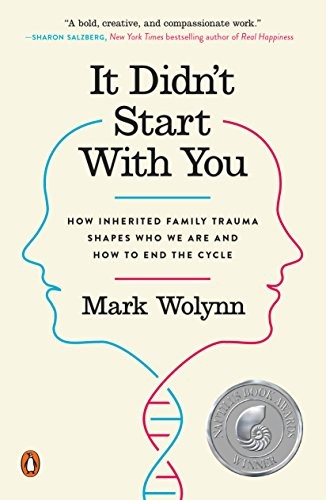
It Didn't Start with You
Mark Wolynn
Groundbreaking exploration of inherited family trauma and how to end intergenerational cycles.

The Polyvagal Theory in Therapy
Deb Dana
Accessible guide to using Polyvagal Theory to regulate your nervous system and feel safe in your body.
As an Amazon Associate, Clarity House Press earns from qualifying purchases. Your price is never affected.
Found this helpful?
Share it with someone who might need it.
Tags
About the Author

Clarity House Press
Editorial Team
The editorial team at Clarity House Press curates and publishes evidence-based content on narcissistic abuse recovery, high-conflict divorce, and healing. Our content is informed by research, survivor experiences, and established trauma-informed approaches.
View all posts by Clarity House Press →Published by Clarity House Press Editorial Team