Please read our important disclaimers before using this content
You hired an attorney to protect your rights in your high-conflict divorce. You're paying substantial fees, trusting this person with your children's future, your financial security, and your safety. But something's wrong. Deadlines are missed. Your attorney doesn't return calls. Critical evidence isn't presented. Settlement advice seems questionable. You're losing ground in your case not because of your ex's tactics, but because of your own lawyer's failures.
This is the devastating reality of attorney misconduct and malpractice in family law. When the person you hired to protect you becomes the source of harm, you face a double betrayal—and critical decisions about how to salvage your case while potentially holding your attorney accountable.
This is Part 1 of a two-part series on attorney misconduct. In this article, we'll cover how to recognize the difference between bad results and actual malpractice, identify common forms of attorney misconduct, spot the warning signs, and make the difficult decision about whether to change attorneys mid-case.
Continue to Part 2: Filing Malpractice Claims and Bar Complaints →
Understanding Legal Malpractice vs. Bad Results
Not every unfavorable outcome is malpractice. Family law cases are unpredictable, and even excellent attorneys sometimes lose. But there's a difference between losing despite good representation and losing because of incompetent representation.
What Is Legal Malpractice?
Legal malpractice occurs when an attorney's conduct falls below the professional standard of care, causing measurable harm to the client.1
Elements of malpractice:
- Attorney-client relationship existed (you hired them)
- Attorney breached duty of care (negligence, incompetence, or misconduct)
- Breach caused harm (you suffered damages as direct result)
- Damages are measurable (financial loss, worse custody outcome than you should have received)
All four elements must be proven to succeed in malpractice claim.
Malpractice vs. Bad Judgment vs. Unfavorable Outcome
Legal Malpractice (actionable):
- Missed statute of limitations for filing appeal
- Failed to subpoena critical witness despite your requests
- Didn't discover assets you identified, resulting in unfavorable property division
- Gave incorrect legal advice causing you to accept bad settlement
- Had conflict of interest (represented both you and ex, or you and another client with adverse interests)
Bad Judgment (not malpractice, but grounds to fire attorney):
- Poor strategic decisions (called witness who hurt your case)
- Weak cross-examination
- Ineffective negotiation resulting in mediocre settlement
- Personality doesn't mesh well with judge
Unfavorable Outcome (not malpractice):
- Judge ruled against you despite competent representation
- Jury trial (if applicable) resulted in unfavorable verdict despite good lawyering
- Ex had better evidence or more resources
- Law in your jurisdiction doesn't favor your position
Critical Distinction: You can be dissatisfied with your attorney's performance without having a malpractice claim. Malpractice requires proof that attorney's conduct fell below professional standards AND caused specific, measurable harm.
Beyond the legal and financial costs, attorney failure can be psychologically devastating for survivors already experiencing trauma. Research on institutional betrayal—defined as wrongdoings perpetrated by an institution upon individuals dependent on that institution—demonstrates that survivors who experience institutional failures report significantly worse psychological outcomes than those who do not.2 If you find yourself feeling hopeless, hypervigilant, or questioning your own judgment, know that these are normal responses to institutional betrayal—not evidence that you're overreacting.
Common Forms of Attorney Misconduct in Family Law
Competence Failures
Missed Deadlines:
- Failed to file pleadings within statute of limitations
- Missed discovery deadlines, resulting in your evidence being excluded
- Didn't file timely response to motions, resulting in default judgment
- Failed to appeal within appeal period
Inadequate Preparation:
- Went to trial without reviewing case file
- Didn't prepare you to testify
- Failed to subpoena witnesses or documents
- Didn't hire necessary experts (forensic accountant, custody evaluator)
Legal Ignorance:
- Gave incorrect legal advice based on misunderstanding of law
- Failed to research applicable statutes or case law
- Didn't know local court rules or procedures
- Advised settlement that was legally impossible to enforce
Communication Failures
Non-Responsiveness:
- Doesn't return calls or emails for weeks
- Misses scheduled appointments
- Fails to inform you of court dates or developments
- Doesn't send you copies of filings or correspondence
Lack of Transparency:
- Doesn't explain legal strategy or options
- Makes decisions without consulting you
- Keeps you in dark about case status
- Doesn't provide bills or accounting of fees
Dishonesty:
- Lies about case developments or court rulings
- Fabricates excuses for missed deadlines
- Misrepresents work performed
- Hides mistakes from you
Conflict of Interest
Former Client Conflicts:
- Attorney who previously represented your ex in ANY matter may have a conflict3
- Even if prior representation was unrelated (e.g., DUI), your ex may have shared confidential information relevant to your divorce
- In most states, attorney must obtain informed written consent from your ex to represent you, or decline representation entirely
- If you discover this conflict after hiring, you may be entitled to a full refund
Law Firm Conflicts:
- If any attorney in the firm previously represented your ex, the entire firm may be conflicted out (depending on state rules and ethical walls)
- Law firm representing a family member with adverse interests creates a conflict
- Business partnerships or social relationships between attorneys can create an appearance of impropriety
Dual Representation:
- Attempts to represent both you and spouse (unethical in contested divorce)
- Represents you and another family member with conflicting interests
Financial Conflicts:
- Has financial interest in outcome (beyond normal fee arrangement)
- Steers you toward unnecessarily expensive litigation to generate fees
- Settles case cheaply to avoid work, against your interests
Discovery Mid-Case:
If a conflict is discovered after representation begins:
- Attorney must withdraw immediately
- You may be entitled to a refund of fees paid
- You may need to disqualify the attorney from representing your ex if they switch sides
- File a motion to disqualify if necessary to protect your interests
Before Accusing Attorney of Conflict: Conflict of interest rules are complex. What seems like an obvious conflict to you may be permissible under state ethics rules, or may require only disclosure and consent. Consult with another attorney before filing a bar complaint based on an alleged conflict—you need legal analysis to determine if an actual ethics violation occurred.
Ethical Rules Vary: Some states have stricter conflict rules than others. Your state's Rules of Professional Conduct govern what constitutes a disqualifying conflict.4 Check your state bar website or consult with another attorney.
Fee Disputes and Financial Misconduct
Overbilling:
- Charges for work not performed
- Bills excessive hours for routine tasks
- "Block billing" that obscures what work was actually done
- Charges for paralegal work at attorney rates
Misuse of Retainer:
- Doesn't deposit retainer in trust account as required5
- Uses retainer before work is performed (if not permitted by agreement)
- Doesn't refund unused portion of retainer
- Trust account violations are among the most serious forms of attorney misconduct, frequently resulting in suspension or disbarment6
Fee Agreement Violations:
- Charges rates different from fee agreement
- Adds costs not disclosed in agreement
- Requires additional retainers without justification
Fee Dispute Resolution:
Most states have mandatory or voluntary fee arbitration programs through the state bar:7
- Clients can request arbitration of disputed fees
- Often faster and cheaper than litigation
- In some states, attorneys must participate if clients request
- May be binding or non-binding depending on state
- Separate from malpractice claims (disputes what you owe, not damages from bad representation)
Fee Agreements Are Regulated: Many states regulate attorney fee agreements (contingency fees, written agreement requirements, trust account rules). If a fee dispute arises, consult your state bar's client assistance or fee arbitration program.
Failure to Follow Instructions
Strategic Decisions Against Your Wishes:
- Settles case without your authorization
- Agrees to terms you explicitly rejected
- Makes litigation decisions you specifically opposed
Ignoring Your Input:
- Dismisses your concerns about ex's hidden assets
- Refuses to pursue discovery you request
- Won't call witnesses you've identified
- Ignores evidence you've provided
Recognizing the Red Flags
Sometimes attorney misconduct is obvious (they disappear for months). Other times it's subtle. Know the warning signs.
Early Red Flags
⚠️ During Initial Consultation:
- Guarantees specific outcome ("I'll get you full custody")
- Minimizes complexity of your case
- Pressures you to hire immediately
- Unclear or absent fee agreement
- Won't provide references or credentials
⚠️ After You Hire:
- Takes weeks to begin work on your case
- Repeatedly reschedules appointments
- Delegates all work to paralegals without oversight
- Doesn't develop case strategy or timeline
- First communication is bill for work you didn't authorize
Mid-Case Red Flags
⚠️ Communication Breakdown:
- Takes days or weeks to return calls/emails
- You learn about court developments from ex or court clerk, not attorney
- Sends junior attorney or paralegal to important hearings without telling you
- Stops providing updates entirely
⚠️ Preparation Failures:
- Shows up to hearings unfamiliar with your case
- Asks you basic questions they should already know
- Forgets critical facts during arguments
- Unprepared for opposing counsel's motions
⚠️ Strategic Concerns:
- Refuses to explain legal strategy
- Makes decisions without consulting you
- Seems to prioritize attorney's convenience over your interests
- Pushes settlement that doesn't meet your stated goals without good explanation
Crisis Red Flags
🚨 Immediate Action Required:
- Missed statute of limitations or critical deadline
- Didn't show up to court hearing
- Stipulated to (agreed to) terms without your permission
- Discovers conflict of interest mid-case
- Withdraws from case without notice
- Substance abuse or untreated mental health condition affecting performance
- Investigation by state bar for ethics violations
Changing Attorneys Mid-Case
If your attorney is failing you, changing counsel may be necessary—but it's complicated and costly.
When to Change Attorneys
You Might Consider Changing If (and it's okay if you decide differently): ✅ Attorney has committed malpractice that's harming your case ✅ Communication breakdown is complete (unreturned calls for weeks) ✅ You've lost trust and can no longer work together ✅ Attorney has a conflict of interest ✅ Attorney's incompetence is evident and causing damage ✅ Attorney wants to withdraw and you need new counsel
Consider Sticking It Out If: ⚠️ You're just unhappy with case progress (not attorney's fault) ⚠️ Switching would cause major delays at a critical juncture ⚠️ You can't afford a new attorney and new retainer ⚠️ Case is nearly resolved and transition would complicate settlement ⚠️ Your dissatisfaction is about case difficulty, not attorney performance
The Process of Changing Attorneys
1. Find New Attorney First:
- Interview multiple family law attorneys
- Explain why you're changing (be honest but not inflammatory)
- Ensure new attorney can take case immediately
- Verify no conflicts of interest
- Secure fee agreement and pay new retainer
2. Notify Current Attorney:
- Send written termination letter via certified mail
- State effective date of termination
- Request complete file (you're entitled to it)
- Address fee issues (pay outstanding fees if owed, or dispute if overbilled)
- Maintain professionalism in your communication (but be clear you're terminating the relationship—you don't owe niceties to someone who has failed you)
3. File Substitution of Attorney:
- New attorney files "Substitution of Attorney" or "Notice of Appearance" with court (document names vary by jurisdiction)
- Court and opposing counsel are notified
- Current attorney files withdrawal (or substitution shows both withdrawal and new attorney)
- Note: In some jurisdictions, court approval may be required for withdrawal, especially if trial is approaching
4. Transition Case:
- New attorney reviews complete file
- Gets up to speed on case status
- May need continuances to prepare for upcoming hearings
- Develops new strategy or continues with existing plan
Challenges of Changing Attorneys
Financial Cost:
- New retainer (typically $3,000-$15,000+)
- Paying new attorney to get up to speed on case
- Potentially still owing old attorney for work performed
- Double-paying for some work (old attorney researched issue, new attorney must too)
Note: Many survivors lack resources for new retainers. If finances are a barrier, consider law school clinics, legal aid organizations, limited-scope representation, or state bar pro bono programs. Financial constraints don't mean you're stuck with incompetent representation.
Time Delays:
- New attorney needs time to review file and prepare
- May need to continue hearings or trials
- Learning curve while new attorney gets up to speed
Strategic Disruption:
- Momentum may be lost
- Opposing counsel may capitalize on transition
- Judge may be frustrated by delays
- Prior strategy may be abandoned, requiring new approach
Continuity Loss:
- New attorney doesn't have relationship with judge, opposing counsel
- Doesn't know case history intimately
- May miss nuances old attorney understood
Weaponization Risk in High-Conflict Cases:
- Narcissistic ex may use attorney change against you in court ("she's impossible to work with, fires everyone")
- Prepare explanation for judge if asked (attorney missed deadlines, conflict of interest, etc.)
- Having legitimate reasons and documentation helps counter this narrative
- Changing attorneys once is understandable; changing multiple times looks problematic
Reality Check: Changing attorneys is expensive, disruptive, and time-consuming. Only you can decide if your current attorney's failures are significant enough to justify the costs and delays. For some survivors, "good enough" representation works; for others, incompetent representation causes more harm than switching costs.
If you're struggling to trust your judgment about whether to make this change, that difficulty itself may be a trauma response. Consulting with a trusted friend, therapist, or support group can provide external validation for your perceptions.
Protecting Yourself from Attorney Misconduct
Prevention is better than cure. Protect yourself from the beginning.
Vetting Attorneys Before Hiring
Research Thoroughly:
- Check state bar website for disciplinary history8
- Read online reviews (take with grain of salt, but patterns matter)
- Ask for references from past clients
- Verify credentials and experience (how many family law cases? high-conflict experience?)
- State bar disciplinary agencies processed over 18,000 attorney misconduct cases in 2024, with trends showing increases in complaints year over year9
Interview Multiple Attorneys:
- Consult with 3-5 attorneys before choosing
- Ask about their approach, experience with high-conflict cases, communication practices
- Pay attention to responsiveness even during initial consultation
- Trust your gut about personality fit
Red Flags to Avoid:
- Guarantees specific outcomes
- Pressure to hire immediately
- Vague or no written fee agreement
- No clear answers about experience or approach
- Disciplinary history on bar website
Clear Fee Agreements
Your fee agreement should specify:
- Hourly rate(s) for attorney and staff
- Retainer amount and how it's used
- Billing increments (6-minute? 15-minute?)
- What's included in fees vs. costs
- How often you'll be billed
- Refund policy for unused retainer
- Termination provisions
Understand Before You Sign:
- Ask questions about anything unclear
- Know what you're paying for
- Understand how bills will be calculated
- Get everything in writing
Communication Expectations
Set Clear Expectations:
- How quickly will attorney return calls/emails? (24-48 hours is reasonable for non-emergency matters; urgent matters may require faster response)
- Who will you primarily communicate with? (attorney, paralegal, assistant)
- How often will you receive updates?
- How will you be informed of developments?
Document Communications:
- Use email for important communications (creates written record)
- Follow up phone conversations with email summary
- Keep copies of all correspondence
- Note dates/times of calls and what was discussed
Active Case Management
Stay Involved (to the extent you're able):
- If you're able, read everything attorney sends you
- Consider reviewing court filings before they're filed
- Aim to attend hearings when possible
- Provide documents/information promptly when requested
- Ask questions if you don't understand something
Monitor Bills:
- Review every invoice carefully
- Question charges that seem excessive or unexplained
- Address billing concerns immediately (in writing)
- Track total fees against budget
Trust But Verify:
- You're the client; attorney works for you
- Ask for explanations of strategy and decisions
- Don't be afraid to get second opinions on major decisions
- If something feels wrong, investigate
Special Considerations: High-Conflict Divorce and Narcissistic Abuse
Attorney failures in high-conflict cases involving narcissistic abuse are particularly devastating because:
The Stakes Are Higher:
- Your safety and children's safety may depend on competent representation
- Protective orders may be needed urgently
- Narcissistic ex will capitalize on any attorney weakness
- Pattern documentation is critical and can't be recreated if missed
Common Attorney Failures in Narcissistic Abuse Cases:
1. Doesn't Understand the Dynamics:
- Treats case like "normal" contentious divorce
- Expects ex to act rationally or in good faith
- Surprised when ex violates agreements or court orders
- Doesn't prepare for DARVO, projection, or false allegations
2. Falls for Narcissist's Charm:
- Believes ex's "reasonable" presentation in mediation
- Dismisses your concerns as "emotional" or "bitter"
- Pushes co-parenting when parallel parenting is safer
- Doesn't recognize love-bombing, future-faking, or manipulation
3. Inadequate Abuse Documentation:
- Doesn't know how to document coercive control (vs. physical abuse only)
- Fails to subpoena relevant records (therapy, school, police)
- Doesn't prepare you to testify about abuse patterns
- Misses statute of limitations for protective order
4. Poor Protective Order Strategy:
- Doesn't understand differences between emergency/temporary/permanent orders
- Files weak petition without sufficient evidence
- Doesn't prepare you for hearing
- Fails to document violations for contempt
5. Custody Evaluation Failures:
- Doesn't prepare you for evaluator interviews
- Fails to provide evaluator with evidence of abuse
- Doesn't challenge biased evaluator recommendations
- Misses deadline to object to report
Red Flags Your Attorney Doesn't Get High-Conflict:
- Says "the court just wants you to get along"
- Minimizes abuse ("all couples fight")
- Pushes mediation when you've explained power imbalance
- Doesn't recognize DARVO when ex accuses you of abuse you suffered
- Seems annoyed by "drama" instead of recognizing abuse tactics
- Doesn't understand trauma responses (why you can't "just be calm")
What You Need in High-Conflict Attorney:
- Specific experience with narcissistic abuse cases
- Understanding of coercive control, DARVO, parental alienation
- Trauma-informed approach (patient with your PTSD responses)
- Aggressive but strategic (knows when to fight vs. when to gray rock)
- Protective order experience
- Trial experience (high-conflict cases rarely settle)
- Network of expert witnesses (therapists, evaluators who understand abuse)
- Training in coercive control and domestic violence dynamics—research shows such education is key to basic competency for professionals working on custody matters10
If Your Attorney Doesn't Get It:
This is not malpractice in the legal sense, but it may be grounds to change attorneys:
- You can fire an attorney for any reason (or no reason)
- "Lack of understanding of abuse dynamics" is a valid reason
- You need an attorney who treats your safety concerns seriously
- Better to change early than continue with an attorney who dismisses your reality
Your Next Steps
If you suspect your attorney has committed malpractice or engaged in misconduct, take these steps to protect yourself.
Immediate Actions
1. Document Everything
Create a comprehensive record of attorney failures:
Communication Log:
- Date/time of every call, email, text
- Who you spoke with (attorney, paralegal, assistant)
- What was discussed
- What attorney promised to do
- Follow-up: Did they do it? When?
Missed Deadlines and Failures: For each failure, document:
- What deadline or task was missed
- When you alerted attorney to the issue
- What consequence resulted (motion denied, evidence excluded, default judgment)
- How this harmed your case specifically
Example: "On 6/1/2024, attorney missed discovery deadline to file Requests for Production seeking ex's financial records. Court denied motion to extend deadline on 6/10/2024. As a result, ex's hidden assets were not discovered, resulting in property division that gave me $50,000 less than I should have received."
Billing Documentation:
- Keep every invoice
- Highlight charges that seem excessive, duplicative, or for work not performed
- Calculate total fees vs. work product received
- Note any fee agreement violations
Court Filings (or lack thereof):
- Copies of everything filed (or not filed when it should have been)
- Court orders resulting from attorney's failures
- Correspondence from opposing counsel capitalizing on your attorney's mistakes
Storage:
- Keep separate folder (physical and digital) labeled "Attorney Performance Issues"
- Email yourself summary after each concerning interaction (creates timestamp)
- Don't store in attorney's client portal (you may lose access if terminated)
- Cloud storage with date-stamped backups
2. Assess Whether You Want to Continue This Relationship
- Is this something you'd like to address directly with your attorney?
- Has trust been so damaged that you don't want to continue?
- Is attorney's conduct actively harming your case?
3. Consult with Another Attorney
- Get second opinion on your case status
- Ask if current attorney's conduct seems problematic
- Evaluate whether changing attorneys is advisable
- Understand timeline and costs of switching
- Consider consulting with a legal malpractice attorney or your state bar association for guidance on whether you have a potential malpractice claim11
- Be aware that proving legal malpractice requires a "case-within-a-case" analysis, meaning you must prove what the outcome should have been with competent representation12
If You Decide to Change Attorneys
4. Find New Attorney Before Terminating Current
- Interview multiple candidates
- Secure fee agreement and pay retainer
- Ensure new attorney can take case immediately
5. Terminate Current Attorney in Writing
- Clear termination letter via certified mail
- Request complete file
- Address outstanding fees
6. File Substitution of Attorney
- New attorney handles court filings
- Ensure no gaps in representation
The Reality of Attorney Failures
Discovering that your own attorney—the person you hired to protect you—has failed you is a devastating betrayal. You're already navigating the trauma of high-conflict divorce, and now you face the additional burden of incompetent or unethical representation.
But you're not powerless. You can change attorneys. You can document failures. You can protect your case. And most importantly, you can move forward with competent representation that gives your case the advocacy it deserves.
Not every unfavorable outcome is malpractice. Family law is unpredictable, and even excellent attorneys sometimes lose. But when your attorney's failures—missed deadlines, conflicts of interest, dishonesty, incompetence—cause you measurable harm, you have options for accountability and recovery.
In Part 2 of this series, we'll explore how to file bar complaints for accountability, pursue malpractice claims when damages are substantial, understand the "case within a case" requirement, and recover from bad representation.
Continue to Part 2: Filing Malpractice Claims and Bar Complaints →
Key Takeaways
- Malpractice vs. bad results: Not every unfavorable outcome is malpractice; must prove attorney's conduct fell below professional standard and caused measurable harm
- Common misconduct: Missed deadlines, conflicts of interest, non-communication, incompetence, fee violations
- Early warning signs: Guarantees of outcomes, pressure to hire, unclear fees, non-responsiveness after hiring
- Mid-case red flags: Communication breakdown, preparation failures, unexplained strategic decisions
- Crisis indicators: Missed deadlines, no-shows at court, unauthorized settlements, conflicts of interest
- Changing attorneys is costly: New retainer, time to get up to speed, strategic disruption—only change if failures are significant
- Prevention is key: Vet attorneys thoroughly, clear fee agreements, document communications, stay actively involved
- You're not powerless: If your attorney is failing you, you can change representation and protect your case
If your attorney is failing you, you don't have to accept it. Document the failures, consult with other counsel, and take action to protect your case. One bad attorney shouldn't prevent you from getting the legal help you deserve.
Continue to Part 2: Filing Malpractice Claims and Bar Complaints →
Resources
Finding and Vetting Attorneys:
- American Bar Association - Find a Lawyer - State bar associations and attorney directories
- Martindale-Hubbell Lawyer Directory - Attorney ratings and peer reviews
- Avvo - Find Lawyers - Attorney ratings, reviews, and disciplinary records
- American Academy of Matrimonial Lawyers - Board-certified family law specialists
- State Bar Disciplinary Records - Check attorney disciplinary history before hiring
Legal Malpractice Resources:
- ABA Center for Professional Responsibility - Ethics complaints and professional conduct rules
- Legal Malpractice Attorney Directory - Find legal malpractice attorneys in your state
- Model Rules of Professional Conduct - ABA standards for attorney ethics
Support and Crisis Resources:
- National Domestic Violence Hotline - 1-800-799-7233 (24/7 support for abuse survivors)
- Psychology Today Therapist Finder - Find trauma-informed therapists
- Crisis Text Line - Text HOME to 741741 for emotional crisis support
References
- American Bar Association. (2023). "Legal Malpractice." ABA Standing Committee on Lawyer Responsibility for Client Protection. https://www.americanbar.org/groups/professional_responsibility/resources/client_protection/ ↩
- American Bar Association. (2020). Model Rules of Professional Conduct, Rule 1.9: Duties to Former Clients. https://www.americanbar.org/groups/professional_responsibility/publications/model_rules_of_professional_conduct/rule_1_9_duties_to_former_clients/ ↩
- American Bar Association. (2020). Model Rules of Professional Conduct. https://www.americanbar.org/groups/professional_responsibility/publications/model_rules_of_professional_conduct/ ↩
- American Bar Association. (2020). Model Rules of Professional Conduct, Rule 1.15: Safekeeping Property. https://www.americanbar.org/groups/professional_responsibility/publications/model_rules_of_professional_conduct/rule_1_15_safekeeping_property/ ↩
- American Bar Association. (2021). "Client Protection and Fee Arbitration." ABA Center for Professional Responsibility. https://www.americanbar.org/groups/professional_responsibility/resources/client_protection/client-security-fund/ ↩
- American Bar Association. (2022). "How to Research a Lawyer's Disciplinary Record." ABA Division for Public Education. https://www.americanbar.org/groups/legal_services/flh-home/flh-hire-a-lawyer/check-disciplinary-record/ ↩
- American Bar Association. (2023). "Lawyer Regulation: Client Grievance and Disciplinary Procedures." ABA Standing Committee on Professional Discipline. https://www.americanbar.org/groups/professional_responsibility/policy/lawyer_regulation_client_grievance_disciplinary_procedures/ ↩
- Smith, C. P., & Freyd, J. J. (2013). Institutional betrayal. American Psychologist, 69(6), 575-587. See also: Freyd, J. J. (2024). Institutional Betrayal Research. University of Oregon. https://dynamic.uoregon.edu/jjf/institutionalbetrayal/ ↩
- State Bar of California. (2024). Annual Discipline Report, FY 2024. https://www.calbar.ca.gov/Portals/0/documents/reports/2024-Annual-Discipline-Report.pdf; See also: North Carolina State Bar. (2024). Lawyer's Trust Account Handbook. https://www.ncbar.gov/media/283992/trust-account-handbook.pdf ↩
- State Bar of California. (2024). Annual Discipline Report, FY 2024. https://www.calbar.ca.gov/Portals/0/documents/reports/2024-Annual-Discipline-Report.pdf; Illinois Attorney Registration and Disciplinary Commission. (2024). 2024 Annual Report. https://www.isba.org/barnews/2025/04/ardcreleases2024annualreport ↩
- Katz, E., & Garrity, Z. (2024). Coercive control in high-conflict custody litigation. Family Law Quarterly, 57(1), 31-64. https://www.americanbar.org/groups/family_law/resources/family-law-quarterly/2024-march/coercive-control-high-conflict-custody-litigation/; See also: Wofford, S., Beeble, M. L., Andersen, E. A., & Peek-Asa, C. (2023). Coercive control in the courtroom: The Legal Abuse Scale (LAS). Journal of Family Violence, 38(3), 527-542. https://doi.org/10.1007/s10896-022-00408-3 ↩
- Jensen, E. M. (1978). Standard of proof of causation in legal malpractice cases. Cornell Law Review, 63(4), 666-688. https://scholarship.law.cornell.edu/cgi/viewcontent.cgi?article=4151&context=clr ↩
Recommended Reading
From Clarity House Press — plus trusted books for deeper understanding


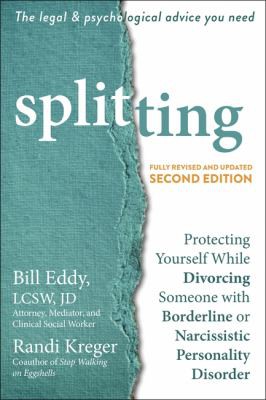
Splitting: Protecting Yourself While Divorcing Someone with Borderline or Narcissistic Personality Disorder
Bill Eddy & Randi Kreger
Updated edition covering domestic violence, alienation, false allegations in high-conflict divorce.

High Conflict People in Legal Disputes
Bill Eddy
Practical guide for disputing with a high-conflict personality through compelling case examples.
As an Amazon Associate, Clarity House Press earns from qualifying purchases. Your price is never affected.
Found this helpful?
Share it with someone who might need it.
About the Author

Clarity House Press
Editorial Team
The editorial team at Clarity House Press curates and publishes evidence-based content on narcissistic abuse recovery, high-conflict divorce, and healing. Our content is informed by research, survivor experiences, and established trauma-informed approaches.
View all posts by Clarity House Press →Published by Clarity House Press Editorial Team