Please read our important disclaimers before using this content
Court orders only matter if they're enforced. When your high-conflict co-parent violates custody orders, withholds children, refuses to pay support, or ignores the parenting plan—and faces no consequences—the orders become meaningless.
Contempt of court is the legal mechanism for enforcing court orders. When someone willfully violates a court order, they can be held in contempt and face serious sanctions including fines, jail time, attorney fees, and modification of custody or support.1
But contempt proceedings are complex, expensive, and require careful strategic consideration. Filing contempt for every minor violation can undermine your credibility with the court. Conversely, failing to enforce orders when your ex repeatedly violates them can establish a pattern that's hard to change later.
This is advanced strategy for survivors navigating enforcement issues in high-conflict custody and divorce cases where one parent treats court orders as optional.
Related reading: See our guides on parallel parenting strategies, documentation best practices, and custody modification for comprehensive enforcement and modification strategies.
What Is Contempt of Court?
Contempt of court occurs when someone:
- Violates a clear court order
- Willfully and knowingly (not accidentally or due to inability)
- Causing harm to the other party or interference with court's authority
Types of Contempt in Family Law
Civil Contempt
- Purpose: Coerce compliance with court order
- Standard: "Clear and convincing evidence" of violation (in most jurisdictions; some states use preponderance of evidence)
- Sanctions: Fines, attorney fees, makeup parenting time, modification of custody
- Jail: Possible, but only until compliance ("keys to the jail cell" — purge by complying)2
Criminal Contempt
- Purpose: Punish past violation
- Standard: "Beyond a reasonable doubt"
- Sanctions: Fines, jail time (fixed sentence, not conditional on compliance)
- Right to attorney: Appointed if you can't afford one (for criminal contempt only)
Most family law contempt is civil contempt (seeking to force compliance, not punish).3
Common Violations Worth Filing Contempt
Custody and Visitation Violations
When your ex:
- Withholds children during your parenting time without legal justification
- Returns children late repeatedly (significantly late, not 10 minutes)
- Takes children out of state/country without permission when order requires it
- Refuses to exchange children at designated location/time
- Interferes with your communication with children (blocks calls, refuses video visits)
- Violates right of first refusal provisions
- Exposes children to prohibited individuals (new partner when order says no overnight guests, etc.)
Not typically contempt:
- Children refuse to go with you (if your ex isn't preventing it)
- Occasional lateness (a few minutes, not a pattern of hours)
- Changes agreed to informally by both parties
- Violations due to true emergencies (medical, safety)
Child Support Violations
When your ex:
- Fails to pay court-ordered support (partial or complete nonpayment)
- Pays late consistently
- Refuses to pay required expenses (medical, extracurriculars, etc.)
- Fails to maintain health insurance as ordered
- Fails to provide tax documents or financial disclosures as required
Not typically contempt:
- Lost job and genuinely unable to pay (but should file modification, not just stop paying)
- Paying through wage garnishment but employer hasn't remitted yet
- Dispute about what's covered (e.g., is debate team an "extracurricular"?)
Other Order Violations
- Violates protective order or restraining order
- Fails to complete court-ordered parenting classes or therapy
- Refuses to attend mediation or parent coordination sessions
- Violates property division order (doesn't transfer title, doesn't pay debts)
- Violates communication order (harasses you when order says communicate only through app)
When to File for Contempt
Strategic Considerations
File for contempt when:
- The violation is clear, documented, and willful
- It's part of a pattern (not an isolated incident)
- Informal resolution failed (you tried to resolve it; your ex refused or ignored you)
- The violation is serious (impacts children's welfare or your rights significantly)
- You want to establish consequences (show your ex they can't violate with impunity)
- You need makeup time or financial relief (contempt can get you what you're owed)
Don't file for contempt when:
- Violation is minor or isolated (may undermine your credibility with the court)
- You contributed to the problem (court will see mutual fault)
- You have no documentation (can't prove violation)
- You've been ignoring violations for months (court will question why it's a problem now)
- You informally agreed to the deviation (can't enforce order you waived)
- The order is ambiguous (unclear what's required—fix the order first)
Pattern vs. Isolated Incident
Isolated incident: Your ex was 30 minutes late returning kids one time due to traffic.
Response: Document it, send written reminder of parenting time, monitor for pattern.
Pattern: Your ex has been 1-2 hours late for the last 8 exchanges, causing you to miss work, disrupting children's routines.
Response: Document each incident, send formal written notice that you'll file contempt if it continues, then file if it doesn't stop.
Courts care about patterns more than isolated incidents. Build your evidence over time.4
SURVIVOR PERSPECTIVE: "I Waited Too Long to Enforce"
"For eight months, I documented every violation—late pickups, missed calls with the kids, denied makeup time. I had 54 documented incidents. But I didn't file contempt because I was afraid of looking 'difficult' and because I couldn't afford the attorney fees.
By the time I finally filed, the judge asked why I'd tolerated this for so long. My ex's attorney argued that I had 'waived' enforcement by accepting the violations for months. The court still found contempt, but I lost credibility I didn't need to lose.
What I learned: You don't have to file after the first violation, but don't wait eight months either. After 3-4 clear violations establishing a pattern, send the formal demand letter. If violations continue, file within 30-60 days. You're not being 'difficult'—you're enforcing court orders that exist to protect your children's relationship with you.
And about the cost: I qualified for legal aid but didn't know it existed. I also didn't know I could ask the court to make him pay my attorney fees. Research your options before assuming you can't afford enforcement. Sometimes not enforcing costs more in the long run."
Evidence Needed for Contempt
You must prove:
- A valid court order existed
- Your ex had knowledge of the order
- Your ex violated the order
- The violation was willful (not accidental, not due to inability)
Documentation Checklist
Essential evidence:
- The court order being violated (custody order, support order, etc.)
- Proof of service (your ex received the order and knows its terms)
- Evidence of violation:
- Visitation violations: Calendar/log of missed exchanges, late returns, withheld time
- Support violations: Bank statements showing nonpayment, payment history from state registry
- Communication violations: Screenshots of harassing texts/emails, call logs
- Your attempts to resolve (emails asking for compliance, proposed makeup time, etc.)
- Impact of violation (you missed work, children were harmed, financial loss, etc.)
Helpful additional evidence:
- Witnesses: Someone who observed the violation (witnessed ex refuse to hand over children)
- Text messages/emails from your ex acknowledging the violation or making excuses
- Photos/videos: If relevant (ex posting on social media during your parenting time when they claimed child was sick)
- Professional statements: Therapist, teacher, coach who observed impact on children
- Police reports: If you called police when ex withheld children
Strategic consideration: Use a parenting communication app (TalkingParents, OurFamilyWizard) that timestamps and preserves all communication. Court-admissible records from these platforms create strong evidence that's difficult to dispute.
How to File for Contempt
Step 1: Send Formal Demand Letter
Before filing, send written notice (via email or certified mail):
Example:
[Date]
[Ex's Name],
This is formal notice that you have violated the following provisions of the [Court Order dated X]:
- On [date], you failed to return the children at 6:00 PM as required by Section 2.1 of the parenting plan. You returned them at 9:30 PM without prior notice or agreement.
- On [date], you refused to allow me to have my scheduled FaceTime call with the children, in violation of Section 3.4.
- On [dates], you failed to pay child support in the amount of $[X] as required by the Support Order.
I am requesting the following:
- Immediate compliance with all provisions of the court order
- Makeup parenting time for the [X hours] you withheld
- Payment of past-due child support totaling $[X]
If you do not comply within [7/14] days, I will have no choice but to file a Motion for Contempt with the court, seeking sanctions including attorney fees and modification of custody.
[Your name]
Why send this?
- Shows you tried to resolve informally (courts like this)
- Puts your ex on notice (can't claim they didn't know it was a problem)
- Sometimes results in compliance without filing (saves you money)
- Creates evidence of willfulness if they ignore it and continue violating
Step 2: File Motion for Contempt
Your attorney will file:
- Motion for Order to Show Cause (why your ex should not be held in contempt)
- Supporting affidavit (your sworn statement of facts)
- Exhibits (court order being violated, evidence of violations, your demand letter)
- Proposed order (what you're asking the court to do)
Filing fee: Typically $100-$300 (varies by jurisdiction)
Step 3: Service on Your Ex
Your ex must be personally served with:
- Motion and supporting documents
- Notice of hearing date
- Copy of order being violated
Service requirements are strict. Use a process server or sheriff—don't try to serve yourself.
Step 4: Hearing
Contempt hearings are contested hearings (like a mini-trial).
You (moving party) must prove:
- The order existed and your ex knew about it
- Your ex violated the order
- The violation was willful
Your ex can defend by showing:
- Order is ambiguous (unclear what was required)
- Impossibility: Violation was due to circumstances beyond their control (emergency, illness, etc.)
- Inability: They were unable to comply (lost job, can't pay support)
- Your fault: You prevented compliance (changed locks, refused to allow makeup time)
- No violation occurred: They complied (or you're misinterpreting the order)
At the hearing:
- You testify about the violations
- Present evidence (documents, texts, calendar)
- Call witnesses if needed
- Your ex testifies (cross-examination by your attorney)
- Judge decides whether contempt is proven
Burden of proof: "Clear and convincing evidence" in most jurisdictions (higher than preponderance of evidence, lower than beyond reasonable doubt).3 Some states use preponderance of evidence standard for civil contempt. Check your local rules.
Sanctions for Contempt
If the court finds your ex in contempt, available sanctions include:
1. Makeup Parenting Time
- You get additional time to compensate for time your ex withheld
- Court can order 2:1 makeup (for every hour withheld, you get 2 hours makeup)
- Makeup time is at your ex's expense (they lose their time)
2. Fines
- Per violation fines ($100-$500 per incident)
- Ongoing daily fines until compliance ($50-$200 per day)
- Fines paid to you or to the court (varies by jurisdiction)
3. Attorney Fees and Costs
- Your ex pays your attorney fees for having to file contempt
- Includes filing fees, service costs, expert fees if needed
- This is often the most powerful sanction (incentivizes compliance to avoid paying your lawyer)
4. Modification of Custody/Visitation
- If violations are serious and repeated, court can modify custody
- Example: Parent who repeatedly withholds children may lose primary custody
- Example: Parent who can't follow parenting time may get supervised visitation
5. Jail Time (Rare in Civil Contempt)
- Typically used for support violations, but courts must determine ability to pay before jailing for non-payment (constitutional protections against debtor's prison)5
- Can be used for serious custody violations (repeatedly withheld children despite court orders)
- Usually short-term (days or weeks) and conditional ("pay the support and you're released")
- Rare in first contempt finding (used for repeat violators)
- Important: Incarceration for civil contempt is remedial, not punitive—the goal is compliance, and the person holds "the keys to their own cell" by complying with the order6
6. Purge Conditions
Court can set conditions to "purge" the contempt:
- Pay the past-due support
- Return the children immediately
- Provide makeup parenting time
- Complete parenting class
- Stop harassing communication
Once purge conditions are met, contempt is resolved (no jail, reduced fines).
Criminal Contempt: When It's Serious
Criminal contempt is reserved for:
- Willful failure to pay child support (especially large arrearages)
- Violation of protective orders (domestic violence restraining orders)
- Serious endangerment of children in violation of orders
- Egregious, repeated civil contempt (your ex has been found in contempt multiple times and continues violating)
Criminal contempt consequences:
- Jail time (fixed sentence, not conditional)
- Criminal record
- Right to court-appointed attorney (if indigent)
- Higher burden of proof (beyond reasonable doubt)
In most family law cases, criminal contempt is not pursued unless:
Strategic Use of Contempt Motions
When Filing Helps Your Case
1. Establishing Pattern of Violations
Even if initial sanctions are light, multiple contempt findings create a record that supports:
- Modification of custody (parent can't follow court orders)
- Supervised visitation (parent is unstable/uncooperative)
- Future, harsher sanctions
2. Financial Enforcement
- Child support contempt often results in wage garnishment, liens, suspended licenses7
- Attorney fee awards make your ex pay for their own violations (deterrent)
3. Credibility with Court
- You look reasonable: You tried to resolve informally, you're enforcing valid orders, you're not making false allegations
- Your ex looks unreasonable: They can't follow orders, they're high-conflict, they're not child-focused
4. Protecting Children
- Makeup time: Children get the parenting time they were denied8
- Modified custody: If your ex's violations are endangering children, contempt record supports custody change
When Filing Backfires
1. Credibility Concerns
Filing contempt for minor violations (15 minutes late once) can damage your credibility with the court and may be viewed as using legal process to harass your co-parent.
2. Mutual Fault
If you've also violated orders, court may find both of you in contempt (or neither).
3. Ambiguous Orders
If the order is unclear, court may deny contempt and tell you to get a clearer order—wasting your time and money.
4. Normalizing Violations
If you've ignored violations for months/years, then suddenly file contempt, court questions why it's a problem now.
5. Retaliation Appearance
Filing contempt immediately after your ex files a motion against you looks retaliatory.
Alternatives to Contempt
Before filing contempt, consider:
1. Modification of Order
If the order isn't working, modify it instead of trying to force compliance.
Example: Your ex is always late on Sunday exchanges. Instead of contempt, propose changing exchanges to Saturday or to a different time.
2. Parenting Coordinator
If high-conflict, request court appoint a parenting coordinator to resolve disputes and enforce orders without constant court filings.910
3. Communication Through App
Require all communication through TalkingParents, OurFamilyWizard, or similar to reduce conflict and document violations.
4. Mediation
Return to mediation to address ongoing issues and update parenting plan.
5. Informal Resolution
Propose makeup time or solution without filing. Sometimes your ex will comply when they realize you're serious (demand letter may be enough).
Cost of Contempt Proceedings
Attorney fees:
- Simple contempt motion: $1,500-$3,000
- Contested hearing: $2,500-$7,000+
- If your ex appeals or drags it out: $10,000+
Other costs:
- Filing fees: $100-$300
- Service fees: $50-$150
- Expert fees (if needed): $500-$3,000
- Lost wages (time off work for hearings)
Potential recovery:
- Attorney fees: Court may order your ex to pay (but not guaranteed)
- Fines: If awarded, may cover some of your costs
- Makeup time: Non-monetary but valuable
Cost-benefit analysis: Is the violation serious enough to justify the cost? Will you likely get attorney fees awarded?
When You Can't Afford Contempt Proceedings
If attorney fees are prohibitive:
1. Self-Representation (Pro Se)
- Many courts have self-help centers with forms and instructions for contempt motions
- Family law facilitators may assist with paperwork (though they can't give legal advice)
- Online resources: Check your state court website for contempt forms and filing guides
- Reality check: Self-representation in contested contempt hearings is challenging. Courts have strict evidentiary rules and procedures. Consider consulting with an attorney for limited-scope representation (unbundled services) even if you can't afford full representation.
2. Legal Aid and Pro Bono Services
- Income qualifications: If you meet income guidelines, legal aid may provide free representation
- Domestic violence programs: If there's a history of abuse, DV legal advocates may assist
- Law school clinics: Many law schools have family law clinics providing free services
- Pro bono attorney programs: State and local bar associations maintain pro bono referral lists
3. Request Attorney Fees in Your Motion
- Ask the court to order your ex to pay your attorney fees as part of the contempt relief
- If your ex's violations are willful and you're the lower-earning party, courts often award fees
- Some attorneys will take contempt cases on contingency if fee award is likely
4. Limited-Scope Representation
- Hire attorney for specific tasks: Draft motion, coach you on evidence/testimony, appear at hearing only
- Cost: $500-$2,000 instead of $3,000-$7,000 for full representation
- Reality: Strategic middle ground between pro se and full representation
5. Prioritize Which Violations to Pursue
- Focus on the most serious, provable violations rather than every incident
- Build a strong case for one comprehensive contempt motion rather than multiple weak filings
- Strategic timing: Wait until pattern is established and evidence is overwhelming
The economic abuse trap: Abusive co-parents often violate orders precisely because they know you can't afford to enforce them. This is financial control continuing post-separation.1112 If this is your situation, prioritize documenting violations meticulously, seek legal aid, and consider whether modification of orders (sometimes easier to get pro bono help) might address the problem more affordably than repeated contempt filings.
Your Next Steps
If your ex is violating court orders:
-
Document every violation meticulously (dates, times, specific details, evidence)
-
Send formal written notice of violation and demand compliance (email or certified mail)
-
Assess whether this is a pattern or isolated incident (wait for pattern if minor violations)
-
Consult with your attorney about:
- Whether contempt is the right remedy
- Likelihood of success
- Cost vs. benefit
- Alternative approaches
-
Gather evidence (texts, emails, calendar, witnesses, police reports)
-
Consider whether modification is better than contempt (if the order isn't working, change it rather than forcing compliance)
-
Decide on timing: File immediately (serious violation) or wait to establish pattern (minor violations)
-
If filing, prepare for hearing with your attorney (organize evidence, identify witnesses, practice testimony)
-
Follow through: If court orders sanctions, enforce them (otherwise future orders will be meaningless)
-
Learn from process: What can you build into future orders to make violations less likely? (Clear, specific language; built-in consequences; parenting coordinator; etc.)
Remember: Contempt is a tool for enforcing valid court orders when informal resolution fails. It's not punishment, revenge, or harassment. Use it strategically, not emotionally. Filing contempt for every minor violation will make you look high-conflict. Ignoring serious, repeated violations will establish a pattern where court orders don't matter.
The goal is compliance, not punishment. If a demand letter gets your ex to comply, you win without the cost and stress of litigation. If your ex continues to violate despite warnings, contempt proceedings establish consequences and protect your children's time with you.
NOTE ON HOTLINE NUMBERS: Phone numbers for crisis hotlines, legal aid, and support services are provided as a resource. These numbers are current as of publication but may change. Please verify hotline numbers are still active before relying on them. For the National Domestic Violence Hotline, visit thehotline.org for current contact information.
Resources
Legal Resources and Court Information:
- Office of Child Support Enforcement - Federal and state enforcement resources
- American Bar Association Family Law Section - Family law attorney directories
- National Center for State Courts - State family court rules and procedures
- Legal Services Corporation - Find free legal aid
Co-Parenting Tools and Support:
- TalkingParents - Documented communication platform
- OurFamilyWizard - Court-admissible co-parenting communication
- Association of Family and Conciliation Courts - Parenting coordination resources
- National Domestic Violence Hotline - 1-800-799-7233 (SAFE)
Crisis Support:
- 988 Suicide & Crisis Lifeline - Call or text 988 (24/7)
- Crisis Text Line - Text HOME to 741741
- National Parent Helpline - 1-855-427-2736
- SAMHSA National Helpline - 1-800-662-4357 (24/7)
This post provides educational information about contempt proceedings in family law. It is not legal advice. Consult with an attorney in your jurisdiction for guidance specific to your situation. Contempt procedures, standards, and sanctions vary significantly by state.
References
- U.S. Department of Health and Human Services, Administration for Children and Families, Office of Child Support Enforcement. (2016). Flexibility, Efficiency, and Modernization in Child Support Enforcement Programs: Civil Contempt. Federal Register Final Rule. https://acf.gov/sites/default/files/documents/ocse/fem_final_rule_civil_contempt.pdf ↩
- Turner v. Rogers, 564 U.S. 431 (2011). U.S. Supreme Court. The Court established that civil contempt incarceration is remedial, with the contemnor holding "the keys to their own cell" by complying with the order. https://supreme.justia.com/cases/federal/us/564/431/ ↩
- U.S. Department of Health and Human Services, Administration for Children and Families. (2011). Turner v. Rogers Guidance. Office of Child Support Enforcement Policy Guidance. https://acf.gov/css/policy-guidance/turner-v-rogers-guidance ↩
- Turner v. Rogers, 564 U.S. 431 (2011). The Supreme Court held that a court may not impose punishment "in a civil contempt proceeding when it is clearly established that the alleged contemnor is unable to comply with the terms of the order." The ability to pay constitutes the "critical question" in civil contempt proceedings. Cornell Law School, Legal Information Institute. https://www.law.cornell.edu/supct/html/10-10.ZS.html ↩
- National Council of Juvenile and Family Court Judges. (2022). Custody and Parenting Time Orders: Compliance Monitoring and Enforcement Strategies for Courts. Research indicates courts should focus on patterns of non-compliance rather than isolated incidents when evaluating enforcement actions. https://www.ncjfcj.org/publications/custody-and-parenting-time-orders-compliance-monitoring-and-enforcement-strategies-for-courts/ ↩
- Spearman, K.J., Hardesty, J.L., & Campbell, J.C. (2023). Post-separation abuse: A concept analysis. Journal of Advanced Nursing, 79(4), 1225-1246. https://pmc.ncbi.nlm.nih.gov/articles/PMC9701248/ ↩
- Mahrer, N.E., O'Hara, K.L., Sandler, I.N., & Wolchik, S.A. (2019). Parenting Time, Parenting Quality, Interparental Conflict, and Mental Health Problems of Children in High-Conflict Divorce. Journal of Family Psychology, 33(6), 690-703. https://pmc.ncbi.nlm.nih.gov/articles/PMC6880406/ ↩
- Mahoney, M.M. (2007). The Enforcement of Child Custody Orders by Contempt Remedies. University of Pittsburgh Law Review, 68(4), 835-877. https://d-scholarship.pitt.edu/17950/ ↩
- MDRC. (2023). Testing a New Approach to Addressing Nonpayment of Child Support: Effects of the Procedural Justice-Informed Alternatives to Contempt Demonstration. https://www.mdrc.org/work/projects/procedural-justice-informed-alternatives-contempt ↩
- Association of Family and Conciliation Courts. (2019). Guidelines for Parenting Coordination. AFCC Task Force on Parenting Coordination. https://www.afccnet.org/Portals/0/PDF/Guidelines%20for%20PC%20with%20Appendex.pdf ↩
- Fieldstone, L., Carter, D.K., King, T., & McHale, J.P. (2016). Parenting Coordination: Applying Clinical Thinking to the Management and Resolution of Post-Divorce Conflict. Journal of Child Custody, 13(4), 290-303. https://pubmed.ncbi.nlm.nih.gov/26828998/ ↩
- National Institute of Justice. (2020). Child Support and Reentry. U.S. Department of Justice, Office of Justice Programs. https://nij.ojp.gov/topics/articles/child-support-and-reentry ↩
Recommended Reading
From Clarity House Press — plus trusted books for deeper understanding

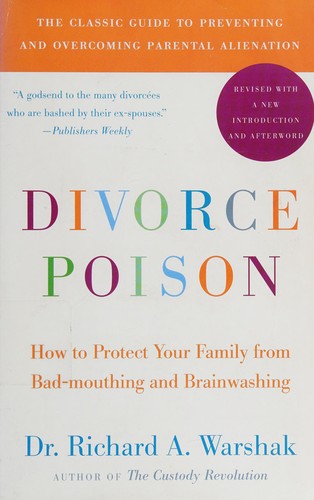
Divorce Poison
Dr. Richard A. Warshak
Classic best-selling parental alienation resource on detecting and countering manipulation tactics.

Fathers' Rights
Jeffery Leving & Kenneth Dachman
Landmark guide by renowned men's rights attorney covering every aspect of custody for fathers.
As an Amazon Associate, Clarity House Press earns from qualifying purchases. Your price is never affected.
Found this helpful?
Share it with someone who might need it.
About the Author

Clarity House Press
Editorial Team
The editorial team at Clarity House Press curates and publishes evidence-based content on narcissistic abuse recovery, high-conflict divorce, and healing. Our content is informed by research, survivor experiences, and established trauma-informed approaches.
View all posts by Clarity House Press →Published by Clarity House Press Editorial Team