Please read our important disclaimers before using this content
I used to describe myself as "zero to sixty"—totally fine one moment, completely overwhelmed the next, with no middle ground. A minor stress at work would send me into full panic mode. A small conflict would shut me down for days. I lived in extremes: hypervigilance or dissociation, anxious activation or depressive collapse, with barely any time in between where I felt... normal.
What I didn't understand then was that trauma had narrowed my window of tolerance to almost nothing.
Your window of tolerance is the zone of arousal where you can function effectively—where you can think clearly, feel emotions without being overwhelmed by them, respond rather than react, and engage with challenges without getting dysregulated. This concept, developed by Dr. Dan Siegel, describes the optimal zone of arousal for effective functioning.1 The introductory guide on understanding your nervous system's window of tolerance covers the foundational concepts before diving into the expansion strategies here. It's your nervous system's sweet spot, the range where you're flexible, present, and resilient.
For people without significant trauma history, this window is relatively wide. They can handle substantial stress, emotional intensity, and challenge before dropping out of the window into hyperarousal (panic, rage, overwhelm) or hypoarousal (shutdown, dissociation, depression).
For those of us with complex trauma, especially narcissistic abuse or chronic relational trauma, the window has often narrowed to a sliver. We have very little tolerance for stress, strong emotions, conflict, or even positive intensity before we dysregulate. We spend most of our time either above the window (anxious, hypervigilant, panicked) or below it (numb, shut down, dissociated), with brief, fragile moments actually inside the window.2
Understanding this changed how I approached healing. The goal wasn't to "be more positive" or "stop overreacting." It was to systematically widen my window of tolerance so I could stay regulated through increasingly challenging experiences.
What Determines Your Window Size
Your window of tolerance is shaped by your nervous system's learned capacity for regulation, developed through both biology and experience. Several factors influence its width:
Early attachment experiences are foundational. Infants don't regulate themselves; they co-regulate with caregivers. Research on attachment demonstrates that responsive caregiving teaches the infant's nervous system how to regulate.3 A responsive caregiver who soothes distress, celebrates joy, and models regulation teaches the infant's nervous system how to move between states flexibly. Over time, the child internalizes this capacity and develops a wide window.
When caregiving is inconsistent, neglectful, or abusive, co-regulation either doesn't happen or happens erratically. The child's nervous system doesn't learn effective regulation. The window remains narrow, sometimes from the very beginning.
Childhood trauma of any kind—abuse, neglect, household chaos, parental mental illness or addiction, poverty, violence—narrows the window. Chronic activation (living in threat) or chronic shutdown (learned helplessness) becomes the baseline, and the nervous system has little experience with the middle zone of safety and presence.
Adult trauma, particularly chronic relational trauma, can narrow a previously adequate window. Years of walking on eggshells, enduring gaslighting, managing unpredictable rage, or surviving betrayal dysregulates even a resilient nervous system. You lose the capacity to stay present with stress or emotion because so much of both have been genuinely overwhelming.
Current safety and resources matter enormously. It's much easier to maintain a wide window when you have secure housing, financial stability, safe relationships, and physical health. Ongoing stressors—poverty, discrimination, illness, caregiving responsibilities, continued contact with abusers—keep the window narrow regardless of your healing work.
Temperament and genetics play a role. Some people are constitutionally more sensitive to stimuli, more easily overwhelmed, more prone to anxiety or shutdown. This isn't weakness; it's nervous system wiring that interacts with environmental factors to shape window width.
The critical point: a narrow window of tolerance isn't a character flaw. It's an adaptation to circumstances that made wide flexibility dangerous or impossible. Your nervous system did the best it could with the conditions it faced.
Recognizing When You're Outside Your Window
Learning to identify when you've dropped outside your window of tolerance is the first step toward regulation. Without this awareness, you can't intervene—you're just living at the mercy of your dysregulation.
Hyperarousal (above your window) typically looks like:
- Racing heart, rapid breathing, muscle tension
- Anxiety, panic, overwhelm
- Hypervigilance, scanning for threats
- Emotional reactivity—quick to anger, tears, or fear
- Feeling wired but exhausted
- Intrusive thoughts, rumination
- Difficulty sitting still or focusing
- Insomnia or restless sleep
Hypoarousal (below your window) typically looks like:
- Numbness, emotional flatness
- Fatigue, difficulty getting moving
- Brain fog, difficulty thinking or remembering
- Feeling disconnected from yourself or surroundings (dissociation)
- Difficulty caring about things that normally matter
- Slowed movements or speech
- Hopelessness, depression
- Sleeping too much or never feeling rested
Inside your window feels like:
- Present and aware without hypervigilance
- Access to emotions without being overwhelmed
- Ability to think clearly and make decisions
- Flexibility in responding to challenges
- Capacity for both focus and relaxation
- Connected to yourself and others
- Energy that matches your activity level
- Capable of feeling good, bad, and neutral emotions
For many complex trauma survivors, being inside the window feels unfamiliar, even uncomfortable at first. We're so adapted to dysregulated states that regulation can seem strange, boring, or even threatening.
Why Your Window Is Narrower Than It Should Be
Chronic trauma teaches your nervous system that the world is dangerous and you're not safe. This isn't an irrational belief or cognitive distortion—it was accurate information based on your lived experience. The problem is that your nervous system often doesn't update this assessment even when circumstances change.
In an abusive relationship, your window necessarily narrowed. Staying regulated was impossible when you were being gaslit, raged at, betrayed, or controlled. Your nervous system correctly identified threat and responded with appropriate survival strategies: hypervigilance to monitor danger, shutdown to endure the unendurable.
But these strategies, while adaptive in trauma, become problematic in safety. If your nervous system continues operating as if you're still in danger even when you've left the relationship, rebuilt your life, and created actual safety, you stay trapped in a narrow window. Neutral situations trigger threat responses. Minor stressors overwhelm you. Positive experiences activate you because your system has learned that feeling good often preceded being hurt.
The trauma essentially recalibrated your nervous system's threat detection to be oversensitive. Neuroimaging research shows that trauma alters amygdala function and threat perception, while chronic childhood trauma is associated with sustained alterations in autonomic balance and increased dysregulation.4 Better to have false alarms than to miss actual danger, your amygdala figures. So it starts identifying neutral facial expressions as angry, ambiguous comments as critical, ordinary challenges as catastrophes.
Additionally, if you never learned regulation in the first place (because your caregivers couldn't teach it), you don't have a wide window to return to. You're building capacity for the first time, not recovering lost capacity. This is harder work but absolutely possible.
The Building Blocks of Window Expansion
Widening your window of tolerance is the core work of nervous system healing. It's not one technique but a combination of approaches that gradually build your capacity to tolerate increasing amounts of activation without dysregulating.
Safety first: You cannot widen your window while actively being traumatized. If you're still in an abusive relationship, still being stalked or harassed, still in genuinely threatening circumstances, your narrow window is appropriate. Safety (physical, emotional, relational, economic) is the foundation. For some people, this means leaving relationships, establishing no-contact, getting legal protection, or securing stable housing before deeper regulation work can succeed.
Nervous system literacy: Understanding how your nervous system works—the polyvagal hierarchy, activation versus shutdown, triggers and responses—provides the cognitive framework for the somatic work.5 The neuroscience of trauma and recovery explains the brain-level changes that created your narrow window in the first place. When you understand that your panic isn't irrational but your amygdala doing its job (even if based on outdated information), you can work with it rather than fighting it.
Interoception: This is awareness of internal body states—what regulation feels like versus dysregulation, subtle shifts in activation, early warning signs that you're approaching the edge of your window. Many trauma survivors have poor interoception because disconnection from the body was protective. Rebuilding body awareness is essential for regulation.
Co-regulation: Just as dysregulation often happens in relationship, regulation also happens in relationship. Safe, attuned connection with others provides nervous system support. This might be a therapist, a partner, a friend, a support group, or even a pet. Your nervous system literally synchronizes with nervous systems around you. Being around regulated people helps you regulate.
Self-regulation skills: These are the practical tools you can use independently—breathing techniques, grounding practices, mindfulness, movement, cold water, weighted blankets, etc. Different tools work for different people and different states. Building a toolkit of options increases flexibility.
Titration and pendulation: Somatic trauma therapies use these principles to gradually expand the window. Titration means approaching activation in small doses that challenge but don't overwhelm you. Pendulation means moving between activation and calm, stretching the window's edges incrementally.6 This is how capacity builds—through repeated practice at the edge, not by forcing yourself into overwhelm.
Processing stored trauma: Unprocessed traumatic material keeps the window narrow. Trauma therapy (EMDR, Somatic Experiencing, IFS, etc.) helps integrate traumatic memories and discharge activation bound in the nervous system, which often significantly widens the window as the system realizes specific threats have ended.7 The freeze response and immobilization article explains what happens when hypoarousal becomes chronic and how to safely release it.
Practical Strategies for Staying in Your Window
Beyond building capacity long-term, you need skills for navigating daily life with your current window width:
Know your current edges. What level and type of stress, emotion, or stimulation pushes you outside your window? This varies by person and context. Maybe you can handle work stress but not interpersonal conflict. Maybe you can process sadness but not anger. Know your specific landscape.
Notice early warning signs. You don't go from zero to full panic instantly (even though it feels that way). There are subtle shifts—change in breathing, slight muscle tension, mental narrative shifting. The earlier you catch these signs, the easier regulation is.
Use the right tool for the right state. Different dysregulated states need different interventions. Hyperarousal usually needs calming, grounding, and downregulation tools (deep breathing, progressive muscle relaxation, cold water). Hypoarousal usually needs activating, energizing tools (movement, music, social connection, sensory stimulation). Using a calming tool when you're already shut down often makes shutdown worse.
Titrate your exposure. If you know something will be challenging, prepare. Break it into smaller pieces. Build in breaks. Have support. You don't have to white-knuckle through experiences that will dysregulate you. You can approach them gradually, building tolerance over time.
Recovery time. Experiences at the edge of or outside your window require recovery. Pushing through without rest narrows your window further. Honor the need for downtime, especially after stressful events.
Self-compassion. Dysregulation isn't failure. It's information that you encountered something your nervous system couldn't tolerate in that moment. Shame about dysregulation just adds another stressor, making re-regulation harder.
Your Next Steps: Beginning Window Work
This week: Map your window. On a scale from shutdown (-10) to panic (+10), where is your typical baseline? What pushes you into hyperarousal? What pushes you into hypoarousal? What does the middle feel like on the rare occasions you're there?
This month: Identify one regulation skill for each state. Practice a grounding technique for hyperarousal, an activating technique for hypoarousal, and a maintaining technique for when you're in your window. Practice in calm moments so they're accessible when you need them.
This quarter: If you're not working with a trauma therapist, consider it. Window expansion work is significantly easier with professional support, especially for processing stored trauma that keeps the window narrow.
Ongoing: Notice and celebrate moments inside your window, however brief. Your nervous system learns through positive reinforcement. Recognizing regulation helps your system identify that state and return to it more easily.
Remember: you're not trying to never feel stressed or never get dysregulated. You're building the capacity to experience increasing ranges of experience while staying functional, and to return to regulation more quickly when you do get dysregulated. That's resilience, and it's absolutely learnable.
Resources
Somatic and Trauma Therapy:
- Psychology Today Therapist Finder - Find somatic and trauma therapists
- Somatic Experiencing International - Find SE practitioners
- Sensorimotor Psychotherapy Institute - Find sensorimotor therapists
- EMDR International Association - Find EMDR therapists
Mental Health and Support:
- National Alliance on Mental Illness (NAMI) - Mental health support
- SAMHSA National Helpline - 1-800-662-4357 (24/7)
- International Society for Traumatic Stress Studies - Trauma resources
Crisis Support:
- 988 Suicide & Crisis Lifeline - Call or text 988 (24/7)
- Crisis Text Line - Text HOME to 741741
References
- Siegel, D. J. (1999). The developing mind: Toward a neurobiology of interpersonal experience. Guilford Press. ↩
- Schore, A. N. (2001). Effects of a secure attachment relationship on right brain development, affect regulation, and infant mental health. Infant Mental Health Journal, 22(1-2), 7-66. https://doi.org/10.1002/1097-0355(200101/04)22:1<7::AID-IMHJ2>3.0.CO;2-N ↩
- Williamson, J. B., Porges, E. C., Lamb, D. G., & Porges, S. W. (2015). Maladaptive autonomic regulation in PTSD accelerates physiological aging. Frontiers in Psychology, 5, 1571. https://doi.org/10.3389/fpsyg.2014.01571 ↩
- Porges, S. W. (2011). The polyvagal theory: New insights into adaptive reactions of the autonomic nervous system. Cleveland Clinic Journal of Medicine, 76(Suppl 2), S86-S90. https://doi.org/10.3949/ccjm.76.s2.17 ↩
- Ogden, P., Minton, K., & Pain, C. (2006). Trauma and the body: A sensorimotor approach to psychotherapy. W. W. Norton & Company. ↩
- Corrigan, F. M., Fisher, J. J., & Nutt, D. J. (2011). Autonomic dysregulation and the window of tolerance model of the effects of complex emotional trauma. Journal of Psychopharmacology, 25(1), 17-25. https://doi.org/10.1177/0269881109354930 ↩
- Cloitre, M., Stolbach, B. C., Herman, J. L., van der Kolk, B., Pynoos, R., Wang, J., & Petkova, E. (2009). A developmental approach to complex PTSD: Childhood and adult cumulative trauma as predictors of symptom complexity. Journal of Traumatic Stress, 22(5), 399-408. https://doi.org/10.1002/jts.20444 ↩
Recommended Reading
From Clarity House Press — plus trusted books for deeper understanding


Adult Children of Emotionally Immature Parents
Lindsay C. Gibson, PsyD
A gentle, practical guide to understanding relationships with emotionally distant parents and reclaiming your inner life.
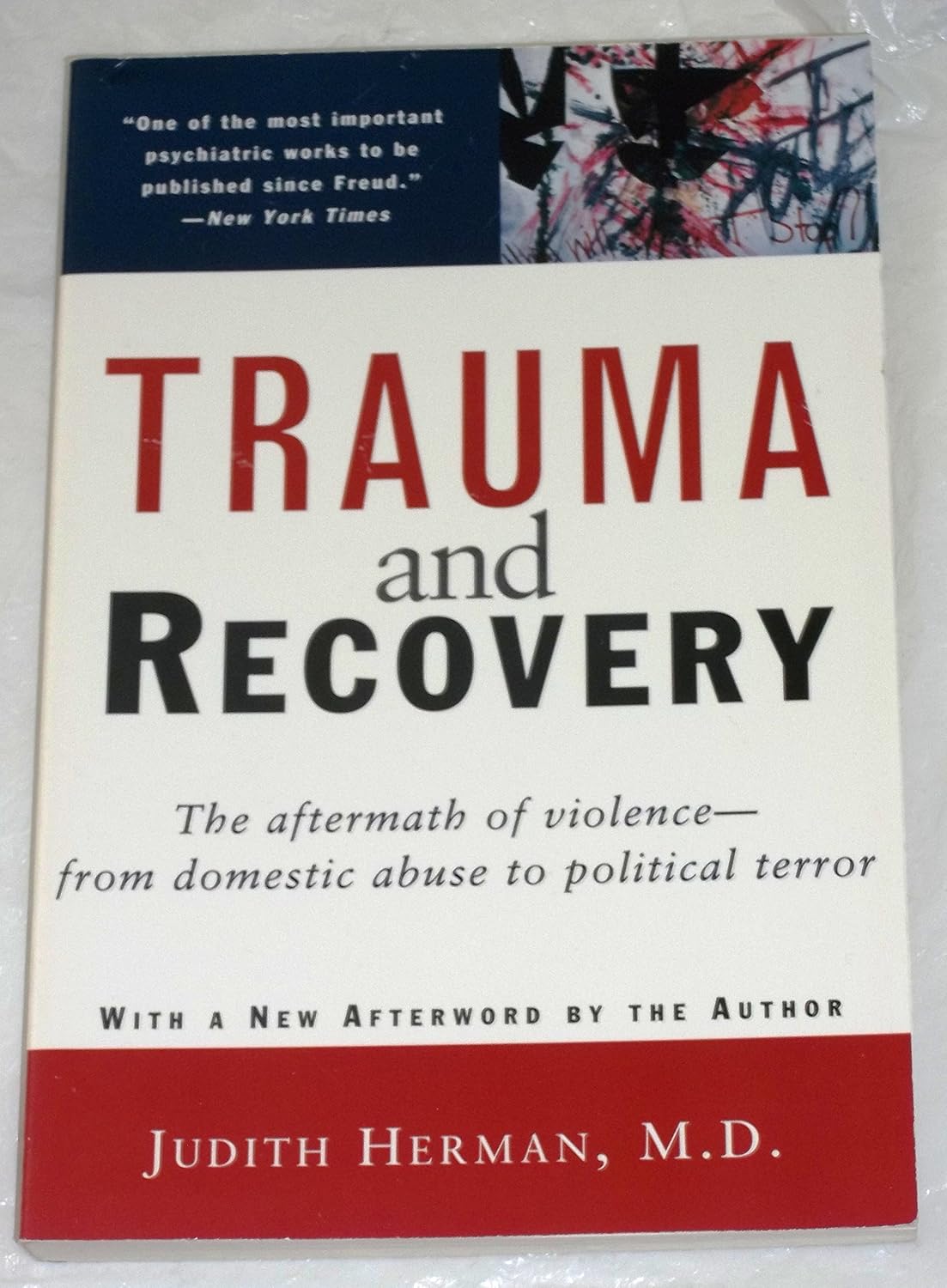
Trauma and Recovery
Judith Lewis Herman, M.D.
The seminal framework for understanding trauma and the stages of recovery — safety, remembrance, and reconnection.
As an Amazon Associate, Clarity House Press earns from qualifying purchases. Your price is never affected.
Found this helpful?
Share it with someone who might need it.
About the Author

Clarity House Press
Editorial Team
The editorial team at Clarity House Press curates and publishes evidence-based content on narcissistic abuse recovery, high-conflict divorce, and healing. Our content is informed by research, survivor experiences, and established trauma-informed approaches.
View all posts by Clarity House Press →Published by Clarity House Press Editorial Team