Please read our important disclaimers before using this content
I was three years out of my marriage when my therapist asked me a simple question: "If your best friend told you she'd just spent 20 minutes berating herself for forgetting to respond to a text message, what would you say to her?"
I answered immediately: "I'd tell her she's being way too hard on herself. Everyone forgets things. It's not a character flaw."
"And yet," my therapist said gently, "you just spent our entire session telling me how you're a terrible person for doing exactly that."
The silence was deafening. I had never noticed that the voice in my head—the one constantly cataloging my failures, predicting disasters, and finding evidence that I was fundamentally defective—sounded exactly like my ex-husband.
After narcissistic abuse, your inner critic is often just the abuser's voice you've internalized. Self-compassion isn't about making excuses or lowering standards. It's about treating yourself with the same kindness you'd offer someone you love—and in doing so, dismantling the abuse that's still happening inside your own mind.
Why Self-Compassion Is Essential for Trauma Recovery
The Neurobiology of Self-Criticism After Abuse
Dr. Kristin Neff, researcher and author of Self-Compassion, has spent two decades studying how we relate to ourselves during difficult moments. Her research reveals something crucial for trauma survivors: self-criticism activates the same threat response in your brain as external attack.1 Studies show that low levels of self-compassion predict PTSD symptoms more strongly than the level of trauma exposure itself2, suggesting that how one relates to trauma is key to how debilitating the trauma becomes.
When you mentally berate yourself for "staying too long" or "missing red flags," your amygdala responds as if you're under active threat.3 Your body floods with cortisol and adrenaline. You enter fight-flight-freeze.
After prolonged narcissistic abuse, this becomes your baseline state. You're not just recovering from external abuse—you're actively re-traumatizing yourself through internal abuse.
The cycle looks like this:
- You make a normal human mistake (forget an appointment, say something awkward)
- Your inner critic attacks: "You're so stupid. You always screw everything up."
- Your brain registers threat and activates stress response
- You feel shame, anxiety, worthlessness
- You withdraw, ruminate, or try to be "perfect" to avoid future criticism
- The hypervigilance and impossible standards guarantee more "failures"
- The cycle repeats
Self-compassion interrupts this cycle. When you respond to yourself with kindness instead of criticism, your brain registers safety instead of threat.4 Your parasympathetic nervous system activates. You can think clearly, learn from mistakes, and move forward instead of spiraling into shame.
What Self-Compassion Is NOT
Before we go further, let me be crystal clear about toxic myths that prevent survivors from practicing self-compassion:
Self-compassion is NOT:
- Making excuses for harmful behavior
- Letting yourself "off the hook" for genuine mistakes
- Toxic positivity ("just think happy thoughts!")
- Weakness or self-pity
- Lowering your standards
- Letting the abuser off the hook
- Pretending you weren't hurt
Self-compassion IS:
- Acknowledging pain without exaggerating or minimizing it
- Treating yourself with kindness while still holding yourself accountable
- Recognizing you're human and humans are imperfect
- Creating internal safety so you can actually learn and grow
- Refusing to abuse yourself the way others have abused you
Many survivors resist self-compassion because they fear it means absolving the abuser or denying the harm done. The opposite is true. Self-compassion allows you to see the abuse clearly because you're not drowning in shame and self-blame that distort your perception.
The Three Components of Self-Compassion (Dr. Kristin Neff)
Dr. Neff's research identifies three essential elements that work together:
1. Self-Kindness vs. Self-Judgment
What it means: Treating yourself with warmth and understanding rather than harsh criticism when you suffer, fail, or feel inadequate.
After abuse, self-judgment sounds like:
- "I'm so stupid for staying so long."
- "I should have known better."
- "I'm damaged goods now."
- "If I were stronger, this wouldn't have affected me so much."
- "I'm a terrible mother/father for exposing my kids to this."
Self-kindness sounds like:
- "I stayed because I loved deeply and believed in growth. That's not stupidity—that's hope and commitment."
- "I made decisions with the information I had at the time. I can't judge past-me with present-me's knowledge."
- "I'm not damaged. I'm healing from damage that was done to me."
- "My symptoms are normal responses to abnormal circumstances. Struggling doesn't mean I'm weak."
- "I protected my children as best I could in an impossible situation. I'm still protecting them by healing myself."
The shift: From attacking yourself to supporting yourself through difficulty.
2. Common Humanity vs. Isolation
What it means: Recognizing that suffering, failure, and imperfection are part of the shared human experience—you're not uniquely flawed or alone.
After abuse, isolation sounds like:
- "I'm the only one who fell for this."
- "Everyone else would have left sooner."
- "Other survivors are doing so much better than me."
- "Normal people don't struggle this much with basic things."
Common humanity sounds like:
- "Millions of people have experienced this type of abuse. I'm part of a community, not an isolated failure."
- "Every survivor's timeline is different. Comparison isn't helpful."
- "Struggling with trust, boundaries, and self-doubt after betrayal is normal—it would be strange if I wasn't struggling."
- "Everyone has invisible battles. I don't know what others are dealing with internally."
The shift: From "I'm uniquely broken" to "I'm having a normal human response to trauma."
Research backing: Studies show that abuse survivors who recognize their experience as part of common humanity (not personal deficiency) have significantly lower rates of depression, anxiety, and shame.5
3. Mindfulness vs. Over-Identification
What it means: Holding painful thoughts and feelings in balanced awareness—neither suppressing them nor being consumed by them.
After abuse, over-identification sounds like:
- "I feel worthless, therefore I AM worthless."
- "This anxiety will never end."
- "I'm having a flashback, which means I'm still completely controlled by my trauma."
- Getting lost in rumination spirals that consume hours
Mindfulness sounds like:
- "I'm having the thought that I'm worthless. That thought isn't truth—it's a symptom of trauma."
- "I'm experiencing intense anxiety right now. It's uncomfortable, but it's temporary and it will pass."
- "I'm having a flashback. This is my nervous system responding to a trigger. I'm safe now, even though my body doesn't feel safe."
- Noticing painful thoughts without judgment: "There's the 'I'm a failure' thought again. Hello, old pattern."
The shift: From being fused with your pain to creating space around it.
Practical technique: When you notice harsh self-talk, try adding "I'm having the thought that..." before it.
- "I'm worthless" → "I'm having the thought that I'm worthless"
- This small shift creates cognitive distance and reminds you that thoughts are not facts
Evidence-Based Self-Compassion Practices for Trauma Survivors
These practices are adapted specifically for survivors of narcissistic abuse and complex trauma:
Practice 1: The Self-Compassion Break (3 minutes)
When to use: When you're struggling, made a mistake, or feeling overwhelmed
Steps:
-
Acknowledge the pain (Mindfulness)
- Put your hand on your heart
- Say silently: "This is really hard right now" or "This hurts"
- Don't try to fix it yet—just acknowledge it
-
Remember common humanity
- Say: "Suffering is part of life. I'm not alone in this."
- Or: "Other people have felt this way. This is a human experience."
-
Offer yourself kindness
- Say: "May I be kind to myself" or "May I give myself the compassion I need"
- Or use your own words: "I'm doing the best I can. That's enough."
Trauma adaptation: If placing your hand on your heart feels triggering (physical touch can be activating for some survivors), try placing your hand on your belly, your arm, or simply crossing your arms in a gentle hug.
Practice 2: Rewriting Your Inner Dialogue
When to use: When you notice harsh, abusive self-talk
Steps:
-
Notice the critical voice
- Write down exactly what you're saying to yourself
- Often survivors don't realize how vicious their inner critic is until they see it written out
-
Identify the source
- Does this sound like your abuser?
- A critical parent?
- Internalized societal messages?
- Recognizing it's not YOUR authentic voice helps create distance
-
Respond with compassion
- What would you say to a friend in this situation?
- Write that down as an alternative response
- Read it out loud (hearing your own compassionate voice matters neurologically)
Example:
Harsh inner critic: "You're pathetic for still struggling with this. It's been two years. Get over it already."
Source recognition: This is how my ex talked to me when I had emotions.
Compassionate response: "Healing from prolonged trauma doesn't have a timeline. Two years is actually a relatively short time for recovering from that level of abuse. I'm making progress every day, even when I can't see it. Struggling doesn't mean I'm failing—it means I'm healing."
Practice 3: The Compassionate Letter
When to use: When you're experiencing intense shame or self-blame
Steps:
-
Write to yourself from the perspective of a deeply compassionate friend
- Someone who knows your whole story
- Who loves you unconditionally
- Who sees your strength even when you can't
-
Address:
- What you're struggling with
- Why this is understandable given your history
- What strengths you've shown
- What you deserve (kindness, time, healing, support)
-
Read it when you need it
- Keep it somewhere accessible
- Read it aloud during difficult moments
- Let yourself receive the compassion
Sample excerpt:
"Dear [your name],
I see how hard you're being on yourself for having an anxiety attack at the grocery store yesterday. I want you to know that your nervous system was responding to a real threat—the way that person raised their voice was exactly like how your ex sounded before things escalated. Your body was trying to protect you. That's not weakness or brokenness. That's your brilliant survival system doing its job.
You didn't cause this anxiety. It was caused by years of walking on eggshells, never knowing when the next explosion would come. Your hypervigilance kept you alive. Now that you're safe, it's taking time for your body to believe it. That's normal. That's expected.
You deserve kindness, especially from yourself. You deserve time to heal. You deserve to struggle sometimes without calling yourself pathetic..."
Practice 4: RAIN Meditation (Adapted for Trauma)
When to use: During emotional flashbacks, shame spirals, or intense difficult emotions
RAIN stands for:
R - Recognize: "I'm having an emotional flashback" or "I'm experiencing intense shame"
A - Allow: Let the feeling be there without trying to fix, suppress, or judge it. "This feeling is here. I don't have to like it, but I can let it exist."
I - Investigate with kindness: "Where do I feel this in my body? What does it need? What is it trying to tell me?"
N - Nurture: Offer yourself compassion. Hand on heart. Kind words. "I'm here with you. This is hard, and I'm not abandoning you in this."
Trauma adaptation: If "allowing" the emotion feels unsafe (like it might consume you), try "acknowledging from a distance" instead. Imagine the emotion is weather passing through—you can observe the storm without standing directly in it.
Practice 5: The "What Would I Tell My Younger Self?" Practice
When to use: When you're stuck in shame about past decisions
Steps:
-
Picture yourself at the moment you're judging
- Not as you are now, but as you were then
- What did you know at that time?
- What were you feeling?
- What were you hoping for?
-
Speak to that version of yourself with compassion
- What would you want them to know?
- What would you want them to hear?
Example:
Self-judgment: "I'm so stupid for going back after he cheated the first time."
Compassionate response to younger self: "You went back because you believed in second chances. You went back because you loved deeply and wanted to believe people could change. You went back because you were fighting for your family. That wasn't stupidity—that was hope, commitment, and love. You didn't know then what you know now about patterns and narcissism. You made the best decision you could with the information you had. I'm proud of you for trying. And I'm proud of you for eventually leaving when you realized trying wasn't enough."
Practice 6: Compassionate Body Scan
When to use: When you're dissociated, numb, or disconnected from your body
Steps:
- Lie down or sit comfortably
- Bring gentle attention to each part of your body
- Notice sensations without judgment
- No need to change anything
- Offer gratitude or compassion to each part
- "Thank you, feet, for carrying me through hard days"
- "I'm sorry I've ignored you, stomach. You were trying to tell me something was wrong."
- "I see you're holding tension, shoulders. You've carried so much."
Trauma adaptation: If bringing attention to certain body parts triggers distress (common for survivors of physical or sexual abuse), you can skip those areas or imagine sending compassion from a distance rather than focusing directly on them.
Common Obstacles for Trauma Survivors
Obstacle 1: "I Don't Deserve Compassion"
The belief: "After what I've done / allowed / stayed for, I don't deserve kindness."
The truth: Compassion isn't something you earn through perfect behavior—it's something all humans deserve simply because suffering is painful. You wouldn't tell a cancer patient they don't deserve medical care because they "should have" prevented it. Trauma is an injury. You deserve treatment.
Practice: Start with compassion for something undeniably not your fault (a physical symptom, something that happened in childhood) and gradually expand.
Obstacle 2: "Self-Compassion Feels Fake/Forced"
The belief: "I don't believe these compassionate things I'm saying to myself, so what's the point?"
The truth: You don't have to believe it for it to work. Neural pathways change through repetition, not conviction. You're creating new neural highways where there were only dirt paths. It feels fake because it's new, not because it's false.
Practice: Think of it as physical therapy for your brain. You wouldn't skip physical therapy exercises because they feel unnatural—you do them precisely because they're strengthening something that's been damaged.
Obstacle 3: "Being Kind to Myself Means Letting the Abuser Off the Hook"
The belief: "If I stop blaming myself, I'm saying what happened was okay."
The truth: You can hold two truths simultaneously:
- The abuse was wrong and the abuser is responsible for their choices
- You deserve kindness and healing regardless of what happened
Self-blame doesn't punish the abuser. It only punishes you.
Practice: Write two separate lists:
- Things that were the abuser's responsibility
- Things I need compassion for
These lists don't cancel each other out—they coexist.
Obstacle 4: "I'm Afraid Compassion Will Make Me Weak/Complacent"
The belief: "I need to be hard on myself to stay motivated and avoid repeating mistakes."
The truth: Research shows the opposite. Self-criticism actually decreases motivation because it activates threat response, which narrows thinking and triggers avoidance. Self-compassion increases motivation because it creates safety, which allows clear thinking and growth.
Studies show: People who practice self-compassion are MORE likely to:6
- Take responsibility for mistakes (because they're not terrified of being "bad")
- Learn from failures (because they can tolerate examining them)
- Persist after setbacks (because they don't spiral into shame)
- Set healthy boundaries (because they believe they deserve respect)
Integrating Self-Compassion into Daily Life
Self-compassion isn't just a practice you do during meditation—it's a new way of relating to yourself during everyday moments:
Morning: Instead of "I have to do all these things perfectly," try "I'm going to do my best today, and my best will be enough."
Mistakes: Instead of "I'm such an idiot," try "Okay, that didn't go as planned. What can I learn? What do I need right now?"
Triggers: Instead of "I should be over this by now," try "My nervous system is responding to something that reminds it of danger. That's normal. I'm safe now."
Bedtime: Instead of reviewing everything you did wrong, try "I survived today. I did some things well. I struggled with some things. Both are okay. I'm proud of myself for continuing."
Setbacks: Instead of "I'm back at square one," try "Healing isn't linear. This setback doesn't erase my progress. I'm still moving forward."
When to Seek Additional Support
Self-compassion practices are powerful, but they're not a substitute for professional help when you need it. Consider reaching out to a trauma-informed therapist if:
- Self-compassion practices consistently trigger overwhelming emotion or dissociation
- You're experiencing suicidal thoughts or self-harm urges
- Your inner critic is so loud it's interfering with daily functioning
- You have flashbacks, nightmares, or other PTSD symptoms
- You're struggling to function in work, relationships, or parenting
Therapy modalities that incorporate self-compassion:
Your Next Steps
This week, commit to ONE self-compassion practice:
-
If you're new to self-compassion: Start with the Self-Compassion Break (Practice 1). Use it once per day for one week, even when things are going fine. Building the muscle when you're NOT in crisis makes it accessible when you are.
-
If self-criticism is your biggest challenge: Try the Rewriting Your Inner Dialogue practice (Practice 2). Carry a small notebook and write down harsh thoughts when you notice them, then write compassionate alternatives.
-
If you're stuck in shame about the past: Write yourself a Compassionate Letter (Practice 3). Set aside 30 minutes when you won't be interrupted.
-
If you're disconnected from your body: Try the Compassionate Body Scan (Practice 6) once this week.
Remember: You're not trying to eliminate all self-criticism or difficult emotions. You're learning to respond to yourself differently when they arise—with kindness instead of harshness, with understanding instead of judgment.
The abuser's voice inside your head has been there for years. It won't disappear overnight. But every time you choose compassion over criticism, you're weakening those old neural pathways and strengthening new ones.
You're not just recovering from abuse. You're learning to love yourself in a way you may never have experienced before.
And that's not self-indulgent. That's revolutionary.
Key Takeaways
- Self-criticism after abuse is often the internalized voice of the abuser continuing the abuse inside your mind
- Self-compassion activates your parasympathetic nervous system (safety/healing) while self-criticism activates your threat response
- The three components of self-compassion are: self-kindness, common humanity, and mindfulness
- Self-compassion is not weakness, excuses, or toxic positivity—it's treating yourself with the same kindness you'd offer a loved one
- Research shows self-compassion INCREASES motivation, accountability, and resilience—it doesn't make you complacent
- Even if compassionate self-talk feels fake at first, it's rewiring your neural pathways through repetition
- Start with one practice and build gradually—you're learning a new skill, not flipping a switch
Resources
Self-Compassion and Trauma Recovery:
- The Center for Self-Compassion - Dr. Kristin Neff's research-based practices and resources
- Greater Good Science Center - Evidence-based well-being practices
- Psychology Today Therapist Finder - Find therapists specializing in trauma and self-compassion
- EMDR International Association - Find certified EMDR therapists
Mental Health Support:
- National Alliance on Mental Illness (NAMI) - Mental health education and support groups
- SAMHSA National Helpline - 1-800-662-4357 for mental health referrals (24/7)
- Anxiety and Depression Association of America (ADAA) - Mental health resources
- International Society for Traumatic Stress Studies - Trauma treatment resources
Crisis Support:
- 988 Suicide & Crisis Lifeline - Call or text 988 (24/7)
- Crisis Text Line - Text HOME to 741741
- National Domestic Violence Hotline - 1-800-799-7233 (SAFE)
References
If you found this helpful, you might also want to read our posts on Emotional Flashbacks: Understanding and Coping and Recovery Timelines: Setting Realistic Expectations.
References
- Neff, K. D. (2023). Self-compassion: Theory, method, research, and intervention. Annual Review of Psychology, 74, 193-218. https://pubmed.ncbi.nlm.nih.gov/35961039/ ↩
- Hiraoka, Meyer, Kimbrel, DeBeer, & Gulliver (2015). Self-Compassion as a prospective predictor of PTSD symptom severity among trauma-exposed U.S. Iraq and Afghanistan war veterans.. Journal of traumatic stress. https://pmc.ncbi.nlm.nih.gov/articles/PMC5032642/ ↩
- Thome, J., Ravindran, N., Fikretoglu, D., & Gualtieri, G. (2021). Prefrontal cortex, amygdala, and threat processing: implications for PTSD. Neuropsychopharmacology, 46(13), 2298-2310. https://pmc.ncbi.nlm.nih.gov/articles/PMC8617299/ ↩
- Boulanger, J. L., Loggia, M. L., & Berenson, S. (2017). Neurobiological changes induced by mindfulness and meditation. Frontiers in Psychiatry, 11, 1020. https://pmc.ncbi.nlm.nih.gov/articles/PMC11591838/ ↩
- Winders, S. J., Hill, R. W., Rasmussen, B., Dunkley, C., & Brémault-Phillips, S. (2020). Self-compassion, trauma, and posttraumatic stress disorder: A systematic review. Journal of Trauma & Dissociation, 21(4), 437-453. https://pubmed.ncbi.nlm.nih.gov/31986553/ ↩
- Neff, K. D., & Vonk, R. (2009). Self-compassion versus global self-esteem: Two different ways of relating to oneself. Journal of Personality and Social Psychology, 94(4), 585-602. https://psycnet.apa.org/record/2024-24549-001 ↩
- Beaumont, E., Irons, C., & Rayner, V. (2020). Compassion focused therapy: A systematic review of its effectiveness and acceptability in clinical populations. Expert Review of Neurotherapeutics, 20(4), 325-345. https://pubmed.ncbi.nlm.nih.gov/32196399/ ↩
- Sweezy, M., & Ziskind, S. (2021). Internal Family Systems (IFS) therapy for posttraumatic stress disorder (PTSD) among survivors of multiple childhood trauma: A pilot effectiveness study. Journal of Family Psychotherapy, 32(3), 249-277. https://www.tandfonline.com/doi/full/10.1080/10926771.2021.2013375 ↩
Recommended Reading
From Clarity House Press — plus trusted books for deeper understanding

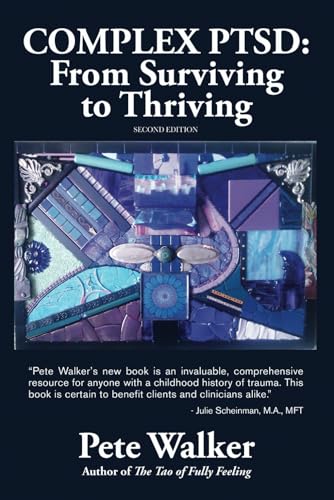
Complex PTSD: From Surviving to Thriving
Pete Walker
A clear, compassionate guide to recognizing and working with the lasting effects of prolonged childhood adversity.
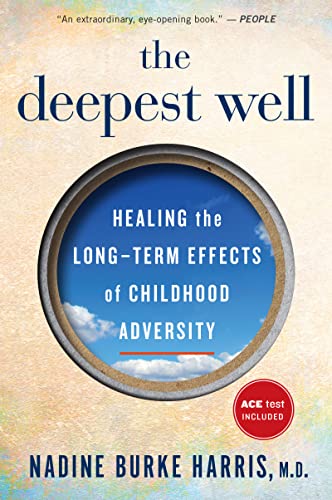
The Deepest Well
Nadine Burke Harris, M.D.
A pediatrician's clear explanation of how adverse childhood experiences affect lifelong health — and what recovery can look like.
As an Amazon Associate, Clarity House Press earns from qualifying purchases. Your price is never affected.
Found this helpful?
Share it with someone who might need it.
About the Author

Clarity House Press
Editorial Team
The editorial team at Clarity House Press curates and publishes evidence-based content on narcissistic abuse recovery, high-conflict divorce, and healing. Our content is informed by research, survivor experiences, and established trauma-informed approaches.
View all posts by Clarity House Press →Published by Clarity House Press Editorial Team