Please read our important disclaimers before using this content
You notice the exits first. Always the exits.
Then the number of people in the room. Who's watching you. Who's turned away. Tone of voice. Micro-expressions. Body language that might indicate anger, or judgment, or threat you can't quite name.
You catalog escape routes. You prepare explanations. You monitor everyone's mood and adjust your behavior to maintain the fragile peace your nervous system believes you're responsible for maintaining.
You can't watch a movie without your awareness splitting between the screen and the room. You can't enjoy a meal without tracking the emotional climate. You can't have a conversation without three-dimensional processing: what they're saying, what they mean, what they'll say next, how to respond, whether you're safe, whether they're upset, whether you need to manage, explain, fix, flee.
This is hypervigilance—the state where your threat detection system never turns off.
And here's what makes it particularly cruel: hypervigilance kept you alive. It correctly identified danger when danger was constant. It helped you navigate impossible situations with minimal damage. It was precisely calibrated for the environment that created it.
The problem is you're not in that environment anymore. But your nervous system hasn't received the memo.
What Hypervigilance Actually Is
Hypervigilance is persistent, excessive awareness of potential threats. It's your nervous system operating from the assumption that danger is always present and survival requires constant monitoring.
Clinically, hypervigilance involves symptoms recognized by the ICD-11 as part of Complex PTSD:
- Enhanced startle response
- Difficulty concentrating (because you're scanning environment)
- Sleep disruption (can't be vulnerable while unconscious)
- Exhaustion (constant activation is metabolically expensive)
- Inability to relax (relaxation feels dangerous)
- Reading threat into neutral stimuli1
It's not the same as normal caution. Normal caution is contextual—more alert in unfamiliar environment, relaxed in known-safe spaces. Normal caution responds to actual risk level.
Hypervigilance is non-contextual. Your nervous system maintains the same threat-scanning in objectively safe situations as genuinely risky ones. Often, known-safe situations trigger more hypervigilance because they're unfamiliar and therefore unpredictable.2 Research into hypervigilance patterns demonstrates a forward feedback loop where heightened threat-scanning generates increased anxiety, which further activates vigilance mechanisms.3
Think about that. Safety itself becomes threatening because you don't know how to navigate it.
Why Hypervigilance Persists After Trauma
Your nervous system learned that:
Threats come from unexpected sources. If a caregiver who smiled could hurt you, or someone who said "I love you" could violate you, or calm moments preceded explosions, your system learned: apparent safety predicts danger. Trust nothing. Research on betrayal trauma demonstrates that violations by trusted attachment figures create particularly persistent hypervigilance patterns. Neuroimaging studies confirm that the amygdala becomes hyperresponsive while the medial prefrontal cortex shows diminished activity, creating a neurobiological basis for persistent threat detection even in safe environments (Morey et al., 2021).4
Vigilance prevented harm. Every time you correctly anticipated someone's mood, adjusted your behavior to prevent their rage, made yourself small to avoid notice—your hypervigilance worked. It was reinforced thousands of times.
Letting your guard down was dangerous. Maybe you relaxed once and got hurt. Maybe you failed to scan and missed critical warning signs. Maybe someone told you that you being "dramatic" or "paranoid" and then proved your vigilance was justified.
No one else was monitoring for threats. You were on your own for safety. Your surveillance system developed because external protection was unreliable or absent.
Now the trauma has ended, but the system remains activated because from your nervous system's perspective: it worked. Why would it stop doing what saved your life?
This is why you can't think your way out of hypervigilance. Your prefrontal cortex knows you're safe now. Your amygdala doesn't trust that assessment because last time someone said "it's safe," it wasn't. This neurobiological reality is also central to complex PTSD and why it differs from PTSD. Neuroimaging studies confirm that trauma causes structural and functional changes in the amygdala that persist independently of conscious beliefs about safety. At the neurobiological level, chronic hypervigilance reflects reduced prefrontal cortex modulation of amygdala reactivity and dysconnectivity in threat-detection networks that maintain a low threshold for interpreting ambiguous stimuli as dangerous.5
The Hidden Costs of Constant Surveillance
Hypervigilance is exhausting in ways people who haven't experienced it cannot comprehend.
Cognitive load: Threat scanning uses mental resources that could go to other tasks. This is why you can't focus, why you forget things, why complex thinking feels impossible. Research demonstrates that hypervigilance consumes working memory capacity, impairing attention and executive function.6 Your working memory is full of surveillance data.
Physical tension: Chronic muscle contraction. Shallow breathing. Elevated heart rate. Constant readiness to fight or flee. Your body never receives permission to settle. The chronic physiological arousal associated with hypervigilance contributes to elevated inflammatory markers and increased health risks.7 Paradoxically, individuals with PTSD often show lower baseline cortisol levels despite chronic stress, reflecting dysregulation of the hypothalamic-pituitary-adrenal (HPA) axis that disrupts normal stress recovery (Schumacher et al., 2019).8
Social disconnection: You can't be fully present with people because part of you is always monitoring them for signs of danger, disapproval, or instability. This creates distance even in close relationships — a pattern also explored in how C-PTSD symptoms present differently in men.9
Decision paralysis: Every decision requires threat assessment. Should you speak? Will it create conflict? What's the safest response? The cognitive processing required for simple choices becomes overwhelming.
Anticipatory anxiety: Your system tries to prevent future threats by imagining every possible worst outcome. This creates anxiety about situations that haven't happened and may never happen.
Inability to rest: True rest requires a nervous system that believes safety is possible. Hypervigilance precludes that belief.
The cruel irony: hypervigilance was protective during trauma. After trauma, it prevents the healing that requires letting your guard down.
Recognizing Your Specific Hypervigilance Patterns
Hypervigilance manifests differently for different people. Yours might look like:
Environmental scanning:
- Constant awareness of who's around you
- Noting exits and escape routes automatically
- Inability to sit with your back to doors or windows
- Discomfort in crowds or open spaces
- Startle response to unexpected sounds, movements, touch
Social hypervigilance:
- Reading into every facial expression and tone
- Analyzing conversations for hidden meanings
- Monitoring others' moods constantly
- Taking responsibility for everyone's emotional state
- Anticipating others' needs before they're expressed
- Apologizing preemptively
Cognitive hypervigilance:
- Rumination about past conversations (Did I say the wrong thing?)
- Catastrophic thinking about future scenarios
- Obsessive planning to prevent potential problems
- Difficulty staying present because you're analyzing past/future
- Second-guessing every decision
Physical hypervigilance:
- Constant body scanning for signs of danger or illness
- Interpreting normal sensations as threat
- Inability to tolerate physical discomfort
- Monitoring others' proximity to your body
- Difficulty with touch, even consensual and safe
Temporal hypervigilance:
- Waiting for "the other shoe to drop"
- Inability to enjoy positive moments because you're waiting for them to end
- Expecting that any peace is temporary and will be disrupted
Most people with C-PTSD experience multiple patterns. Identifying yours helps you understand what recalibration needs to address.
The Recalibration Process: Teaching Your Body That Danger Has Passed
Recalibrating hypervigilance isn't about eliminating caution. It's about rightsizing your threat response to match actual risk levels.
This requires:
1. Creating genuinely safe environments where you can practice lowering vigilance
You can't recalibrate in environments that actually require vigilance. Identify spaces and relationships where:
- You have control over who has access
- Threats genuinely don't exist
- You can test lowering your guard in tiny increments
- Consequences for vulnerability are minimal
This might be your bedroom, your therapist's office, time alone in nature, or presence with one carefully-chosen safe person.
2. Titrated exposure to letting your guard down
Start absurdly small:
- Five minutes of not scanning the room
- One meal where you don't monitor everyone's mood
- Sitting with your back to a door in your own home for ten minutes
- Watching a show without simultaneously monitoring your environment
Notice what happens. Usually: nothing. You survive. The threatened catastrophe doesn't occur. This data slowly accumulates.
3. Somatic practices that teach your body what safety feels like
Your nervous system learns through experience, not explanation. Body-based approaches work because interoception--the ability to perceive internal bodily signals--is often disrupted after trauma. Higher interoceptive awareness enables better emotion regulation, but trauma survivors frequently disconnect from bodily sensations as a protective adaptation (Dunne et al., 2024).10 Practices that rebuild interoceptive awareness and create safety signals include:
- Extended exhale breathing (activates parasympathetic nervous system via vagal afferent pathways)11
- Progressive muscle relaxation (practice tensing, then releasing)
- Self-havening (gentle touch on arms, face, hands)
- Gentle movement (yoga and tai chi show evidence for reducing PTSD symptoms)12
- Bilateral stimulation (alternating tapping, butterfly hug)
- Grounding techniques (5-4-3-2-1 sensory awareness and other grounding methods help interrupt threat-scanning loops by anchoring attention to the present moment)13
These aren't "relaxation" in the toxic-positivity sense. They're neurological tools that signal safety to your nervous system through somatic pathways.
4. Co-regulation with safe people/animals
Your nervous system can borrow regulation from others. Research on social buffering demonstrates that safe social contact reduces stress responses and HPA axis activation. The polyvagal theory framework explains this through vagal system responsiveness: safe social engagement activates the ventral vagal complex, shifting your autonomic state from threat-detecting sympathetic activation toward calm-alert parasympathetic engagement.14 Time with:
- People whose presence feels calming (not activating)
- Animals (who don't have complex social demands)
- Situations where you can be near people without performing
This teaches your system: proximity to others doesn't always equal danger.
5. Building tolerance for "not knowing"
Much hypervigilance is an attempt to eliminate uncertainty. But certainty is impossible. Part of recalibration is slowly increasing tolerance for ambiguity:
- Sitting with not knowing what someone is thinking
- Allowing unpredictability in low-stakes situations
- Practicing being surprised (planned small surprises that are actually pleasant)
- Noticing when you compulsively seek information and choosing not to
6. Differententiating past from present
When hypervigilance activates, practice: "This reminds me of [past situation], but this is [current situation]. Then I was [age/circumstances]. Now I am [age/circumstances]."
Your nervous system can learn that similarity doesn't equal sameness.
Working With—Not Against—Your Hypervigilance
Here's a counterintuitive truth: fighting your hypervigilance often makes it stronger.
When you criticize yourself for being "too anxious," your nervous system receives the message: you're under attack. It increases vigilance to protect you from the attack (your own self-criticism).
When you force yourself into situations that trigger hypervigilance before you're ready, your system collects evidence that letting your guard down leads to overwhelm. It strengthens the hypervigilance.
A different approach:
Thank your hypervigilance. "Thank you for keeping me safe all these years. You were exactly what I needed then."
Acknowledge its accuracy in the past. "You correctly identified real dangers. You helped me survive. I'm alive because of you."
Explain that conditions have changed. "The situation now is different. I need different tools. Would you be willing to let me try something new?"
Negotiate with it. "How about you stay fully active when I'm [in genuinely unpredictable situation], and practice dialing down when I'm [in verified safe space]?"
Give it specific jobs. "I need you to alert me if there's actual danger. But you don't need to alert me to every possibility of potential future imagined danger."
This isn't silly. Parts work (from IFS) demonstrates that speaking to your protective mechanisms with respect and negotiating with them is far more effective than trying to eliminate them through force.
Realistic Timeline for Recalibration
Let's be honest about how long this takes: years, not months.
Your hypervigilance developed over extended time, was reinforced constantly, and became deeply embedded in your nervous system. It doesn't recalibrate quickly.
Milestones might look like:
Months 1-6: Recognizing when you're in hypervigilance. Beginning to notice it without judgment. Starting tiny experiments with lowering guard in very safe situations. Emerging research suggests that targeting interoceptive awareness through mind-body interventions may help restore the capacity to distinguish between actual threat signals and trauma-related false alarms (Harricharan et al., 2023).15
Months 6-12: Identifying specific triggers. Having moments (minutes, not hours) where you're less vigilant. Building tolerance for those moments without panic.
Year 2: Longer periods of modulated vigilance. Ability to consciously choose to scan vs. not scan in some situations. Less exhaustion as baseline.
Year 3+: Hypervigilance as occasional response to specific triggers rather than constant baseline. Ability to recover more quickly when activated. Trust that you can monitor environment when needed without needing to do it constantly.
This isn't linear. You'll have periods of regression, especially during stress or when encountering reminders of original trauma.
What Progress Actually Feels Like
Progress isn't the absence of hypervigilance. It's:
- Noticing you were relaxed and didn't realize it until later
- Choosing to scan vs. compulsively scanning
- Recovering from activation more quickly
- Hypervigilance spiking in genuinely risky situations but not safe ones
- Being able to override hypervigilance for short periods
- Trusting yourself to handle threats if they arise rather than needing to prevent every possibility
It's subtle. Don't expect dramatic transformation. Expect small shifts that accumulate over time.
Living With It While Working On It
You don't have to wait until hypervigilance is "cured" to live your life. You can live with it while gently working toward recalibration:
Accommodate it when necessary:
- Sit where you can see the room if that helps
- Arrive early to scan environment before others arrive
- Limit time in overstimulating environments
- Be selective about who has access to you
Push gently when possible:
- Stay five minutes longer than feels comfortable
- Try the seat that's not your preferred hypervigilant position once
- Practice one meal without monitoring others
Know your limits:
- Some situations will always be more activating
- That's okay
- You don't have to force yourself into perpetual discomfort to prove you're "healed"
Build support:
- People who understand when you need to leave
- Environments where your hypervigilance is accepted without judgment
- Therapist who works with trauma and gets it
Hypervigilance kept you alive. Now it's slowly learning a different truth: you're safe enough, often enough, to rest sometimes.
That's not weakness. That's wisdom your nervous system is painstakingly acquiring through experiences that contradict what it learned in trauma.
You're teaching it something new. That takes time. And compassion. And patience with a system that's been working overtime to protect you for years.
It will learn. Your body will recalibrate. The guard can come down—not all the way, not all at once, but enough.
Enough to rest. Enough to be present. Enough to live.
Resources
Understanding Hypervigilance and PTSD:
- The Body Keeps the Score by Bessel van der Kolk - Understanding trauma's impact on the nervous system
- Waking the Tiger by Peter Levine - Somatic Experiencing approach to trauma release
- The Polyvagal Theory in Therapy by Deb Dana - Understanding nervous system states
- National Center for PTSD - Hypervigilance and PTSD resources
Therapy and Nervous System Regulation:
- Somatic Experiencing Trauma Institute - Find SE practitioners for nervous system work
- EMDR International Association - Find EMDR therapists for trauma processing
- Psychology Today - Therapists - Filter for "PTSD" and "hypervigilance"
- Polyvagal Institute - Polyvagal-informed therapy resources
Crisis Support and Community:
- 988 Suicide & Crisis Lifeline - Call or text 988 for immediate crisis support (24/7)
- Crisis Text Line - Text HOME to 741741 for crisis counseling
- r/CPTSD - Reddit peer support community for complex trauma
- SAMHSA National Helpline - 1-800-662-4357 (mental health treatment referrals)
References
- Brewin, C. R., Cloitre, M., Hyland, P., Shevlin, M., Maercker, A., Bryant, R. A., Humayun, A., Jones, L. M., Kagee, A., Rousseau, C., Somasundaram, D., Suzuki, Y., Thomaes, K., Wessely, S., & Reed, G. M. (2017). A review of current evidence regarding the ICD-11 proposals for diagnosing PTSD and complex PTSD. Clinical Psychology Review, 58, 1-15. https://doi.org/10.1016/j.cpr.2017.09.001 ↩
- Kimble, M. O., Fleming, K., Bandy, C., Kim, J., & Zambetti, A. (2010). Eye tracking and visual attention to threating stimuli in veterans of the Iraq war. Journal of Anxiety Disorders, 24(3), 293-299. https://doi.org/10.1016/j.janxdis.2009.12.006 ↩
- Vasterling, J. J., Duke, L. M., Brailey, K., Constans, J. I., Allain, A. N., & Sutker, P. B. (2002). Attention, learning, and memory performances and intellectual resources in Vietnam veterans: PTSD and no disorder comparisons. Neuropsychology, 16(1), 5-14. https://doi.org/10.1037/0894-4105.16.1.5 ↩
- Miller, M. W., Lin, A. P., Wolf, E. J., & Miller, D. R. (2018). Oxidative stress, inflammation, and neuroprogression in chronic PTSD. Harvard Review of Psychiatry, 26(2), 57-69. https://doi.org/10.1097/HRP.0000000000000167 ↩
- Charuvastra, A., & Cloitre, M. (2008). Social bonds and posttraumatic stress disorder. Annual Review of Psychology, 59, 301-328. https://doi.org/10.1146/annurev.psych.58.110405.085650 ↩
- Gerritsen, R. J., & Band, G. P. (2018). Breath of life: The respiratory vagal stimulation model of contemplative activity. Frontiers in Human Neuroscience, 12, 397. https://doi.org/10.3389/fnhum.2018.00397 ↩
- van der Kolk, B. A., Stone, L., West, J., Rhodes, A., Emerson, D., Suvak, M., & Spinazzola, J. (2014). Yoga as an adjunctive treatment for posttraumatic stress disorder: A randomized controlled trial. Journal of Clinical Psychiatry, 75(6), e559-e565. https://doi.org/10.4088/JCP.13m08561 ↩
- Kimble, M. O., Fleming, K., & Zambetti, A. E. (2013). The impact of hypervigilance: Evidence for a forward feedback loop. Journal of Anxiety Disorders, 27(3), 247-255. https://doi.org/10.1016/j.janxdis.2013.03.002 ↩
- Etkin, A., & Wager, T. D. (2007). Functional neuroimaging of anxiety: A meta-analysis of the amygdala-anterior cingulate cortex circuit. NeuroImage, 37(4), 1091-1096. https://doi.org/10.1016/j.neuroimage.2007.05.016 ↩
- Porges, S. W. (2022). Polyvagal theory: A neurophysiological foundation for emotions, attachment, communication, and self-regulation. Current Opinion in Psychology, 43, 113-118. https://doi.org/10.1016/j.copsyc.2021.07.007 ↩
- Substance Abuse and Mental Health Services Administration (SAMHSA). (2014). Grounding techniques. In Trauma-informed care in behavioral health services (Section 1.4). U.S. Department of Health and Human Services. https://www.ncbi.nlm.nih.gov/books/NBK207188/ ↩
- Morey, R. A., Dunsmoor, J. E., Haswell, C. C., Brown, V. M., & LaBar, K. S. (2021). Prefrontal cortex, amygdala, and threat processing: Implications for PTSD. Neuropsychopharmacology, 47(1), 247-259. https://doi.org/10.1038/s41386-021-01155-7 ↩
- Schumacher, S., Niemeyer, H., Engel, S., Cwik, J. C., & Knaevelsrud, C. (2019). HPA axis function and diurnal cortisol in post-traumatic stress disorder: A systematic review. Psychoneuroendocrinology, 108, 172-190. https://doi.org/10.1016/j.psyneuen.2019.06.014 ↩
- Dunne, T., Price, C. J., & Thompson, M. (2024). A roadmap to understanding interoceptive awareness and post-traumatic stress disorder: A scoping review. Frontiers in Psychiatry, 15, 1355442. https://doi.org/10.3389/fpsyt.2024.1355442 ↩
- Harricharan, S., McKinnon, M. C., & Bherer, L. (2023). Interoception in fear learning and posttraumatic stress disorder. Focus: The Journal of Lifelong Learning in Psychiatry, 21(3), 285-298. https://doi.org/10.1176/appi.focus.20230007 ↩
Recommended Reading
From Clarity House Press — plus trusted books for deeper understanding


Surviving the Storm: When the Court Takes Your Children
Clarity House Press
For fathers in active high-conflict custody battles. Understand your CPTSD symptoms, begin stabilization, and build foundation for healing. 17 chapters covering recognition, symptoms, and the healing path.
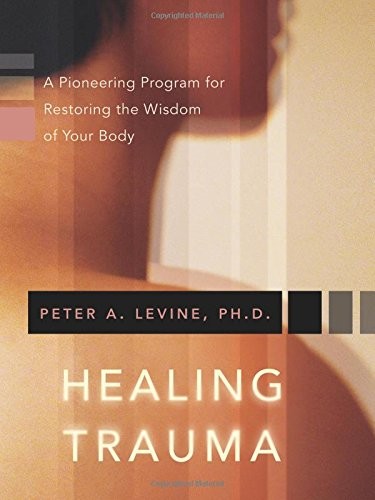
Healing Trauma
Peter A. Levine, PhD
Practical how-to guide for body-based trauma recovery with 12 guided Somatic Experiencing exercises.
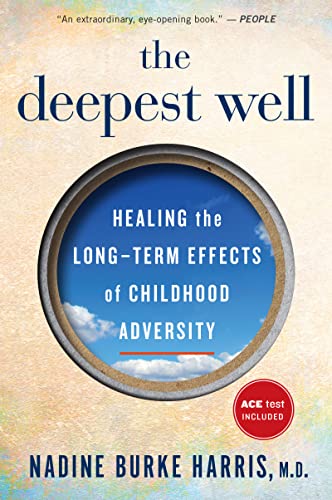
The Deepest Well
Nadine Burke Harris, M.D.
A pediatrician's clear explanation of how adverse childhood experiences affect lifelong health — and what recovery can look like.
As an Amazon Associate, Clarity House Press earns from qualifying purchases. Your price is never affected.
Found this helpful?
Share it with someone who might need it.
About the Author

Clarity House Press
Editorial Team
The editorial team at Clarity House Press curates and publishes evidence-based content on narcissistic abuse recovery, high-conflict divorce, and healing. Our content is informed by research, survivor experiences, and established trauma-informed approaches.
View all posts by Clarity House Press →Published by Clarity House Press Editorial Team